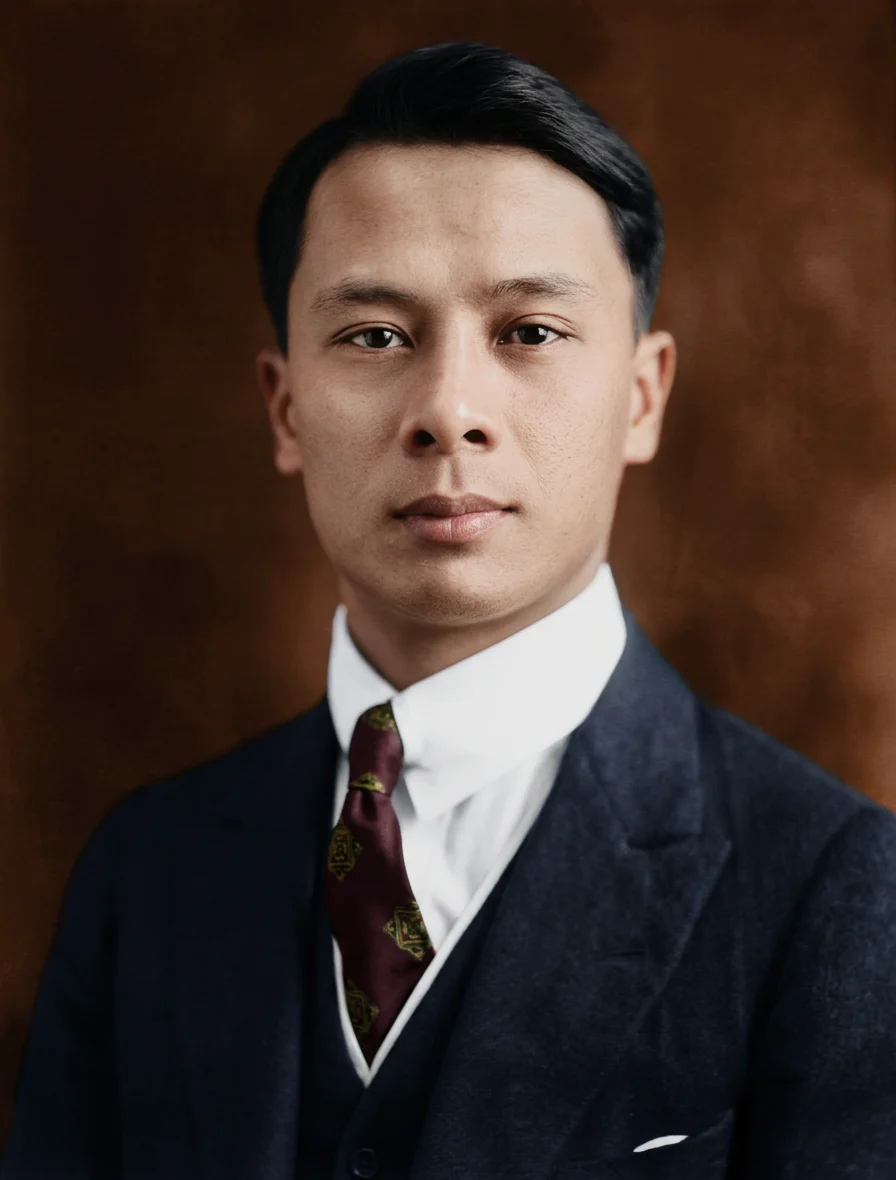

From Calao to Kalaw
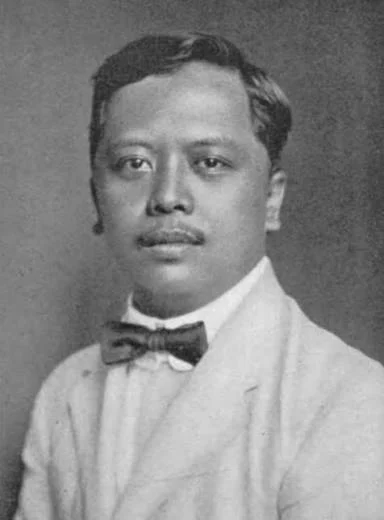
Maximo Manguiat Kalaw spent thirty years making the case for the Philippines in words. He wrote the textbooks that taught Filipinos their own government, argued for independence before committees of the United States Congress, built his country’s first university department of political science, and turned the whole argument into a novel. Then, at fifty-three, a retired professor long out of the fight, he went into the hills of Mindoro and joined the guerrillas. His life, which ran its course from the expanse of the writing desk to the underground camp, began in Lipa, in the spring of 1891.
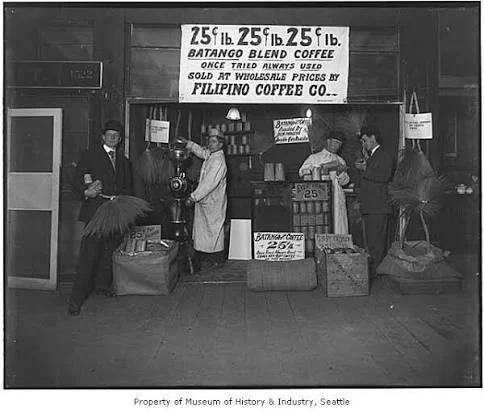
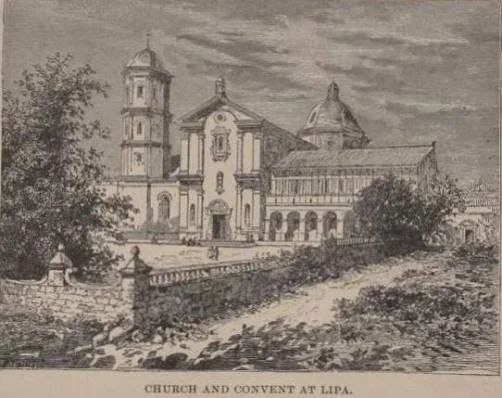
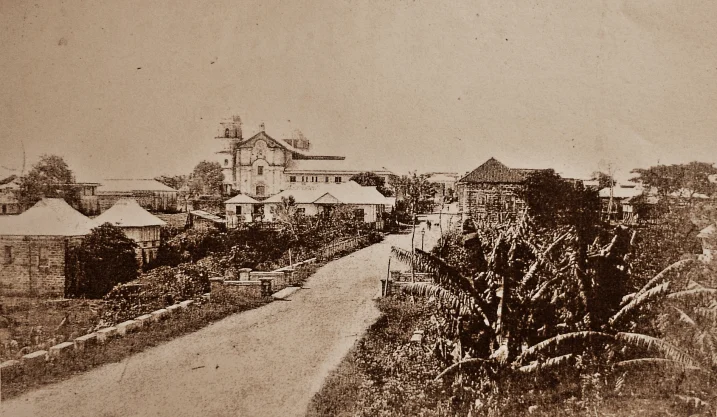
Lipa, in the cool coffee country, uplands of Batangas, is reached after a long day’s travel south of Manila. It was not an ordinary town. Through the 1880s, Lipa had grown conspicuously rich from coffee, in the years when disease was destroying the great plantations of Ceylon and the world had run short of the bean. As an offshoot, the town was raised to the rank of villa, a Spanish civic dignity that set it above the common pueblo, and the clerk who registered Maximo’s birth still wrote his family down as living de esta villa or of this villa.1 But by then, the boom had already broken. A blight had moved to destroy Lipa’s own coffee trees at the close of the decade, and the great money had begun to leave the town. Maximo was born into a place that had just finished being rich.
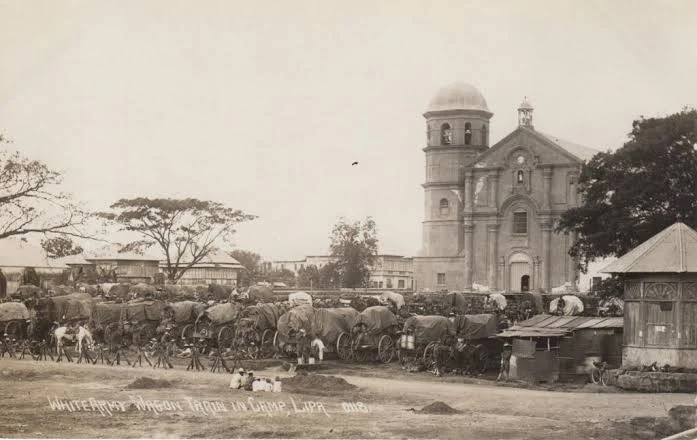
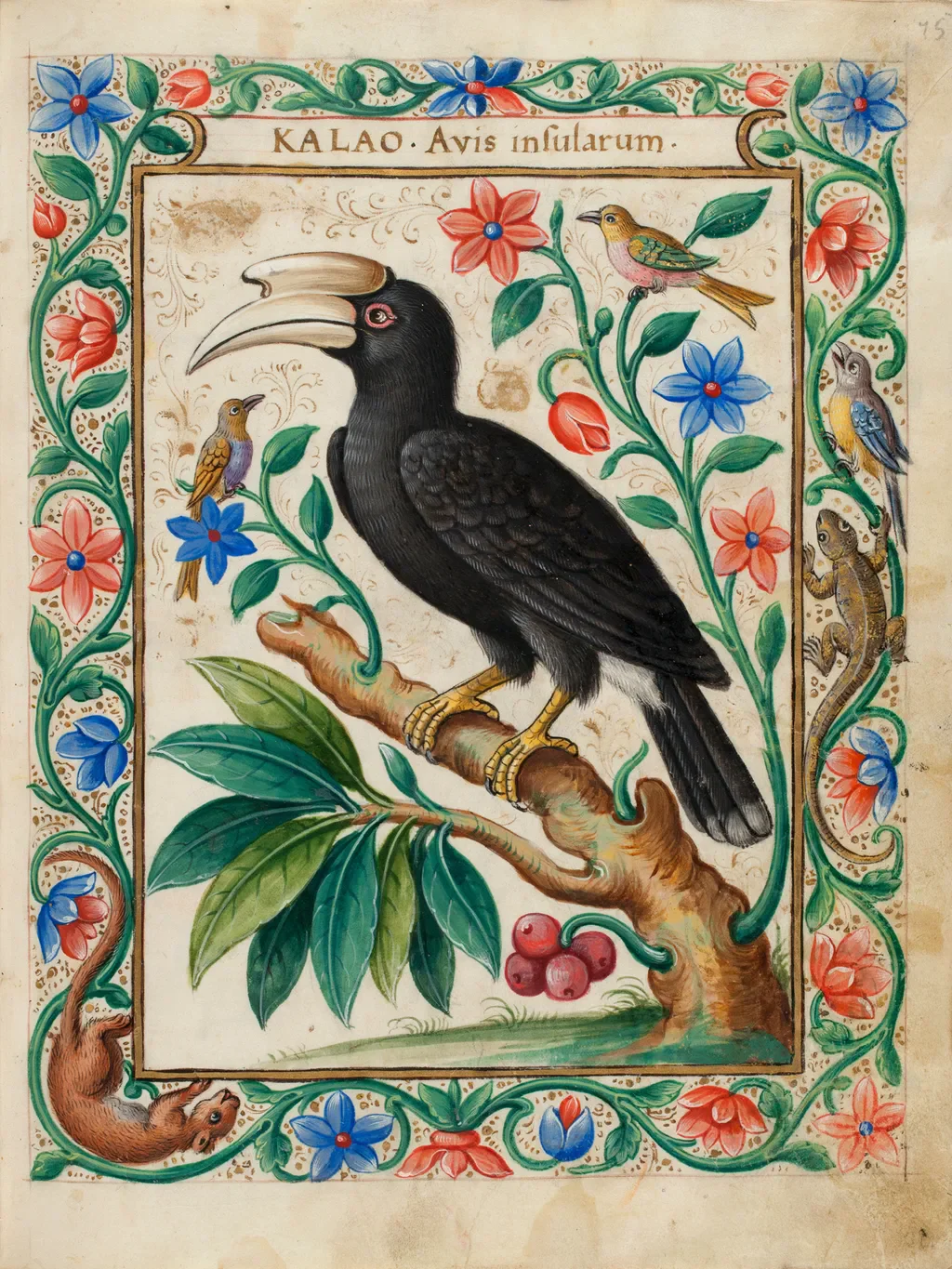
Maximo’s family was an old one and it stood among Lipa’s principalía, the propertied townsmen who held what local office the colony allowed and carried the courtesy of Don before their names. The name itself ran deeper than Lipa. A niece of Maximo’s, the painter and writer Purita Kalaw-Ledesma, set down in a 1994 memoir a Kalaw family lore that the earliest known of the line was a chief of Tondo in the late sixteenth century, put to death by the Spanish for leading a rebellion, and that the family had taken its name from the kalaw, the Philippine hornbill, in the Filipino custom of adopting bird names. The love of freedom, the niece wrote, ran in the Kalaw blood since way back. In the parish books of the Spanish century the family name was originally listed as Calao rather than Kalaw. Given that the Spanish language has no letter K, for as long as Spain kept the registers of the Philippines, the family could be nothing but Calao. The K, when it came, was not an American import but a Filipino one. From the 1880s, nationalist writers, Rizal among them, had urged Filipinos to spell their own languages with the K and W that Spanish lacked, and to set aside the C and Qu of the Spanish system. It was a reform with politics in it. The revolutionary Katipunan would put three K’s in its name, and Spanish loyalists dismissed the K as foreign and its users as disloyal. After 1898, with Spain gone and English the language of the schools, the reformed spelling spread, and Calao became Kalaw. The niece credited the change inside the family to Maximo’s father, Valerio, who had taken the spelling reform in hand personally.2
The earliest Calao included in this research is Maximo’s paternal grandfather, Ramón Calao; this story does not trace the line further to include the older Calaos who lived in the town. Ramón, and his wife Romana Inciong, both of Lipa, were the grandparents the priest set down on the page when the child was brought to be baptized.1
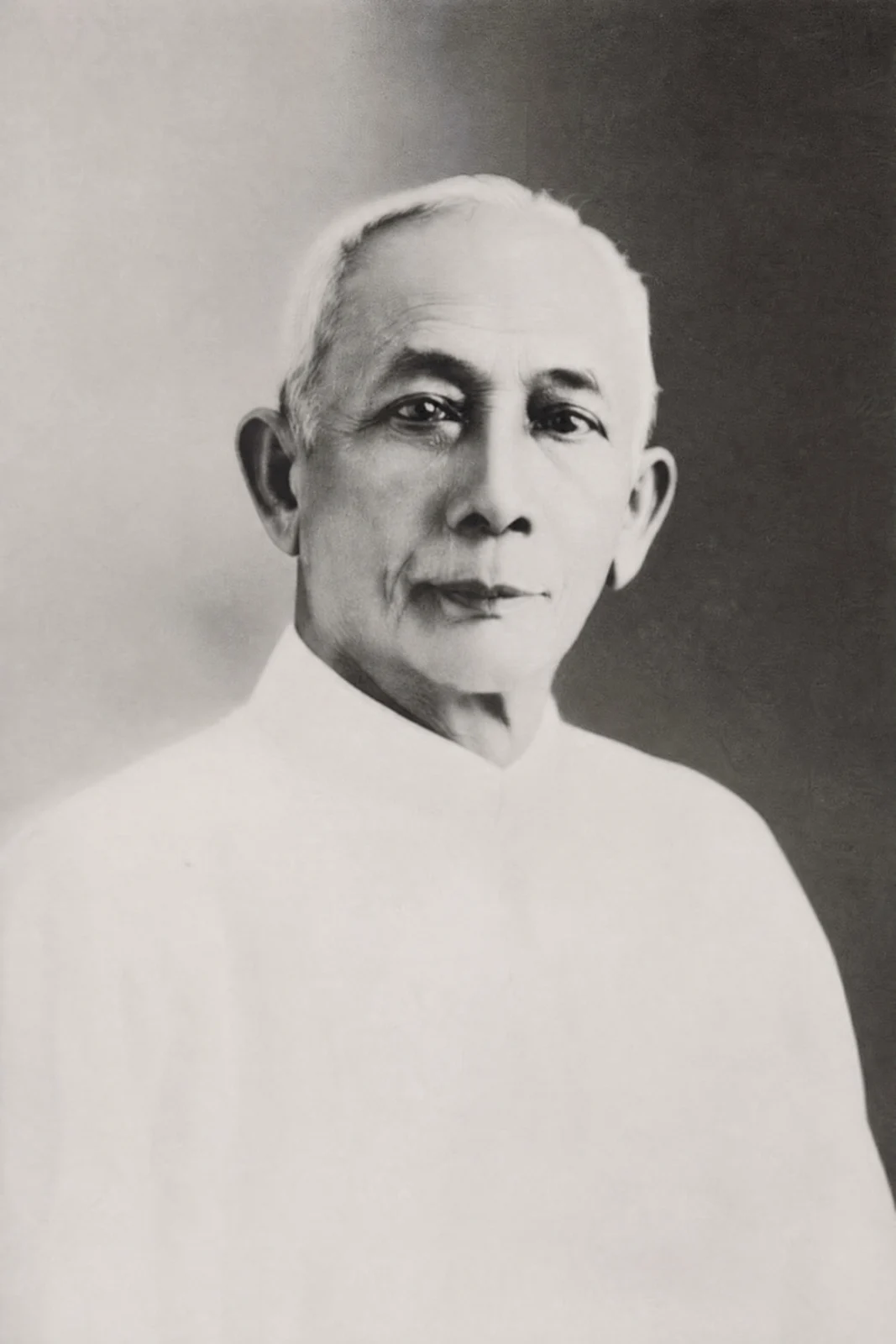
Their son Valerio, Maximo’s father, was born in Lipa in April 1858, and by 1891 had grown into a man of rising standing in the town. He had had little formal schooling. What he had instead, as the Manila papers would say of him at his death many years later, was a force of character that gave him a decisive influence in Lipa. The same niece who set down the family’s older stories described Valerio plainly. He was fair for a Filipino, with a high-bridged nose and soft wavy hair, having taken the coloring from his Inciong mother’s Chinese side, and he had sloping shoulders that became, in the next two generations, a distinctive mark of his descendants. He wrote poetry. He learned English in middle life by reading the Manila newspapers. He was counted, the niece wrote, among the liberals of his generation. Within a decade the Revolution would make him a soldier and the town would make him its chief. That part of his life belongs to the next chapter. In the spring of 1891 he was about to have another son.
Maximo’s mother was Maria Maralit Manguiat, daughter of Pedro Manguiat and Fabiana Maralit, and her household stood, by Purita Kalaw-Ledesma’s later estimation, a step above her husband’s. The Manguiats were the landed gentry of Lipa; the Kalaws were the lower middle class. Maria, the niece would write, married below her social standing.2 She brought property into the marriage. She had been sent to La Concordia College in Manila, where she had learned embroidery and the home arts; she spoke excellent Spanish and read what came out on Catholicism; on marrying into Lipa she joined the powerful society of the Sacred Heart there. She was very dark of complexion, slender, tall for a Filipina and a little round-shouldered, and she said little. Valerio and Maria had had children before Maximo: Emilio and Pedro, both of whom had died in infancy, and Teodoro, who was born in 1884. Teodoro, seven years old when Maximo was born, would grow up to write the first full Filipino history of the Revolution and direct the National Library. For most of the brothers’ lives he was the more famous of the two. Two sisters, Rosario and Manuela, would follow Maximo into the family. They would be called Charing and Lilay through the rest of their lives
Maximo was born on 10 May 1891. The next day he was brought to the parish church of San Sebastián de Lipa to be baptized. The parish priest was Fray Benito Baras, an Augustinian who had presided over Lipa since 1865; the rite itself was administered by an assisting presbyter under Baras’s license and entered in the parish register. The clerk wrote the child down as the son of Valerio Calao and Maria Manguiat, classed the family among the indios de esta villa, the term the Spanish state used for a native Filipino, and noted the household’s enrolment in barangay number 169, one of the clusters of families that formed the smallest unit of colonial administration, kept by its cabeza de barangay, Valentino Inciong.1
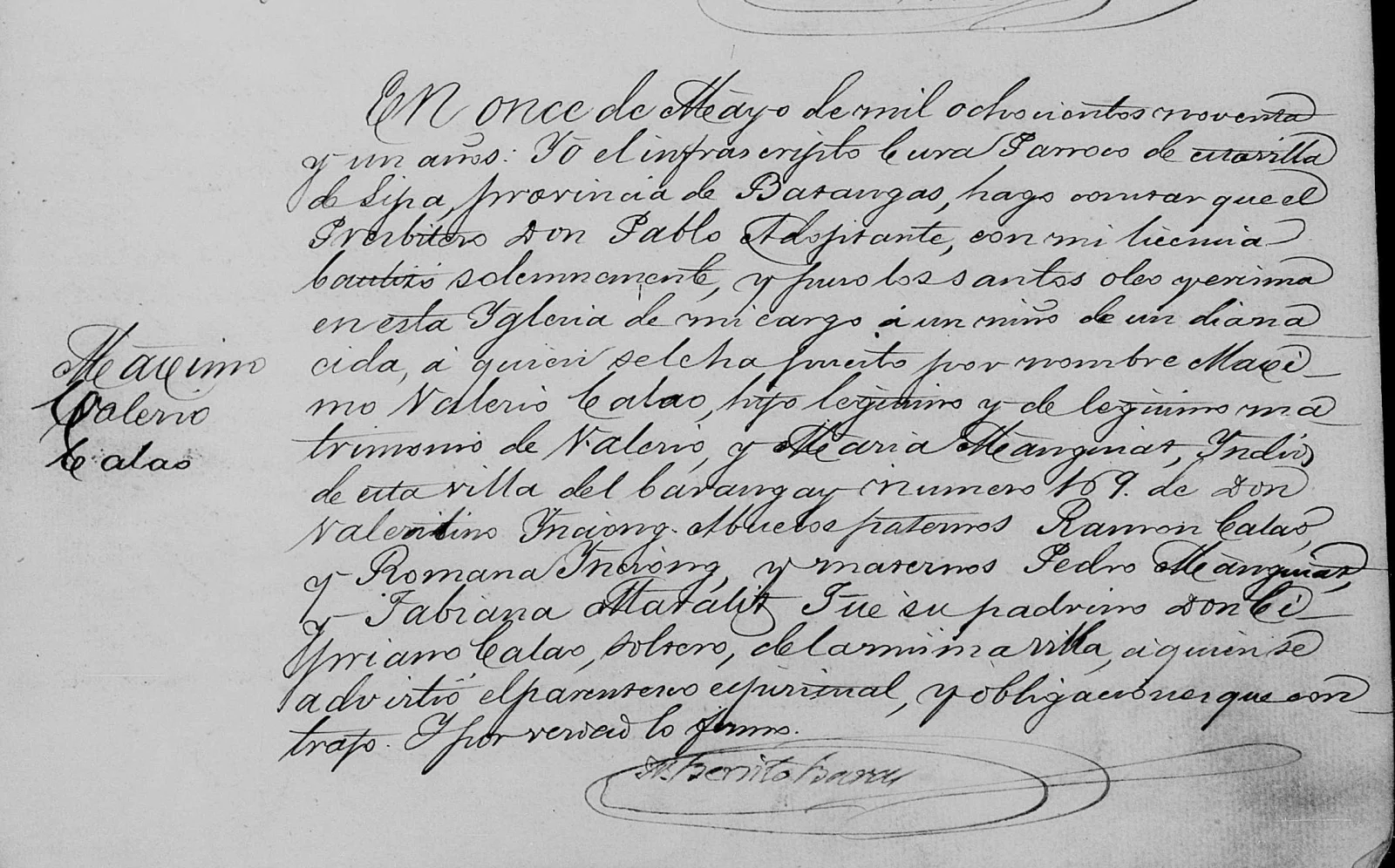
The name the clerk entered was Maximo Valerio Calao. There was no Manguiat in it; the maternal surname was added later, in the American years, and he became in print Maximo M. Kalaw. The Valerio was not a surname but his father’s given name, carried as a middle name as is common in the Philippines. And the surname was Calao. So it was written for the child, for his father, for his grandfather, and for the man who stood as his godfather, Don Cipriano Calao, a soltero, an unmarried man of the town.1
After 1898, Maximo and his family would come to adopt the spelling of the family name as Kalaw. Not everyone followed suit. Cipriano Calao, his godfather, was still signing himself Calao in a memoir he set down decades later, in the spelling of the old century. Maximo went the other way. It was as a Kalaw that he would henceforth sign every book he authored and name every child he fathered. The child baptized Calao in the church of a Spanish villa would spend his life writing, in English, under a name the Spanish alphabet could not have spelled.
A soldier of the Revolution
When the Spanish century came to a close, Maximo was seven years old. In 1898, the revolution that had two years earlier broken out against Spain swept into Batangas, and the towns of the province began to change hands. Valerio Kalaw was then the capitán municipal of Lipa, the head of the town’s government and the highest post the Spanish colony allowed a Filipino in his own town. The office made him, on paper, a servant of the colonial order. When the revolution reached Lipa, he turned against that colonial order. He joined the revolutionaries, was with them at the siege of Lipa, and was wounded there. A local history of Lipa would later credit him with the plan of the attack. The Manila papers, printing his obituary nearly forty years on, put it more simply: he had figured in the struggles of 1898 as a soldier of the Revolution.3
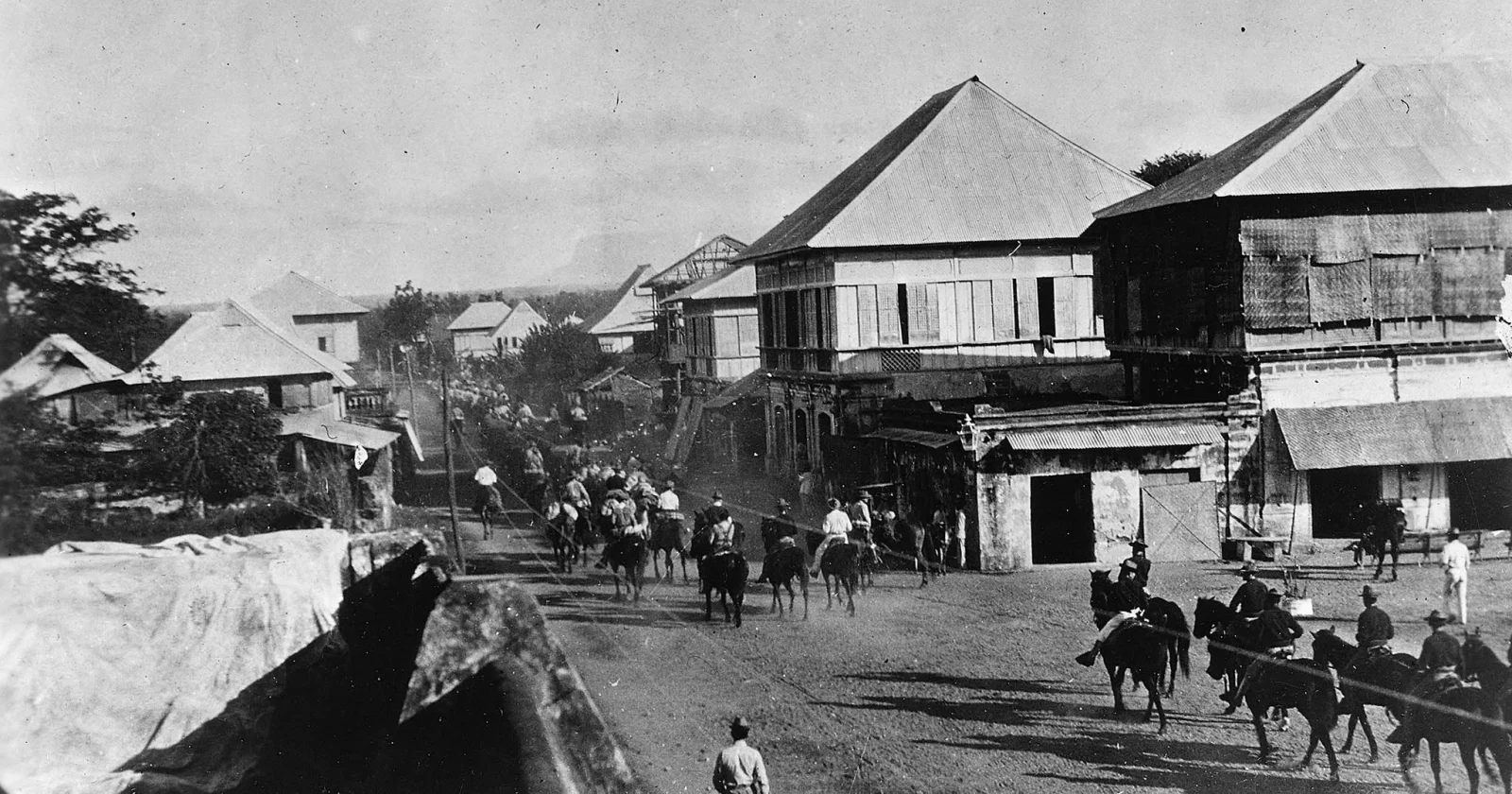
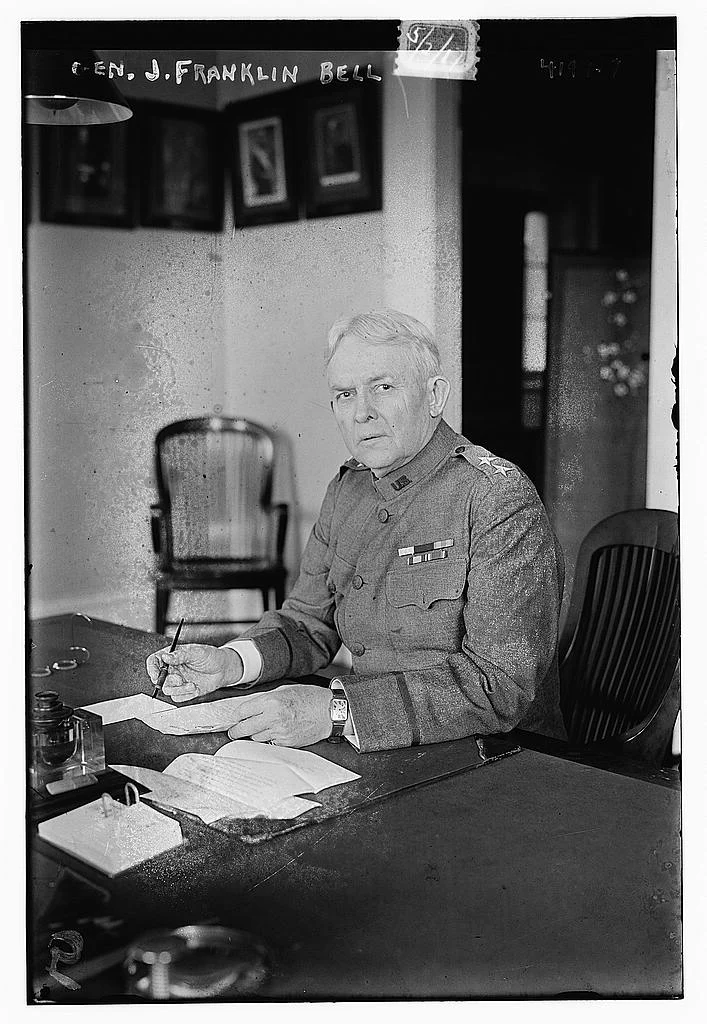
The revolution’s victory did not last a year. At the end of 1898 Spain signed the islands over to the United States, a new arrangement the Filipinos had no say in. Within months the young Filipino republic and the American army were at war. Batangas became one of the hardest fronts of that war. The province was guerrilla country, held for the resistance by General Miguel Malvar. Yet in the end the Americans would emerge victorious. Late in 1901, General J. Franklin Bell took command of the province and ordered its people into zones controlled by the US army under a policy called reconcentration. Outside the zones, crops were burned and the livestock killed so that the populace, and effectively the guerrillas among them would have nothing to live on. Inside these zones, thousands died of disease and hunger. Upon Malvar’s surrender in April 1902, the war was effectively over. As this period of warfare and resistance came to a close, Maximo would be a young boy of ten in Lipa, one of the garrisoned towns.
Valerio came through the wars with a reputation that outlived him. In the first days of the war against the Americans, when their soldiers fell into Filipino hands as prisoners, he treated them with a generosity his town would not forget. When the fighting stopped, he did not hold himself apart from the new order. He worked, as the obituary writers would put it at his death, as few men did for the pacification of the country, convinced that this was the way toward progress and liberty. The conviction carried him into office under the American flag: Lipa made him its first municipal president in 1903, and in time, its chief of police. The soldier of 1898 had become the keeper of the town’s peace, a man who never lost a reformer’s concern for the poor and the young of the province.3
The household around Maximo shifted over time through his childhood. His mother, Maria Maralit Manguiat, died, and Valerio would remarry. His second wife, Emilia Torre Manguiat, was already family. She was the daughter of Maria’s brother Mateo, which made Valerio’s new wife a niece of his first. This meant that the woman who now ran the household was a first cousin of the children she was raising.4 In time, Emilia bore Valerio seven more children. Maximo grew up a son of the first marriage in a large and blended family, half-brothers and half-sisters around him and a stepmother in his mother’s place.
By the time Maximo was old enough for serious schooling his brother Teodoro had already left Lipa. Seven years older, Teodoro was already making a name in the nationalist press, the first of the Kalaws to carry the family name out of the province and into the public life of the islands. Maximo would follow the same road, albeit more slowly. He went to elementary school in Lipa, and then went to Batangas High School, a public secondary school of the kind the Americans were opening up across the country. The Spanish colonizers had given Filipinos little to and almost no public schooling; the Americans built schools in which English was taught. For a provincial boy, as clever as Maximo was, this offered a new ladder towards advancement. Valerio, with little schooling of his own, was raising sons who would have a great deal of it, and who would carry the name across the islands while their father remained the best-known Kalaw in Lipa itself. By the time Maximo had completed his schooling at Batangas High School he was ready, as Teodoro had been before him, to leave Lipa for Manila. The provincial Batangas tradition placed that move squarely on the older brother’s shoulders. Teodoro, now in steady work of his own, sent for the younger one and paid for his education in the capital. The debt would be honored forward as well as back. Years later, when his own turn came, Maximo—Tio Memong, as the next generation of the family came to call him—would send for his two younger sisters Charing and Lilay and put them through the Centro Escolar de Señoritas. The whole of the Kalaw household, sons and daughters alike, would be educated by the next sibling up.2
The College Folio
In 1908, Maximo moved to Manila. He spent a year at the Manila Normal School, the American government’s college for training teachers, and then entered the University of the Philippines. The university was nearly as new as he was to it: the Philippine Legislature had founded it only in 1908, a national university built on the American model, public and secular. Maximo joined one of its earliest classes in the College of Liberal Arts. For a bright boy out of a Batangas town this was the top of the ladder the American schools had built, and he had climbed it quickly.
The university opened onto a particular world. In entering it Maximo was joining the ilustrados, the educated Filipinos, the thin strata of the literate class that in the Spanish era had produced the propagandists and much of the leadership of the Revolution. Under the Americans that class was no longer as thin. The public schools and the new university were enlarging it year by year, and Maximo belonged to the enlarged generation. He rose in it quickly. In his second year at the university he was made editor-in-chief of The College Folio, its student magazine. In the Manila of 1910, to head a student paper was no small feat. It was where young Filipinos learned to write for a public and to argue in print, much as the propagandists had taught themselves to do a generation before, and Maximo’s work on the Folio was good enough to be noticed beyond the campus.
The October 1911 issue of The College Folio carried an essay by its editor. It is the earliest piece of his writing on record, and one which reveals a voice of his own. The essay was titled “The Filipino Student: His Unique Position,” and he was twenty when he wrote it. His argument was that his own generation of students stood at a moment in time that would not come again. They had watched, he wrote, the breaking down of the medieval barriers that had long shut their country off from the world, and felt the entrance of modern thought; and it would fall to the rising generation, not to the old, to make something of it. He wrote about smaller things too such as the want of decent dormitories for Manila’s students, the gravity of the Filipino student beside the noisier American. But the line that stood out most was his verdict on the legacy of the American period. The greatest contribution of American civilization, he wrote, was not its sport or its manners but “the acquisition of American ideas of life, society, and government.”5 The student who wrote that line would eventually devote much of his working life to the latter.
He did not stay to edit another issue. His work, within weeks of being written, had drawn attention well beyond the university. Manuel L. Quezon, then resident commissioner of the Philippines and the islands’ delegate to the United States Congress, was returning to Washington and wanted a private secretary. He chose the twenty-year-old editor of The College Folio. A Manila newspaper, announcing the departure, introduced Maximo in two ways at once: as the brother of Assemblyman Teodoro Kalaw and as one of the most brilliant students ever enrolled in the schools of the Philippines. The first description he had inherited. The second the capital’s press had awarded him while his university course was still unfinished. On 29 October 1911 he sailed from Manila with Quezon, by way of Hong Kong, bound for the United States.6 The newspapers said he would be gone four years. He would be gone nearly five.
Five years for independence
At the end of 1911, Maximo arrived in Washington alongside his employer, Manuel L. Quezon, the resident commissioner of the Philippines. Quezon was the islands’ representative in the United States Congress, a man who could speak but not vote. He had a voice without a ballot, yet he used it to press the United States for a single thing, a firm promise that the Philippines would one day be independent. Maximo was his private secretary, who also helped run The Filipino People, the journal the independence movement published in Washington to argue its case to Americans. This was the work of the lobby. For five years, by his mentor’s own later account, Maximo Kalaw was in the thick of it.
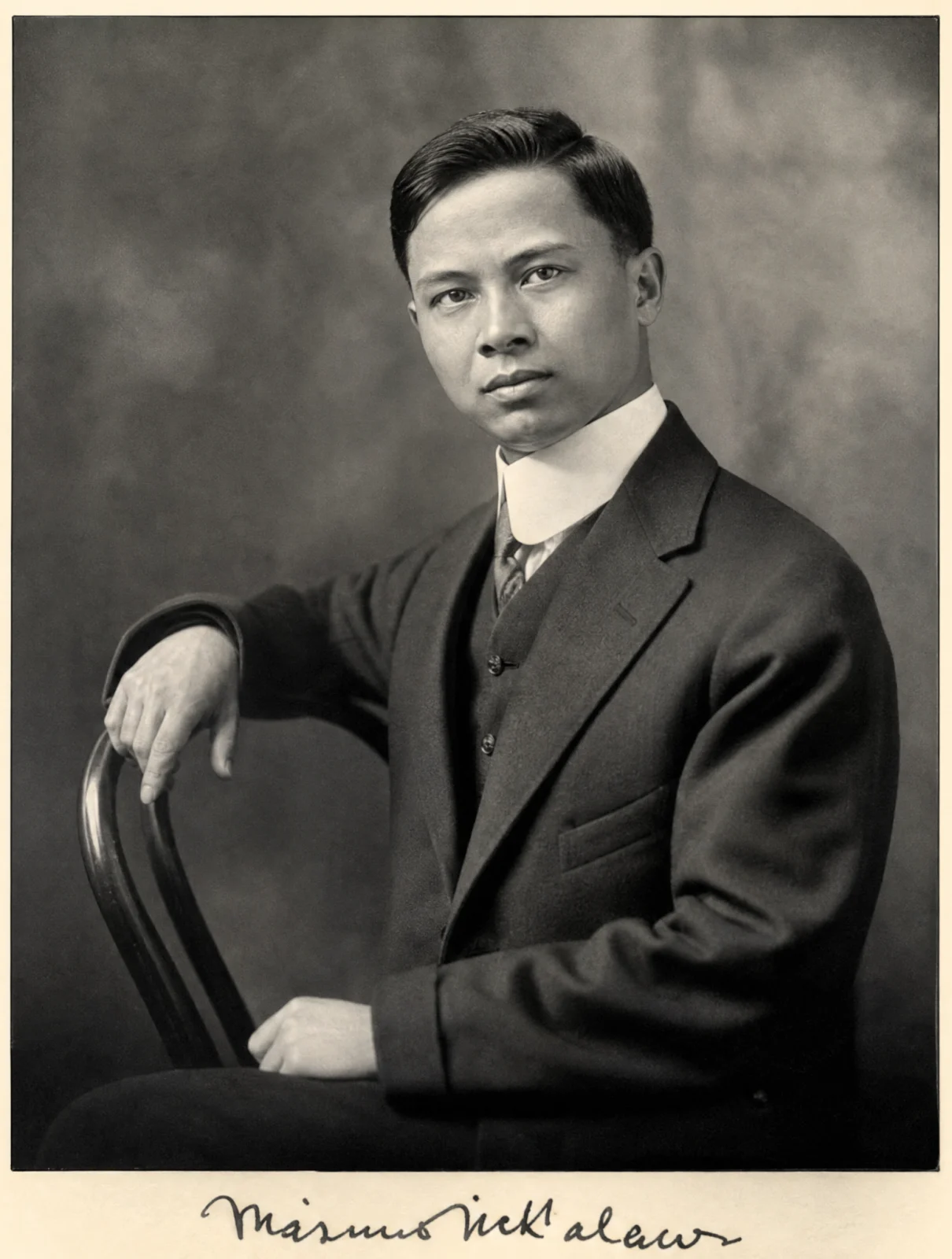
Apart from serving as Quezon’s secretary, Maximo was also a student. He took a law degree at Georgetown, conferred in 1914, and a bachelor’s degree at the George Washington University, in 1916.7 That same year, George Washington gave him its Davis Prize for oratory.7 He became an advocate in his own right. In October 1912, about twenty-one years old, he was asked to give the keynote at the Lake Mohonk Conference of Friends of the Indian and Other Dependent Peoples, the annual New York gathering that debated the future of the world’s dependent peoples. The vice president of the United States, James S. Sherman, was in the chair. Maximo’s address, “The Filipino Youth and the Independence of the Philippines,” gave the conference twenty-five minutes of an argument he would carry for the next forty years. American teachers had told themselves that an education in English would moderate Filipino nationalism. They were wrong. “The more you educate a people,” the young man told the room, “the greater will be their desire to be free from foreign control.”8 The language of Jefferson and Burke and Byron and Emmet had not, by being taught to Filipinos, become the language of acquiescence. It had become the language by which Filipinos would speak their own liberty back to its authors. The Boston Transcript, a paper with no love for Philippine independence, reported that he had given an oration rather than a speech, “of such force and beauty of expression as has seldom fallen upon the ears of a Mohonk audience,” and allowed that if the islands could furnish such men to plead for them, “the day of their liberty is not far distant.” He had his place, too, in the small Filipino world of the capital. At the Filipino Club of Washington’s Rizal Day at the end of 1912, he stood on the program among the Filipino students of Georgetown and George Washington, beside Alfredo Hidalgo Rizal, a nephew of Dr. Jose Rizal, and a young man named Vicente Podico Lim, eighteen months from becoming the first Filipino to graduate from the United States Military Academy at West Point.9
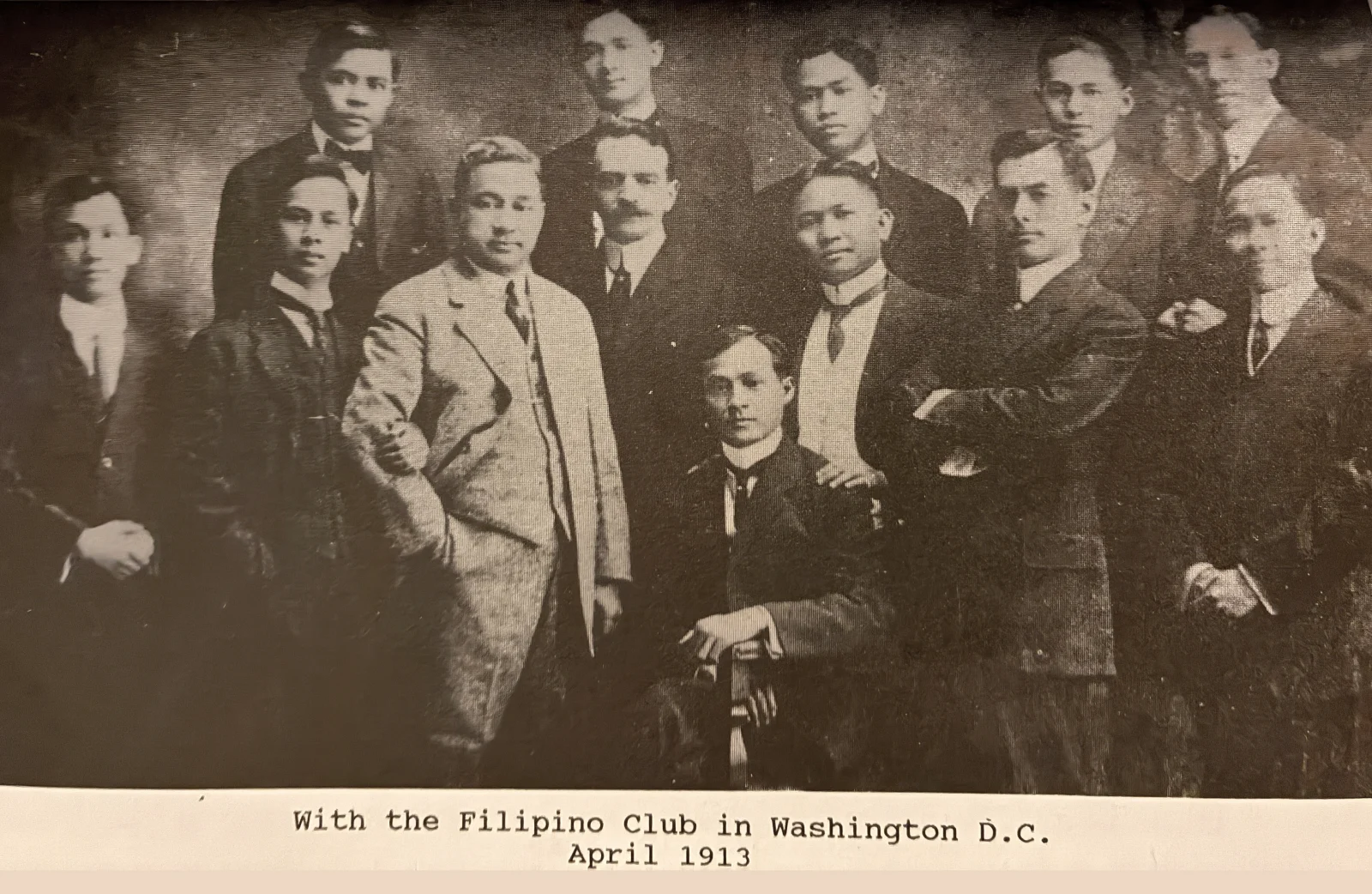
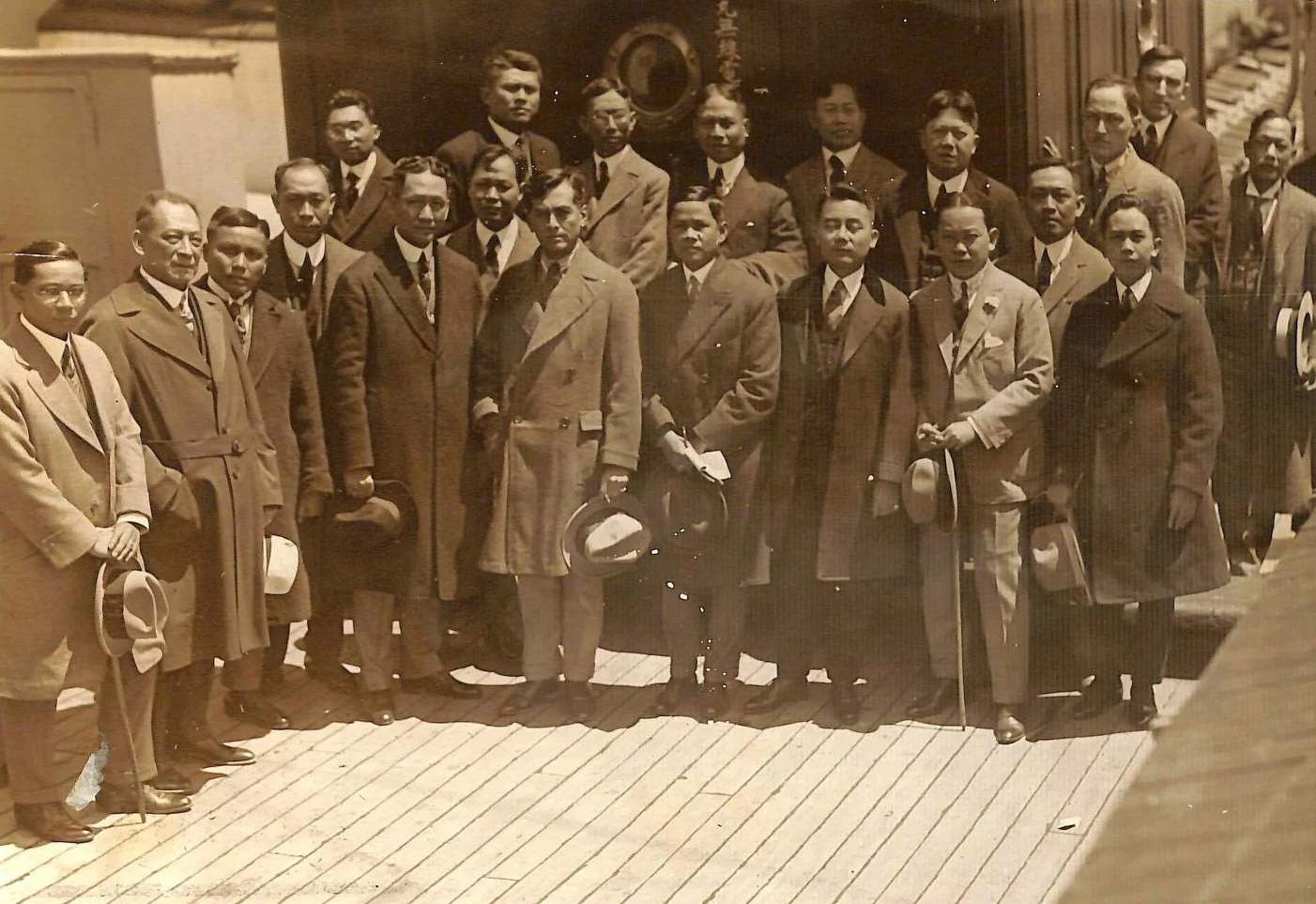
Front row: Eliseo Panopio (Secretary, B. Com.), Maximo M. Kalaw, Hon. Manuel Earnshaw (Resident Commissioner, P.I.), Hon. Antonio Opisso (Attorney at Law), Manuel Lopez, Hon. Manuel L. Quezon (Resident Commissioner, P.I.) and Jose P. Dans.
Seated (center): Gabriel La O, President.
In the summer of 1915, Maximo came home to the Philippines on a visit. On 25 July, he was in Batangas, his own province, for the unveiling of a monument to Apolinario Mabini. Mabini, the paralytic statesman revered as the brains of the first Philippine Republic, was a son of Batangas, and the Americans had deported him to Guam after the war; the monument was the province’s homage to him. The platform that day held the front rank of the nationalist movement: Speaker Sergio Osmeña, Quezon, the old revolutionary diplomat Felipe Agoncillo. Quezon spoke in Tagalog. Maximo, speaking for the younger generation, spoke in English. He likened Mabini’s deportation to Napoleon’s exile to Saint Helena: the captive on the deck of the ship that bore him away, watching the shore of his country slip under the mist, his will unbroken. So far as the record shows, it was the first public political speech he ever gave, and he was twenty-four.10 The boy the Manila papers had crowned in 1911 was making good on the notice.
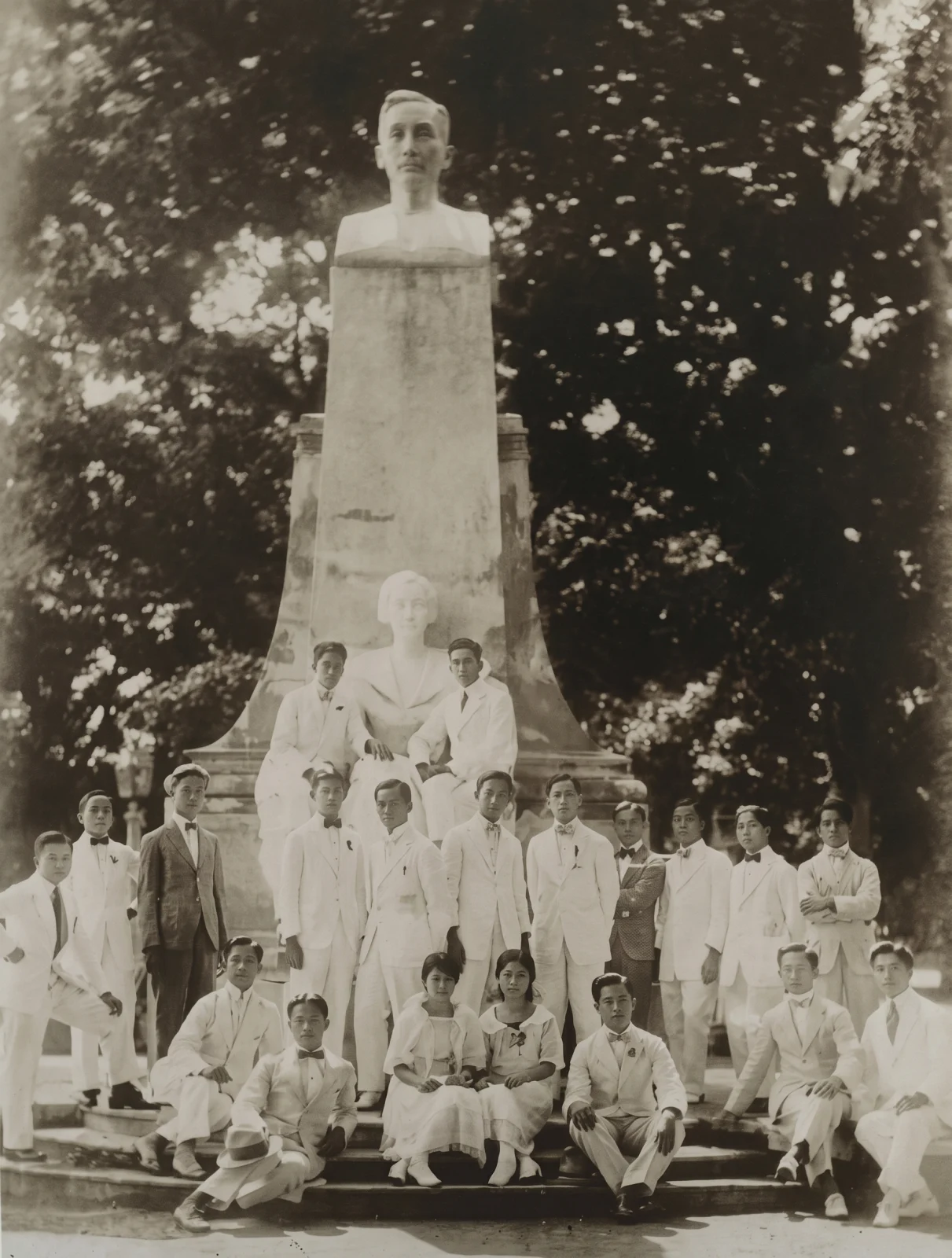
Maximo came home for good in the middle of 1916. Quezon sailed from Vancouver for Manila in July, and his private secretary, who had handled the arrangements, traveled with him.11 Maximo had been away four years and eight months, and he came back a man entirely different from the student who had left: he had two American degrees, one of them in law, five years inside the independence campaign, and, newly in print, a first book. He had called it The Case for the Filipinos, and Quezon had written its introduction.12
The campaign for independence would at last bear fruit that summer. In August 1916, the United States Congress passed the Jones Act. The law gave the Philippines an elected legislature of its own, and for the first time it declared that the United States intended the islands to become independent, once they had shown they could keep a stable government. It was not independence. It was independence promised, written into American law, the thing Quezon’s office had worked those years to win. Maximo came home into a country that had just been told, in writing and for the first time, that it would one day be free.
Marieta of Molo
Back in Manila, Maximo returned to the University of the Philippines, this time as a teacher. The national university was young, not yet a decade old, and still building its faculty, much of which was American. A Filipino lately home from the United States, holding two American degrees and carrying five years inside the practice of government, was a man it had every reason to want. The university placed Maximo on the faculty of its Department of Political Science, a department itself only a year or two old and very small. Its catalogue named two men: George Malcolm, the American who headed it, and Mr. Kalaw, who taught the junior courses alone and the senior ones at Malcolm’s side.
The arrangement did not last long. In 1917, Malcolm was appointed to the Supreme Court of the Philippines, and Maximo, twenty-six years old, took his place at the head of the department. He was the first Filipino to hold this post. Political science in the Philippines was a discipline barely begun, and from that year onward the building of it would be, more than any other man’s, his work.13
In the spring of 1918, Maximo married Maria Rosario Lopez Tejico. Called Marieta in her family, she was born in Molo, Iloilo, in 1898, the eldest child of Cipriano Tejico and Concepción Lopez. Her people were of the Iloilo principalía, with the Don and Doña titles on the older generation to show it. Iloilo lay far south of Batangas, in a different island group and a different world of the colony. How a man from Lipa and a woman from Molo had come to marry the record does not say. Nevertheless, they were married on 18 April 1918 in the Santa Ana church at Molo, where Marieta had been baptized twenty years before.14 Filipino custom dictated that the wedding be held in the bride’s home parish.
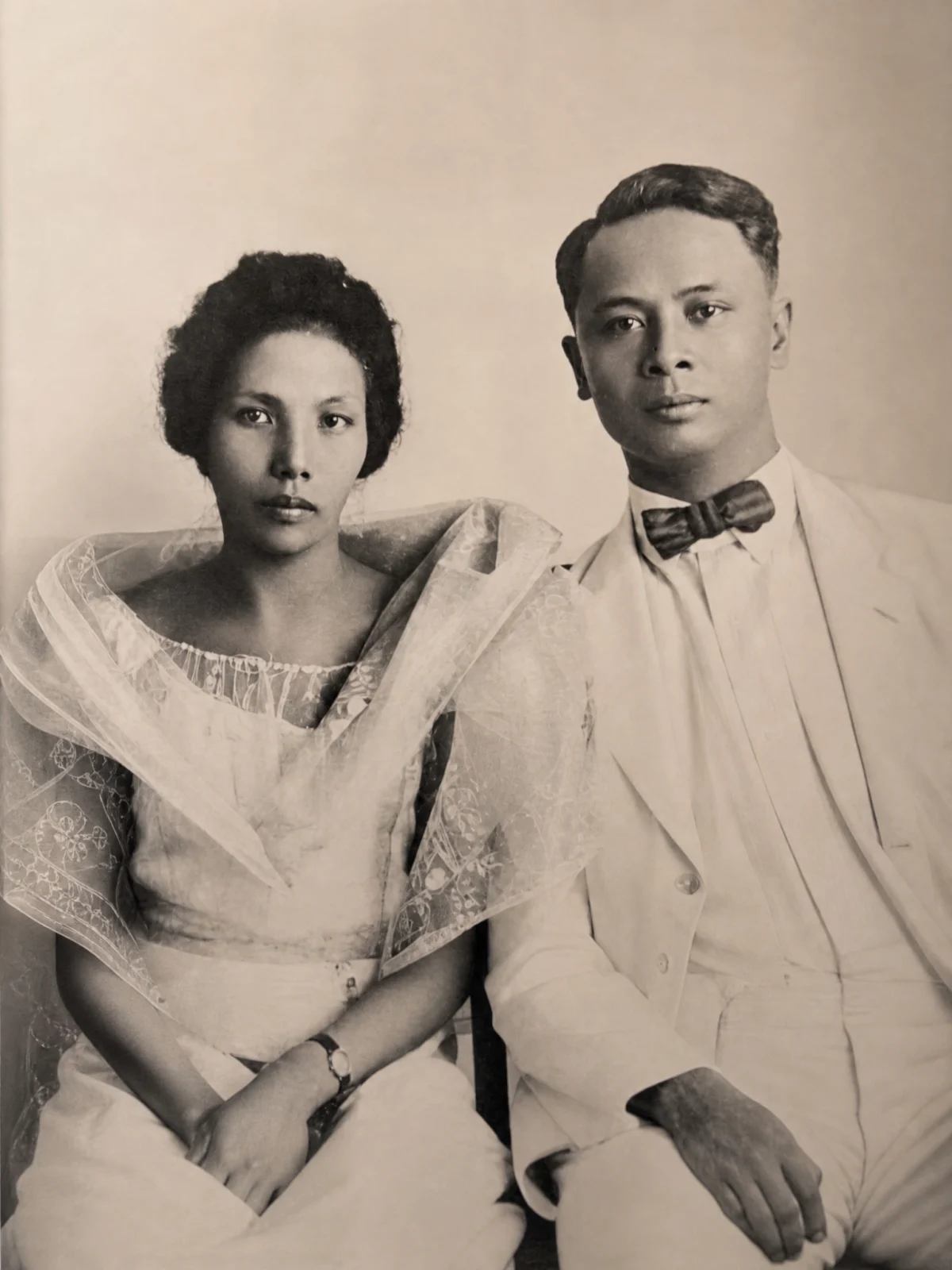
Marieta was not going to stand quietly at the edge of her husband’s life. Throughout their marriage, through the 1920s and the 1930s, it was her name as often as his listed on family property: land in Mindoro held in her own name, a mining venture in which her share was the largest of any partner’s, deeds she signed for herself. And when the war came, and Maximo gave its last year to the resistance, the danger of that choice fell just as heavily on Marieta and the children as it did on him. The marriage made at Molo gave Maximo more than a wife. It gave him a partner with property and a will of her own. In time, the family would have need of both.
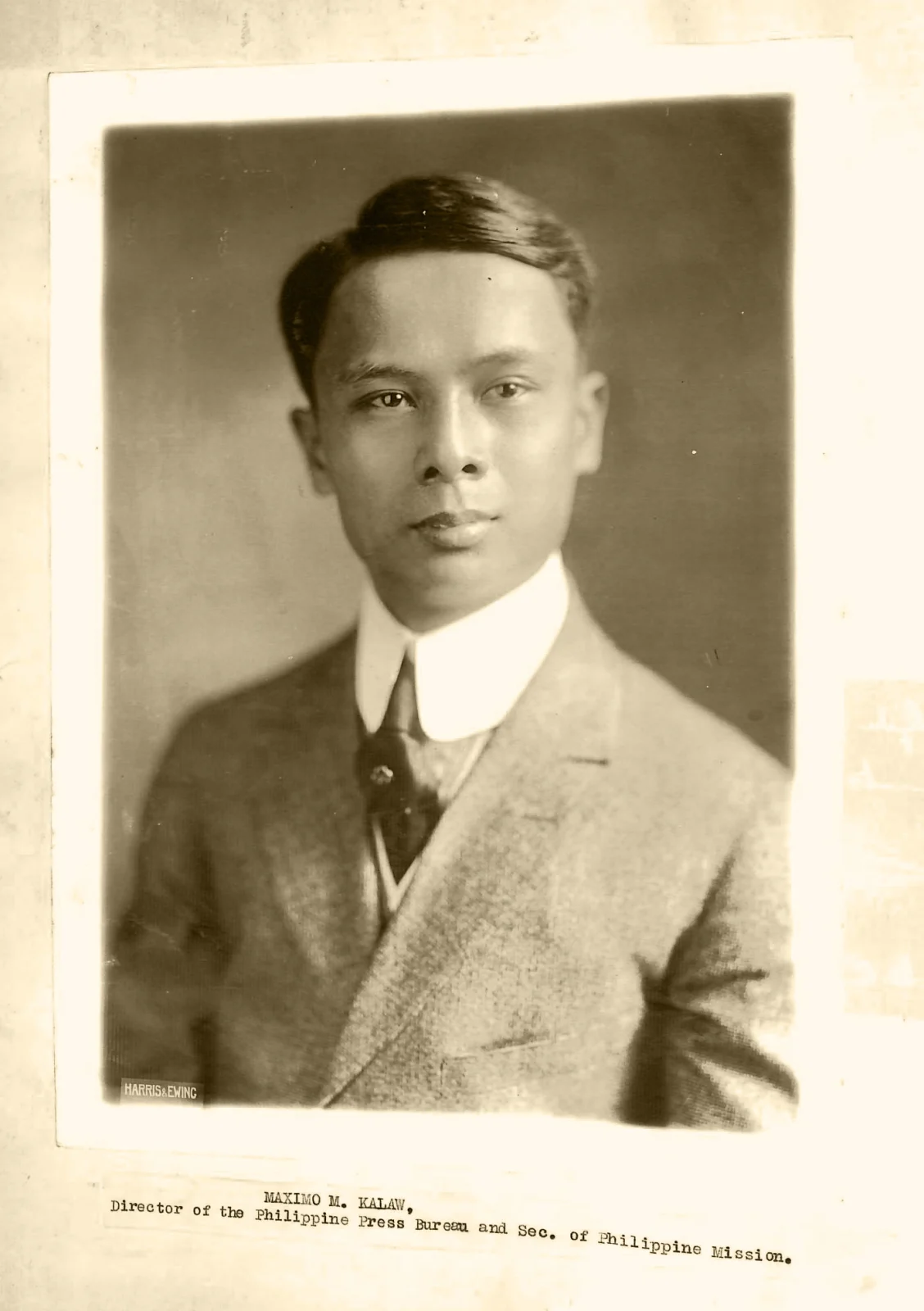
He had been three years at the university when the independence movement called him back to Washington. In 1919, the Philippine Legislature sent a large mission to the United States to press once more for independence, and Maximo went as its secretary. This role expanded almost at once. When the rest of the mission sailed home in the middle of the year, Quezon kept Maximo in Washington to run its publicity office and gave him the work of putting the Philippine case before the American press, the Congress, and the public in a steady campaign of print and argument. He testified before a committee of the United States Congress. He went out to Iowa to speak at the state university there, in the home state of the congressman who chaired the House committee that handled Philippine affairs. He had traveled to Washington as a secretary and emerged as the mission’s voice in America.15
What that voice sounded like survives in the papers of the time. In May 1919, under the byline “Secretary of the Philippine Mission,” Maximo placed an article called “Facts and Fancies About the Philippines,” and it ran far from the centers of power, in The Producers News, a farmer-labor weekly in Plentywood, Montana, about as far from the Washington commission offices as an American paper could be. That was the reach the publicity office was built for. The piece opened not with statistics but with a joke. A lady at the St. Louis Exposition, Maximo wrote, had taken a brown-complexioned man in faultless evening dress for a Japanese, then a Chinese, and on being told he was a Filipino had said she thought they were “all savages living in the woods.” The man played it straight, spinning her a tale that the American governor had caught him a month earlier “living in the woods,” trained him to dress and speak a little English, and shipped him over, “so here I am, just as you see.” And the St. Louis lady, Maximo finished, “actually believed him.” The joke had a target his readers would have caught: that same St. Louis Exposition, the world’s fair of 1904, had put Igorot villagers from the Philippine highlands on display in a live ethnological exhibit, so the picture of the Filipino as a savage was in part an American manufacture. Having disarmed the reader with the joke, Maximo spent the rest of the column taking it apart with figures, a literate, Christian, land-owning people three centuries old, fit, as he had always argued, to govern themselves.66
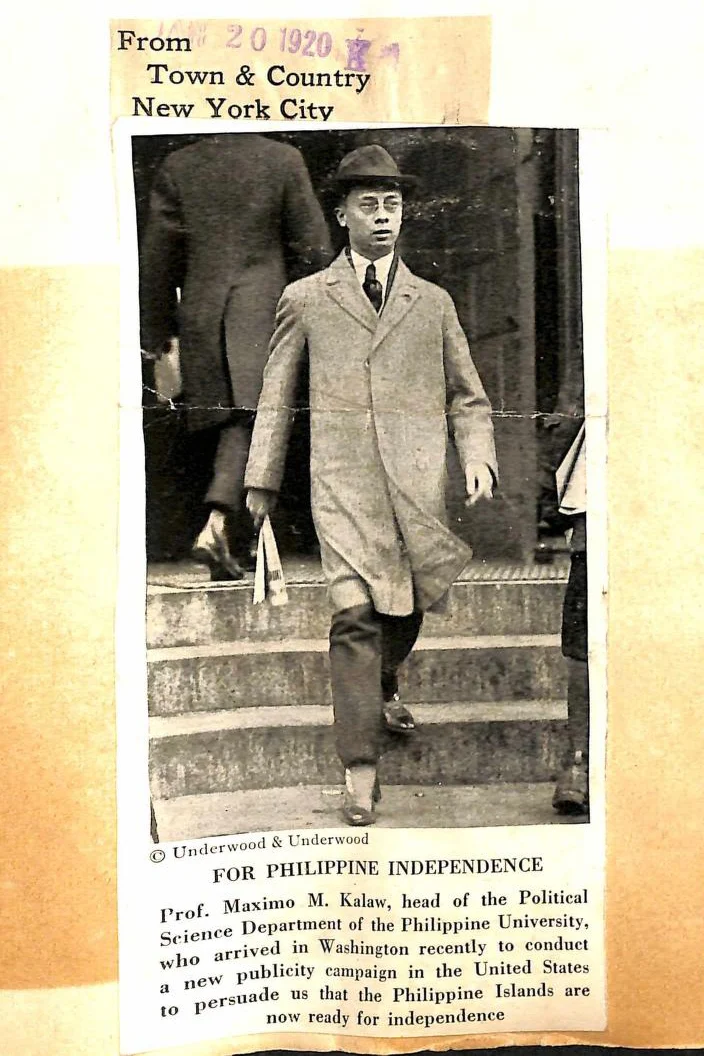
Manila would attempt to identify his party affiliations. He had been Quezon’s private secretary and had just come home from the independence mission; the newspapers filed him, naturally enough, as a Nacionalista and a Quezon man. Maximo refused the label. In the summer of 1919, and again in a signed letter to a Manila paper later that year, he stated plainly that he belonged to no political party and was no one’s emissary.16 He was a professor, he said, and what he owed he owed to the university and to the country, not to a faction. He made the same argument at greater length the next year, in an essay on the place of the university in the public life of the nation. For a man who had come up under Quezon it was not an easy thing to say, and he said it more than once, in print, under his own name.
In 1922, the Legislature sent him across the Pacific again, this time as a technical adviser to the Philippine Parliamentary Mission, the follow-up independence delegation that Quezon and Speaker Osmeña carried to Washington that summer in answer to the Wood-Forbes report that had lately judged the islands unfit to govern themselves. Like the mission of 1919 before it, it came home with nothing.69
Through all of this, the political science department would continue to grow as a fruit of his efforts. He was an inventive teacher. As early as 1917, he had the students of the College of Liberal Arts organize a junior house of representatives, a working model of the Philippine legislature, so that young men who might one day govern the country would learn first hand, of the practice of parliamentary law.17 The department filled out under him. The two-man faculty of 1916 was, by the early 1920s, a department of seven with its course list more than doubled. Among the teachers he gathered into it was a young scholar named Jose P. Laurel, who would years later rise to assume the post of president of the Japanese-sponsored Second Philippine Republic. In 1923, Maximo crossed to the United States once more, as an exchange professor at the University of Michigan, and in 1924, Michigan made him a doctor of political science.13 Thirteen years after leaving Manila with an unfinished undergraduate degree, he came home in 1924 with a doctorate, the head of a department he had largely built. Political science in the Philippines had become a discipline, and it had become one in large part through his efforts. His son Hadji would put the distinction plainly: his father, he said, was “the first Filipino Ph.D. in political science.”67
The dean and his adversaries
By the mid-1920s, Maximo held two posts at the University of the Philippines. He was still head of the department of political science. He was also dean of the College of Liberal Arts, the larger college within which that department sat. He would hold the deanship until he left the university in 1935. The post put him among the most visible men on the campus, and a visible man who liked an argument as much as Maximo did was certain to collect adversaries. The years of the deanship were the years he collected them.
The first adversary was the Church. On 21 September 1924, Maximo’s Liberal Arts students gave a banquet in his honor at the Hotel de Francia in Manila. That evening his speech tackled the subject of the two universities of the Philippines, the old and the new. The University of Santo Tomas had been founded in Manila by the Dominican order in 1611. It was three centuries old, Catholic, and the university of the Spanish colonial world. The University of the Philippines was sixteen years old, secular, and a creation of the American administration. Maximo set the one against the other, and to the older one’s disadvantage. The speech survives only as his Catholic critics afterward rendered it, so its words are theirs and not quite his; but the substance was a sustained and pointed comparison. Sixteen years of the new university, he was reported to have said, had outdone three centuries of the old. At the University of the Philippines, faith had been “definitively banished,” and nothing guided the work but evidence and proof. At Santo Tomas, the authority of the medieval doctors still reigned, and a question was closed because a master had once settled it.
Three and a half weeks later, a reply arrived from Cebu. A Catholic weekly there, El Boletín Católico, printed a long rebuttal under the title “Eloquence of Words and Eloquence of Facts.” Its writer charged the state university with a purely negative achievement, the tearing-down of belief, and named it the chief fortress of rationalism in the islands. He defended Santo Tomas by its graduates, the magistrates and jurists and bishops and officials who filled the archipelago. He turned Maximo’s own patrons against him, quoting both Quezon and Osmeña, who had each praised the Dominican university in public, Quezon while testifying before the United States Congress. Mr. Kalaw, the writer concluded, might have earned long applause from the students who heard him; before the reflective and impartial public he had lost a good deal of ground.18 It was the first time the Catholic press had taken Maximo for a target and it would not be the last. Maximo, by placing himself roundly on one side of a lively, intellectual debate pitting the role of the secular versus the religious in academic life, had also set himself in their line of sight.
A different register of Maximo survived in a different archive entirely. Pranciškus Baltrus Šivickis, a Lithuanian zoologist who had taken a Chicago doctorate in 1922 and come to the University of the Philippines in 1923, served on Maximo’s faculty through the years of the deanship; he was the dean’s colleague and friend. Šivickis kept in his Lithuanian papers an anecdote Maximo had told him sometime in those UP years, about an early-marriage evening at the club, set down in Maximo’s own voice. It surfaced almost a century later when a Kaunas daily wrote up the Šivickis archive in 2020.19 The wife in the story is Marieta, Maximo calling her by what was evidently his pet name for her, Consuelo—the Spanish word for comfort, or consolation:
My wife and I were not long married. It must have been the second year of our life together. In the evenings I usually stayed home to write or to work at something, but now and then I would slip out alone to have dinner with old friends. When I came home late my wife did not always welcome me warmly, and when I was very late there would be anger, and there would be tears.
One night I met some of my old friends at a club. Word after word, glass after glass, another round of billiards, and before I knew it, it was striking three. Realising how late it had grown I hurried home.
Walking, I began to think what my wife would say to me this time. She would certainly not praise me for it. I had never come home this late before; even much smaller delays had always brought a great deal of trouble, and tonight I was sure to be in for it. I walked and I thought. Was it not better, perhaps, to deploy a little diplomacy than to face a quarrel?
I came up to the house. The light was still burning. So my wife was not yet in bed. Should I go in or should I not? Better to go in. I went in, and sure enough she was sitting at the table waiting for me. She could hardly keep her seat for anger. Here, I thought, comes the storm. But before she could begin to question me, I spoke first:
“Forgive me, my dear Consuelo (that is my wife’s name), I have stayed out a little later than usual today. On my way home from work I stopped at the club. I had some small errands there. I dispatched those errands quickly and was just leaving when our friend Pedro arrived at the door. As you know, he has recently married a young wife. He boasted to me at once that his wife was the more beautiful of the two. I was offended. We began to argue. We argued and made up, argued and made up. He praised his, I praised mine, until at last he publicly admitted that mine was the more beautiful after all. We said good night, I came straight home, and he stayed on at the club.”
My wife began to laugh. She came over and kissed me and asked me to sit down to dinner, or perhaps it was breakfast by then. The whole affair ended far better than I had any right to expect. But for a long time afterwards I lived in fear that she would meet Pedro somewhere before I had had the chance to meet him myself.
And did they meet? we asked him.
No, he replied. The whole week before, you see, he had been away in America.
Not every adversary was one he chose. In October 1927 a Manila court tried a self-styled clairvoyant named Valentín Daluz for swindling Maximo’s mother-in-law. Marieta’s mother, Concepción Lopez, was by then a widow living in Pasay, and Daluz had worked on her for months: he foretold disasters for her family, then offered to avert them if she gave up her money to be burned and scattered its ashes about her house. She had handed him several thousand pesos at a time. Brought before the judge, Daluz was unrepentant. He went on prophesying even from the courtroom: Dean Kalaw, he announced, would die a sudden death, and one of Maximo’s sisters-in-law would go to prison for murder, and both could still escape these fates if only they prayed and gave up their money. The prophecies came to nothing; Daluz was a fraud. But they had put the dean’s name, and a fortune-teller’s curse, in the Manila papers, which is its own small measure of how well-known he had become.20
There were lighter glimpses into Maximo’s life. In the spring of 1929, he went hiking on Polillo, a forested island in the Pacific off the eastern coast of Luzon, and at the end of a day’s walking he hurt himself in a fall while he stood watching the sunset over a landlocked bay. A day or two later he was back in Manila, telling the story to friends and still limping. One of them was Conrado Benitez, a fellow dean and a friend, who put it in his newspaper column. Maximo had got so much pleasure out of the trip, Benitez wrote, that he meant to write something on the joys of camping in spite of his bruises. He was nearing thirty-eight, a decade into the deanship, the foremost political scientist of his generation, and he had limped home from a sunset on a Pacific island and counted it well worth the cost. It is the warmest glimpse the record gives of him in these years.21
By 1930, the dean’s public voice had extended to well beyond the confines of campus. He was still in the independence fight. On 16 September 1930, the front page of La Vanguardia, a Spanish-language Manila daily, carried a long appeal over two signatures: Maximo Kalaw, dean of the College of Liberal Arts, and Jorge Bocobo, dean of the College of Law. The two senior Filipino deans of the university had written it together. Speaker Manuel Roxas had just come home from Washington with a warning that the independence campaign would be won or lost not in the United States but in the Philippines, in the will of the Filipino people themselves; Maximo and Bocobo took up the warning and called for a Second Independence Congress to carry the campaign to the public. The first such congress, held that February, had been allowed to lapse out of what the two deans called timidity. The old paths, they wrote, had led only to national discouragement; a new congress would keep the fire of liberty burning. It was the same cause Maximo had served in Washington as Quezon’s secretary, argued now from a dean’s chair. And it was signed by two allies. Within five years, Bocobo and Kalaw would be rivals for the presidency of the university, and Bocobo would emerge with a victory. In 1930, however, that lay ahead of them, unseen, and they signed as friends.22
Three weeks after the appeal, the dean was at war on his own campus. In October 1930, an Australian member of the university’s faculty, Tom Inglis Moore, declared in public that 90 per cent of the students at the University of the Philippines cheated. The charge was injurious to the reputation of the institution Maximo had given his career to building, and responding to the charge fell to the college dean. He ran an investigation. He went through the university’s records and found that Moore, in two years of teaching, had never once reported a case of cheating in his own classes; he took testimony from the faculty, who put the real figure below 20 per cent and often below 10; and he established that Moore had not looked into the other colleges at all before condemning the whole university. Moore defended himself with an argument of his own: the gap between the heavy cheating his colleagues privately guessed at and the few cases they formally reported was itself proof of a faculty that did not report what it saw. The two men were not answering the same question. Moore was describing a culture; Maximo was defending a name. As dean, he submitted his findings to the university’s president, Rafael Palma, calling the charge false and unfounded and recommending that Moore be dismissed from service at once.23
The two acts sat oddly together, three weeks apart. In September, Maximo had put his name to a public reproach of his country’s leaders for their caution. In October, he was using a dean’s authority to silence a colleague who had said something rash and unwelcome about the university. Critic of the powerful and guardian of the institution: the deanship had room for both, and Maximo filled both without apparent strain. He had grown into a public man of exactly the kind the new university was built to produce, at home in the Manila papers in two languages, sure of his ground, and not at all reluctant to make an enemy of anyone standing on the other side of it. That standing reached beyond the campus, too. The Kalaws kept a house at 489 Peñafrancia in Paco, where in September 1932 Maximo and Marieta gave a dinner-dance for thirty-nine guests drawn from the leading ranks of Commonwealth Manila.70 By 1933, the Manila press had a name for him. In a Tribune sketch that year of the quirks of famous Batangueños, Jose Guevara caught the dean in a single line: fearless was his middle name, “every inch an intelligent fighter. Hence, the fighting dean.”71 The 1920s had made him a figure. The 1930s would test what kind.
The Filipino Rebel
The polemics and the public quarrels were one face of Maximo’s working life in these years. There was another, steadier and more lasting: the books. He had come back from Washington in 1916 with one already in print, The Case for the Filipinos, the independence argument that Quezon had introduced. It proved to be the first of a shelf. From his earliest years back at the university Maximo had set himself to build political science into a Filipino discipline, and a discipline needs a literature of its own. A Filipino who wanted to study the government of his own country had almost nothing written for him to read. Maximo set about supplying it.
Over the next decade the shelf filled. There was a second book of the independence argument, Self-Government in the Philippines, published in 1919, its title page identifying him as secretary of that year’s mission to Washington.24 There was a textbook of the Philippine government written with George Malcolm, the American whom Maximo had succeeded as head of the department, so that the man he had followed into the chair became a man he wrote beside. And there was the fullest of them, The Development of Philippine Politics, which appeared in 1926: a history of how Filipinos had governed and been governed across the long passage through the years under Spain.25 The books were textbooks and arguments at the same time. They taught a subject, and they also pressed a case, one Maximo had carried since Washington: that the Philippines already possessed, in working order, the institutions and the habits of a self-governing nation, and wanted only the sovereignty to match them.
In 1930, he did a thing a professor of political science was not expected to do: he wrote a novel. The Filipino Rebel came out in Manila that December, advertised among the season’s Christmas books as “a romance of American occupation in the Philippines,” and sold alongside new titles by Jorge Bocobo and by the university’s president, Rafael Palma.26 It was Maximo’s only novel. The form was new to him, and still new to Filipino writers generally, who had only lately begun to write fiction in English at all. But the argument inside it was the old one. At the center of the book stood Don Pedro Ricafort, an old revolutionary never reconciled to American rule, and the long speeches Maximo gave him carried, in a character’s voice, the author’s own convictions about his country. Don Pedro was more than a vehicle, however. A literary scholar reading the book in 2021, Johaina Crisostomo of the University of California at Berkeley, would identify him in a sustained fictional dialogue with Apolinario Mabini, the revolutionary theorist Maximo had once called “the greatest political writer the Filipinos have produced,” and the novel’s central drama as the unresolved translation between the Spanish-Catholic ethic of self-sacrifice the men of 1896 had carried into their work and the Anglo-American ethic of self-reliance the American century had set down beside it. Beside Don Pedro stood a heroine, too: Josefa, a country girl who follows her childhood beloved into the war and then into Manila and then to an American college, eventually renaming herself Juana Liwanag—liwanag, the Tagalog word for enlightenment—and becomes a spokeswoman for Filipino women’s rights, half a century before the Republic she was made to argue for would catch up with her.27 Maximo knew that a novel could reach a reader a textbook never would. He, who had argued the Filipino case to committees and editors for most of his adult life, was now making it to whoever picked up a book over the holidays. The book had a second life on the stage. In 1934, Maximo turned The Filipino Rebel into a play of the same name, and on the night of 30 November, National Heroes’ Day, the U.P. Dramatic Club staged it at the Manila Opera House under the direction of Jean Edades, with the law student Fred Ruiz Castro, a future Chief Justice of the Republic, in the principal role and Alberto Cacnio as the old rebel Don Pedro himself.72 The Tribune’s reviewer thought it heavy with its patriotic message, the playwright having “sacrificed a great deal of art,” but granted it was “distinctly Filipino,” and the university kept admission cheap so that crowds could come.
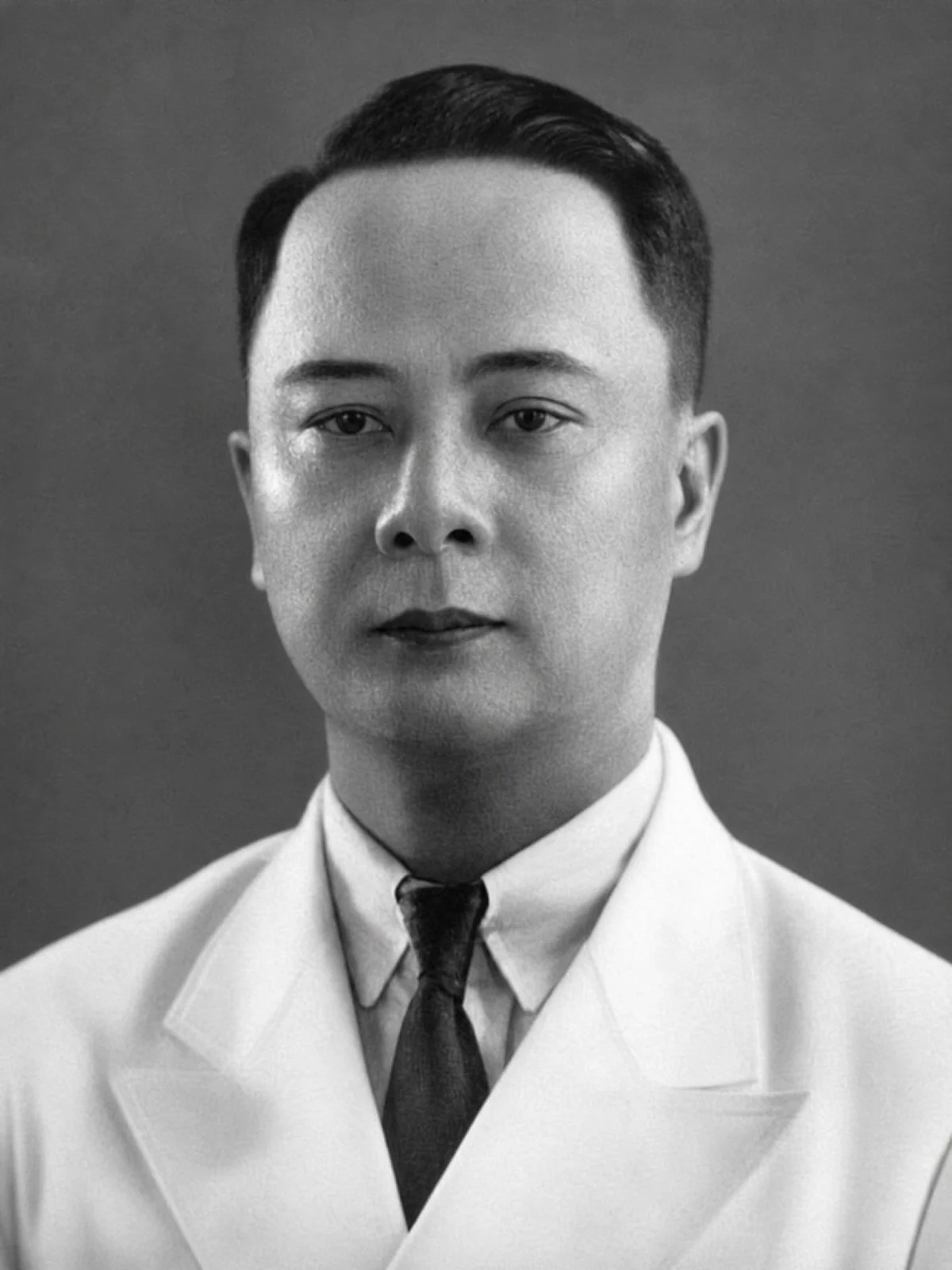
The writing found its widest readership at the start of 1932. That January, the American quarterly Foreign Affairs, the most influential journal of the United States foreign-policy world, published an essay by Maximo under the title “Why the Filipinos Expect Independence.” He signed it as dean of the University of the Philippines and the author of several books on Philippine government. Twenty years before, he had gone to Washington a twenty-year old secretary, carrying other men’s papers. Now the American foreign-policy establishment was reading the Filipino case in his own words and in its own journal.28 The case itself had not changed since The Case for the Filipinos of 1916. What had changed was the question around it. It was no longer whether Philippine independence would come, but on what terms and how soon. The answering of that question was about to become the hardest passage of Maximo’s public life.
Behind the books and the quarrels there was a quieter life, and much of it stood in Marieta’s name. The family’s property in Mindoro was hers. In the town of Calapan, she held title to a block of land, registered to her as Maria Tejico de Kalaw and large enough that by the early 1930s it had been surveyed and cut into building lots.29 In the autumn of 1932, she sold off nine of the lots within a few weeks, to families of the town. Marieta did not sign the deeds herself; Maximo signed them for her, under a written authority she had given him back in 1928, the instrument the period’s law used when a husband dealt in a wife’s own property. The land was hers and the decision to sell it was hers.
There was income in Manila to go with the land in Mindoro. Maximo and Marieta were landlords of student lodgings in Malate, in a city block bounded by Georgia, San Andres, Remedios, and Florida Streets and known in the neighborhood as Kalaw Court. The buildings carried the names Manila lodging houses often did, after American states: Florida Hall on the street of the same name, Nebraska Hall, and a small house above Florida Hall’s kitchen.30 The halls were leased out to be run by others, and the rents gave the household a second income beside the dean’s salary.
One last small Manila property reached Maximo by a stranger route. Daluz, the fortune-teller who had swindled Marieta’s mother and foretold Maximo’s sudden death in open court, had owed Concepción Lopez a debt that the family chased through the civil courts for years. When the sheriff at last auctioned off the one poor scrap of land Daluz owned, in the Santa Ana district, Maximo went to the auction and bought it himself, for fifty pesos. It recovered next to nothing of what Daluz had taken. But it closed the account.31
By the end of 1932, Maximo was forty-one, and a man of substance in more ways than one. He had written the books from which Filipinos now studied their own government, and a novel they could read for pleasure. He and Marieta held property in Manila and in Mindoro. The combative public life and this steadier, accumulative one had run side by side through the whole decade. But the writing kept carrying him back to the question that had first sent him to Washington as a boy of twenty. By 1932, the terms of Philippine independence were about to be set, and the process threatened to drive a wedge between those who had devoted their lives’ work to it. Maximo would not stay out of it.
Glass house
Maximo’s life work would, in a way, come to fruition in the early 1930s. After a generation of campaigning by the Filipinos, the United States was at last ready to fix a date and a process for Philippine independence. But the closer they came to acquiring independence, the more bitterly Filipinos fought over its terms. The fiercest of battles ran not between Filipinos and Americans but among the Filipino leaders themselves, Maximo included. He would come out of it on the losing side, and it would cost him the university.
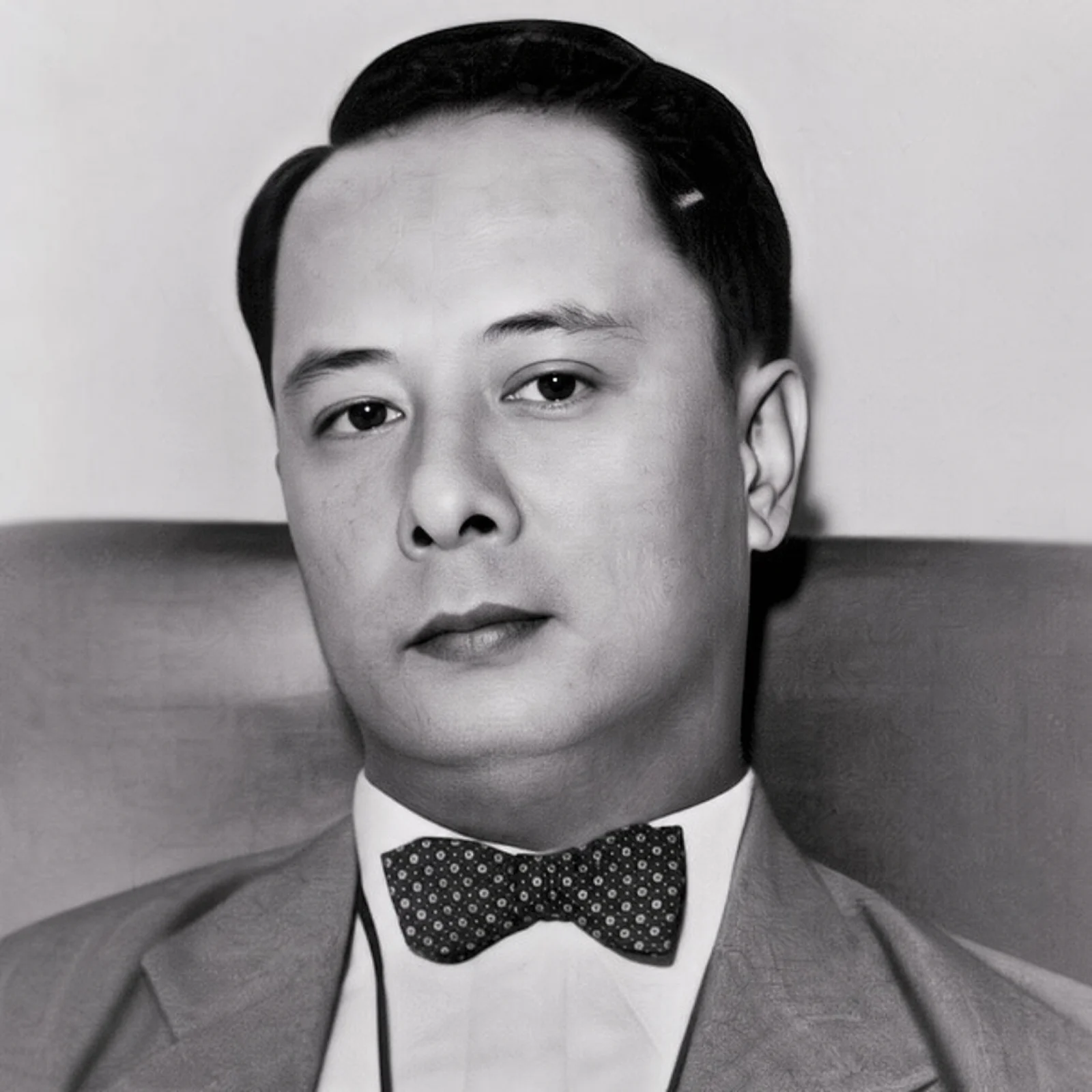
The independence the Americans offered took the shape of a law. In 1933, the United States Congress passed the Hare-Hawes-Cutting Act, which promised the Philippines independence after a transition period of ten years, during which the islands would govern themselves under American oversight. The act had been worked out in Washington by a Philippine mission led by Sergio Osmeña and Manuel Roxas; the combination of their names would lend itself to the mission being labeled OSROX. The mission had sailed for San Francisco on the maiden voyage of the SS President Coolidge, on the fifth of December 1931, Osmeña and Roxas and their families seen off by a press of well-wishers at the Manila pier. Maximo went with them, attached as a technical adviser and secretary, and Marieta sailed at his side. But the law, upon closer reading by the Filipinos, was not the clean grant of freedom they had envisioned. It held American trade conditions over Philippine goods, kept American military and naval reservations on Philippine soil, and set in place a powerful American high commissioner overseeing the transition government. Independence was promised, and hedged.
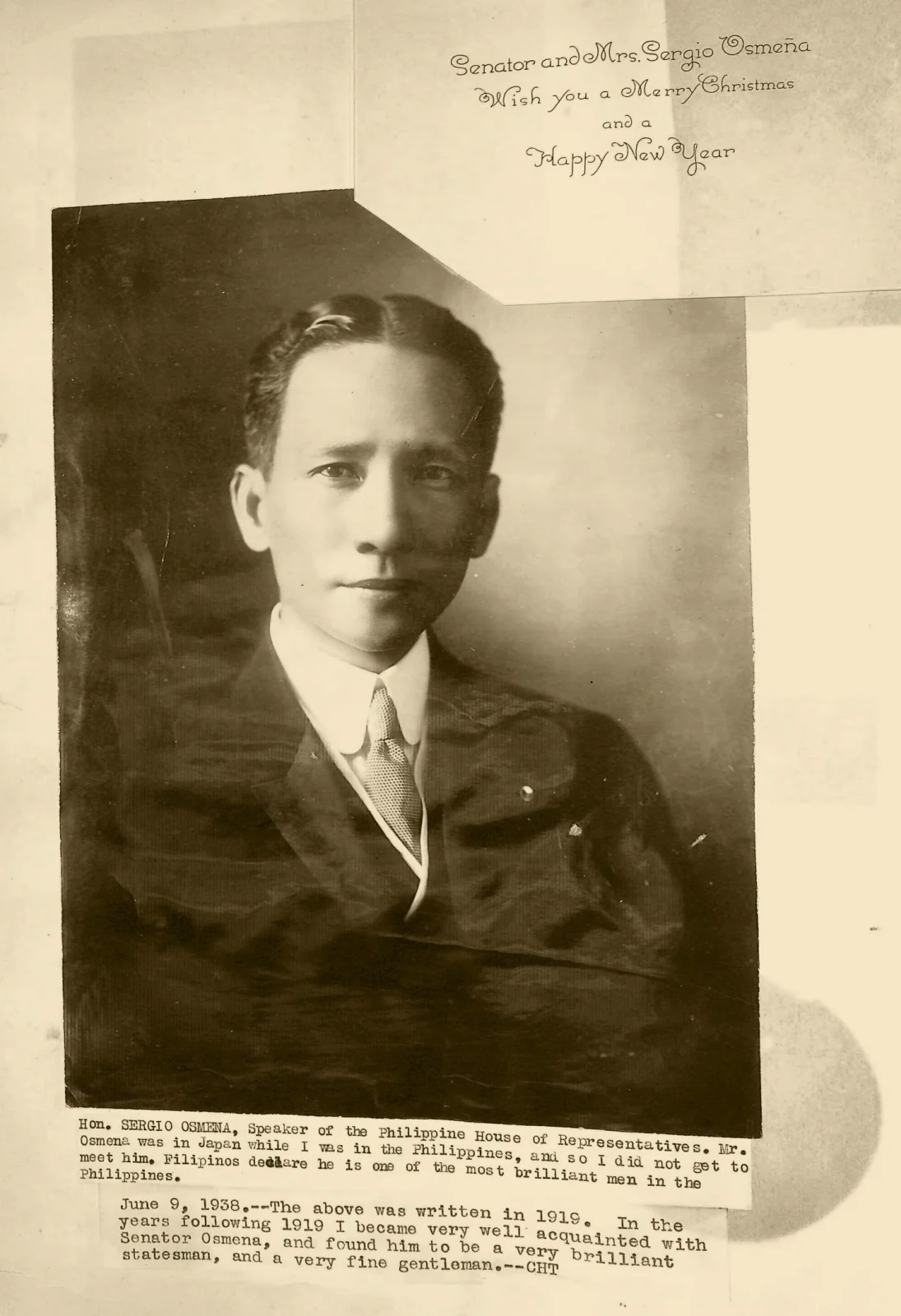
The fight among Filipinos was over whether to take it. Manuel Quezon, the most powerful politician of the age and Maximo’s own patron since 1911, came out against the Hare-Hawes-Cutting Act. The fight he led was partly over the act’s terms; Quezon disagreed with the indefinite length by which US military and naval bases would be retained in the country as well as the strict tariffs and quotas on Philippine exports outlined in the Hare-Hawks-Cutting Act. Some accounts would have Quezon object to it on account of whose victory the independence settlement would be. Osmeña and Roxas had carried the law home, and Quezon did not mean to let it stand as their achievement. In October 1933, the Philippine Legislature, led by Quezon, rejected the act. Quezon then went to Washington himself and returned the next year with a law of his own, the Tydings-McDuffie Act, which the Legislature accepted. It differed only modestly from the act it replaced. But it was Quezon’s, and that apparently made all the difference. Tydings-McDuffie created, in 1935, the Commonwealth of the Philippines, the self-governing state that would carry the islands through a ten-year transition to full independence, with Quezon as its first president. Osmeña and Roxas, and the law they had brought home, had lost.
Maximo’s own place in this fight was an exposed one, and it had not been a fixed one. Through late 1932, he stood against the Hare-Hawes-Cutting Act. In an article in the Philippine Social Science Review that October, he wrote against its one-sided economic terms and what he called “the circle of a continuous economic domination.” That position drew fire. In October 1932, the Cebu weekly PROGRESS ran a signed attack on him by Vicente Sotto, a politician and writer of the anti-Hare-Hawes-Cutting camp, headlined “Facts Are Being Distorted.” Sotto accused the dean of twisting the record of the independence mission, and to do it he quoted Maximo’s recent testimony before the legislature’s joint committee. In the words Sotto put in print, Maximo had said the mission “has never, as far as I know, endorsed the Hawes-Cutting bill,” and that public sentiment favored immediate independence, which “in the long run, is the wiser path.” The quotation reached the public through a hostile source. But it stood as a record of where the dean stood at that juncture.32
Within a few months, it appeared that he reversed himself. On 1 January 1933, PROGRESS, the same Cebu paper that had carried Sotto’s attack, printed a statement by Maximo alongside one by Osmeña and Roxas, all three now urging acceptance of the act. The conference report before Congress, providing independence after ten years, was “acceptable to the Filipinos,” Maximo wrote, and the choice had narrowed to a single thing: “that report or nothing.” Maximo explained his change in stance. He had served the independence mission as its adviser and secretary; the act was, in a sense, his mission’s own work. The report, he argued, followed in its essentials the very plan Quezon had himself put before the country the year before; and once independence was actually on the table the real question was no longer how the bill might be improved but whether to take the freedom on offer or hold out for a better one that might never come. An independence “immediate, complete and absolute,” he argued, was not a thing the United States was going to grant, and a people who spurned a workable law to wait for a perfect one were like the son who refuses his father’s Ford while holding out for a Packard, and is left with no automobile at all.33
But a reversal was a reversal, and Jorge Bocobo, the dean of the College of Law and a colleague who had once stood with Maximo made certain this was seen as one. Three years earlier, the two senior Filipino deans had co-signed the front-page appeal for a Second Independence Congress, allies in a single cause. On the Hare-Hawes-Cutting Act, they stood apart. In February 1933, Bocobo opened a long and learned answer to the articles in which Maximo had come out for the act, the first installment of a series, run across six pages in an issue of PROGRESS. He set out five propositions against the act, answered the Ford-and-Packard parable with one of his own, and quoted back four pages of Maximo’s October 1932 article. Where Maximo’s parable likened Filipinos to a son refusing his father’s car, Bocobo’s made them a small farmer whose land a powerful neighbor had seized years before, and who now begged that neighbor to stay on twelve years more. Maximo, Bocobo concluded, had written something as one who “evidently lives in a glasshouse” and “should throw no stone at his neighbor.”34 The press made the quarrel a spectacle. The same 5 February issue of PROGRESS carried an editorial that named the exchange “the Kalaw-Bocobo Tournament,” a literary tussle between the two deans. The editorial wrote for a paper that had taken the anti-Hare-Hawes-Cutting side, and it gave the round to Bocobo. Maximo’s article was “undoubtedly forceful,” it granted. Bocobo’s brought home the stark realities. The dispute was no longer a disagreement between two professors. It was a public contest, named and scored in print.35
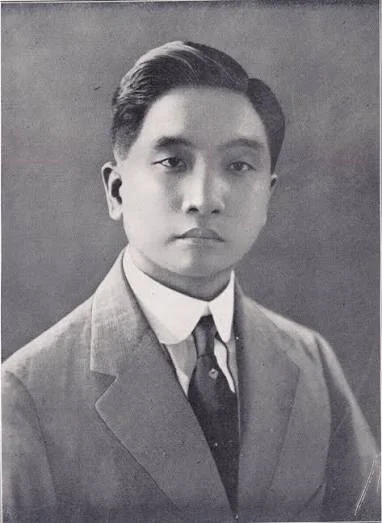
The quarrel was public enough that the satirists took it up. That season the Tribune ran a comic serial, “Under the Commonwealth,” a mock-history of the independence fight built, by its own subtitle, upon the “Hawes-Hare-Cutting-Copeland-Bocobo-Kalaw Bill.” In one February 1933 installment, the brothers Maximo and Teodoro ride home from a fruitless errand to Emilio Aguinaldo at Kawit, billed by the columnist as “the Kalaw Brains, Inc.,” a firm “matchless” in reporting its own achievements. The two cannot agree on what the errand had won:
“We got what we wanted,” he said mildly.
“We got what we wanted me eye,” Maximo rejoined dejectedly. “You made no offer whatever, and you let Don Felipe steal a march on you.”
“We got what we wanted,” Teodoro repeated gently. “He said he would study the matter. I know that bird. If you asked him if the sun was coming up tomorrow he’d say that he would study the matter.”
“Well, maybe you’re right; but for me, I would have used the straightforward method.”
To be caricatured at all was a kind of fame. The dean had become a figure the public knew well enough to laugh at.73
Through these same months Maximo was quietly arranging an exit of his own. By the close of 1933, his application to retire as dean of the College of Liberal Arts was already on file. He had not filed it alone; a number of the university’s professors had put in their retirement papers that same season, and the Board of Regents held the whole set back, to be settled the following year under a new retirement plan. Why Maximo wanted out just then, the record does not fully say. But the timing carries a point of its own: The wish to go was on file well before the defeat that the usual account treats as its cause.36
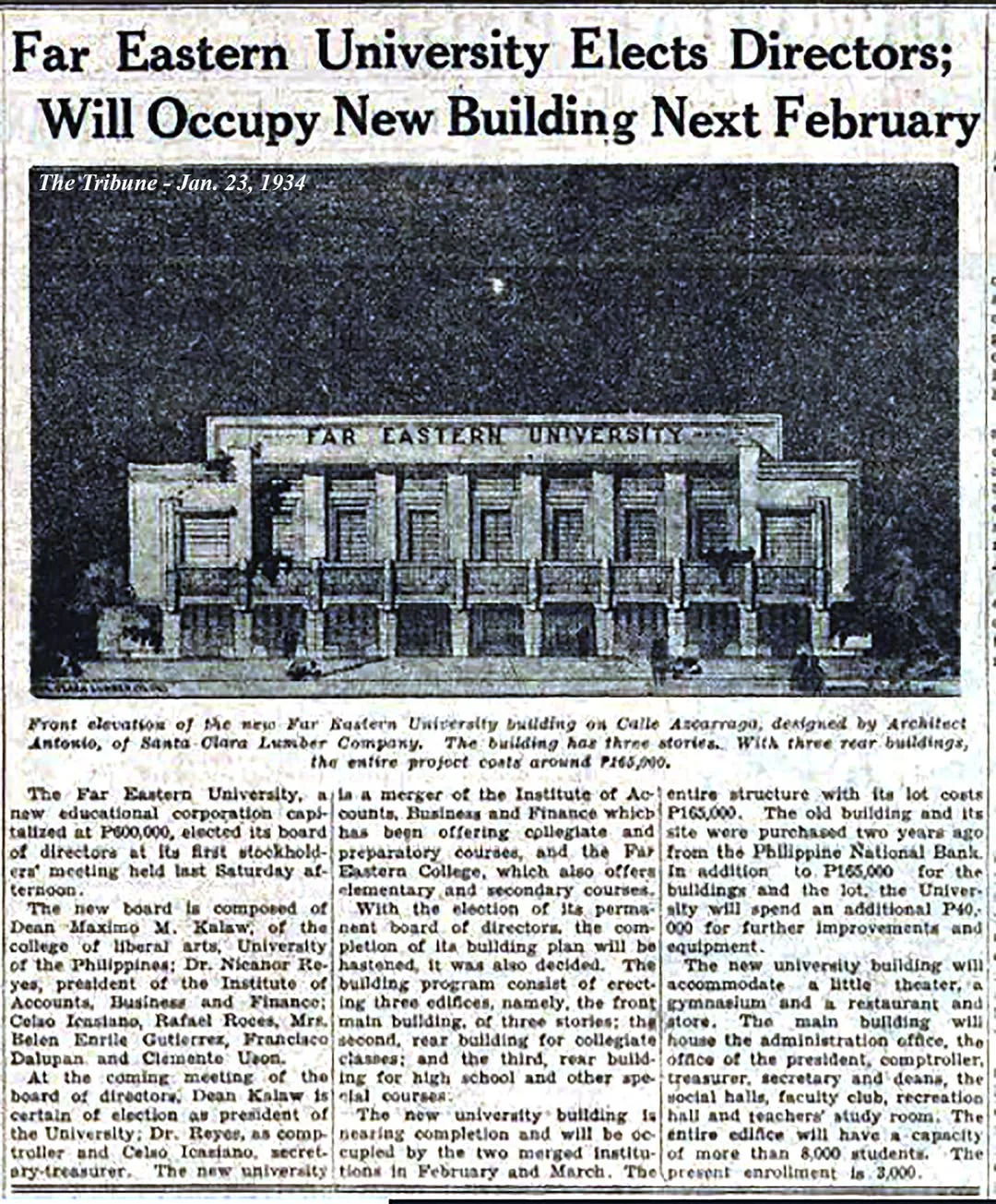
While that application sat pending, a new Manila institution beckoned him. In January 1934, the Far Eastern University, a private university just then being assembled out of the merger of two existing schools, elected its first board of directors, and Maximo was among them. The Tribune, reporting the election, said the dean was certain to be chosen president of the new university at the board’s coming meeting. He never took the office. The presidency had indeed been offered to him, and offered at the suggestion of Dr. Nicanor Reyes, one of the cofounders. However, the board withdrew it. The Sunday Tribune, announcing the university’s opening that April, said the offer had been called off over a disagreement about the powers and authority of the president, and that Reyes himself would take the chair. Where exactly the disagreement lay, and what Maximo’s own position had been, the article does not say. What it records is plain enough: a university presidency had come within, and then slipped from his reach.37 The following year, this would happen again.
The defeat that ended his university career came in 1935, and emerged from the same quarter as the glass-house piece. The presidency of the University of the Philippines fell vacant, and Maximo was a candidate for it. He had as strong a claim as anyone on the campus. But the university was not isolated from events that were unfolding beyond its gates. Quezon had just won the fight against the Hare-Hawes Cutting Act, and Rafael Palma, the sitting president, had backed it. Palma was made to resign for having stood on the wrong side of the issue. The presidency went to Jorge Bocobo, Quezon’s ally, the same Bocobo of the glass house. Maximo, who had tied his name to Osmeña and Roxas, was passed over.13
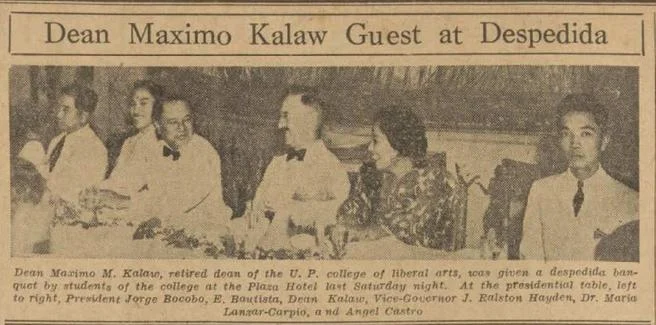
And so in 1935, Maximo left the University of the Philippines. He was forty-four. He had come to it as a student in one of its first classes, edited its magazine, joined its faculty, built its department of political science from two teachers into a discipline, written the books it taught from, and held the deanship of its largest college for the better part of two decades. As much as any one person, he had made the place. Now he walked out of it on the losing side of an argument, while a man with whom he had once co-signed appeals took the president’s chair. The students, at least, sent him off warmly: that August, they gave their departing dean a despedida, a farewell dinner, at the Plaza Hotel, where the new president Jorge Bocobo sat at the head table beside the American vice-governor J. Ralston Hayden and the political scientist Maria Lanzar-Carpio.74 It would be easy to read 1935 as the end of something, and in one sense it was: the long unbroken arc of the university career was over. But Maximo was forty-four, not seventy, and with a thirty-year habit of finding the next argument and walking into it. His career was far from finished.
To Mindoro
Any other man who had spent his adult life between Manila and Washington might have stayed in the capital, taken a desk at a law office or a newspaper, and lived comfortably afterward on the strength of his name. Maximo was not one of those men. In the months after he left the university, he moved his base back to Batangas, the province of his birth. By the start of 1936, his residence papers were registered at Lipa rather than Manila, the small bureaucratic sign of a man who had decided where he now belonged. He was not retiring to the province. He was standing for it.
In 1935, the Philippines became a Commonwealth, the self-governing state the long independence fight had at last produced, and the Commonwealth needed a legislature. The bicameral body of the American years gave way to a single chamber, the National Assembly, and its first members were elected that year. Maximo stood for the Third District of Batangas and won. He would hold the seat through a re-election in 1938 and into 1941, two full terms as an assemblyman of the Commonwealth. There was a rhyme in it, he must have felt. Nearly twenty years before, the young professor had overseen the establishment of a junior house of representatives in the University of the Philippines, a working model of the legislature, so that his students, men who might one day govern, would first learn its rules by practicing them. Now he sat in the real one.
How that first seat was won became a family legend. His half-sister Emilia, known to everyone as Mely, who had married into the Tapalla family, remembered the campaign as a grand affair. Phone lines were strung from Lipa out to the other towns of the district, Malvar, Tanauan, and Sto. Tomas. The Tapalla house served as headquarters. Every week several head of cattle were slaughtered, and supplies came up from Manila by the truckload, a six-by-six piled to the top, in her words, with “sako-sakong sotanghon, balde-baldeng mantika at sako-sakong patatas at sibuyas, bukod pa ang bigas,” sacks of noodles and pails of lard and sacks of potatoes and onions, and the rice besides. The food was served without stopping. People said afterward that no other candidate had ever spent so much on a campaign.68
By his own later account, Maximo also took on, in his first year in the Assembly, the chairmanship of a Philippine-Japan Association, one of the cultural bodies the young Commonwealth set up to know its neighbors. He would not accept it, he wrote, until the charter was made to bind each nation to respect the other’s national rights, for he suspected the association, run under the eye of the Japanese consul, of being “a means of indoctrinating us Filipinos in Japanese ways preparatory to Japanese invasion.” When Japan invaded China in 1937, he dissolved it, an action he attributed to wariness the occupation would more than bear out.38 In the middle of 1939 the National Assembly sent him abroad to study the coconut, and he sailed on the SS Tjisadane for the Dutch East Indies, the Malay States, Ceylon, France, and the United States, taking along Hilarion Henares of the National Development Company for his grasp of the by-product trade. The coconut problem, he told the press as he left, had three faces, the agricultural, the marketing, and the industrial, with a fourth, the political, behind them, and other countries had gone further with all of them than the Philippines had.75 Out of that trip came a 1940 study, The Coconut Industry, his contribution to the policy around the crop the islands’ export economy rested on. The coconut would have more to do with the rest of his life than he could have guessed.
Politics was not the only new thing in his life. Within weeks of leaving the university, Maximo went prospecting. On 10 March 1935 he located a mining claim, entered it in the government’s books, and named it Hecti. It was the middle of a gold rush. When the United States left the gold standard in 1933 the price of gold leapt, and across the mountains of northern Luzon claims were being staked by men who had never mined in their lives. Maximo was one of them. By the summer of 1936 he and three partners held a block of 10 claims, and that July they sold the lot to the Mother Lode Mining Company for 124,000 pesos, most of it paid in the new company’s stock. The largest single share of that sale was not Maximo’s but Marieta’s. The claims had been deeded in her name, and when the four partners divided the proceeds her portion was the biggest of them, larger than her own husband’s. The agreement was drawn up before a Manila notary, Marcial Lichauco.39 The writer and professor was now, on paper, a mining man as well.
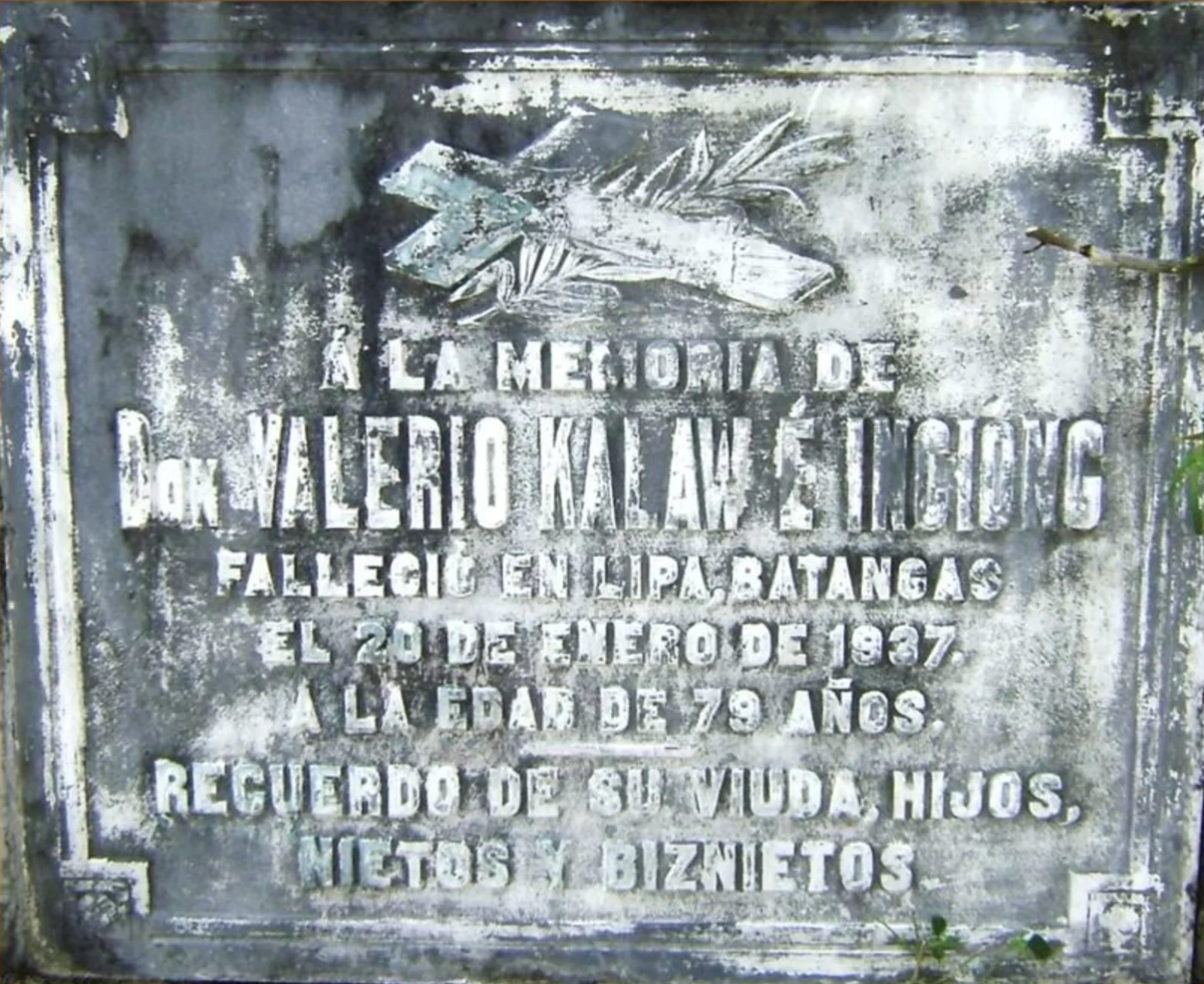
In the middle of all this remaking, Maximo’s father died on the morning of 20 January 1937, in Lipa. Valerio Kalaw was seventy-eight. His two sons, Teodoro and Maximo, left Manila for the province that same morning, going home to bury him. The Manila press ran the death on its front page, an honor it paid less to due to Valerio than to the standing of his two sons. And yet the obituary took care to say that in Lipa the order was reversed: the father had been better known in his own town than either of the men he had raised.3 He had been a soldier of the Revolution, the first municipal president of Lipa under the Americans, its chief of police, a man who spent his whole life inside one province while his sons carried the name across the islands and past them. The generation that had begun the story was now gone.
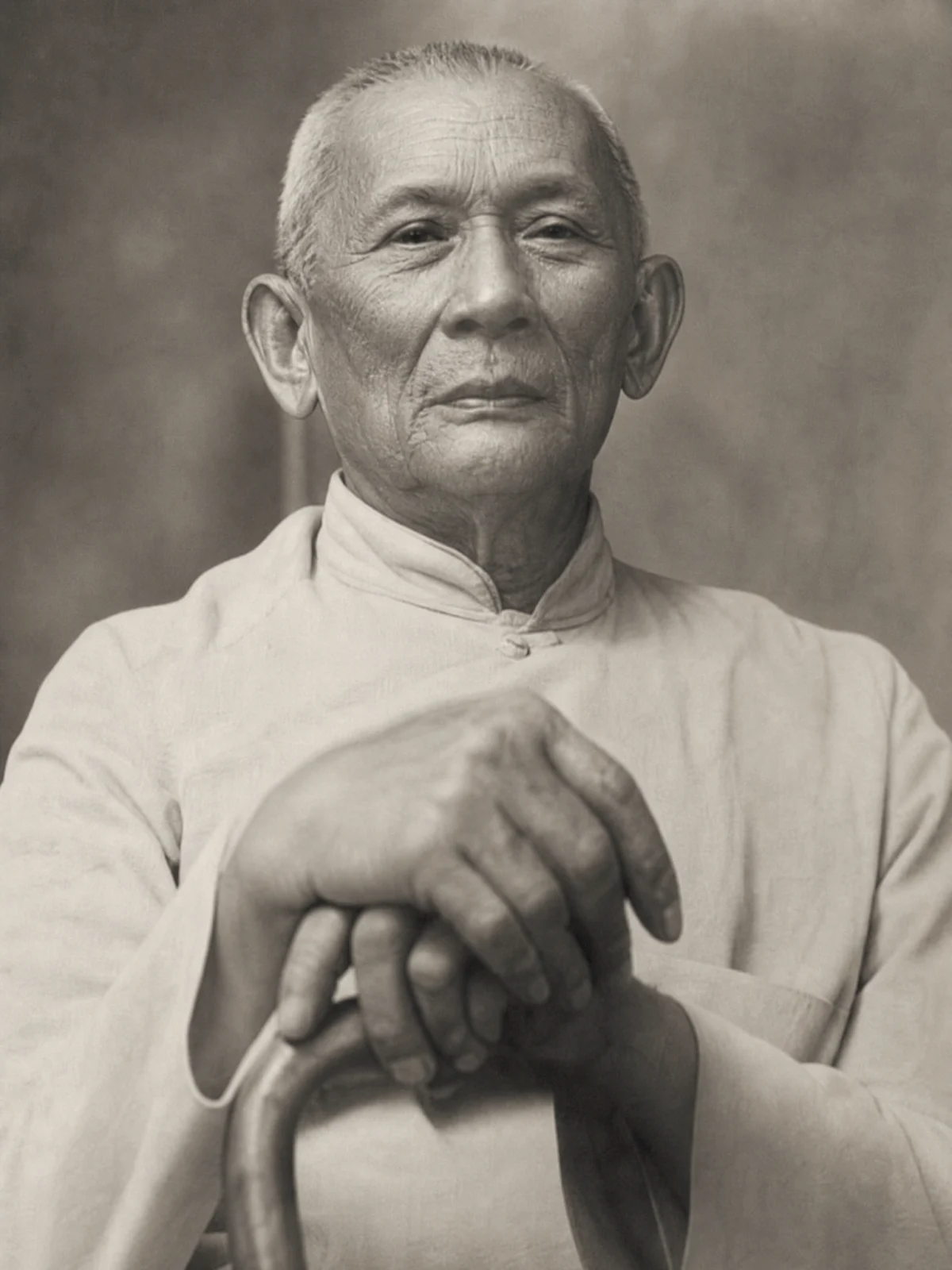
Valerio left a large family behind. He had married twice, and the obituary counted them all: the children of his first marriage, Teodoro and Maximo with their sisters Rosario and Manuela, and the seven of the second. It named the family’s sons-in-law too, a professor of the University of the Philippines, a former undersecretary of agriculture and commerce, and the son of a former governor of Pangasinan. It was a provincial family’s whole shape, set down on a Manila front page the morning Valerio died. At the graveside Maximo stood among them all. Three years later, Teodoro, by then director of the National Library, died in Manila in December 1940. Maximo was the senior Kalaw of his line now, at fifty years old. The reinvention had held. He was an assemblyman, a man of property, a writer, settled again in the province he had come from, and a man who might fairly have expected quiet years ahead. They did not come. In fact, the war was almost on the islands, and the strangest and most dangerous passage of his life was just about to begin.
Manila under the rising sun
The war came to the Philippines within hours of the attack on Pearl Harbor. On 8 December 1941, Japanese aircraft crossed from Formosa (now Taiwan) and destroyed most of the American air force in the islands on the ground, in a single day. The invasion came within the fortnight. Japanese armies landed to the north and the south of Manila and drove on the capital from both sides, and the American and Filipino troops, outmatched, fell back toward the Bataan peninsula. Manila itself could not be defended. Late in December it was declared an open city, undefended, and President Quezon and the Commonwealth government withdrew across the bay to the island fortress of Corregidor. The capital emptied, and waited.
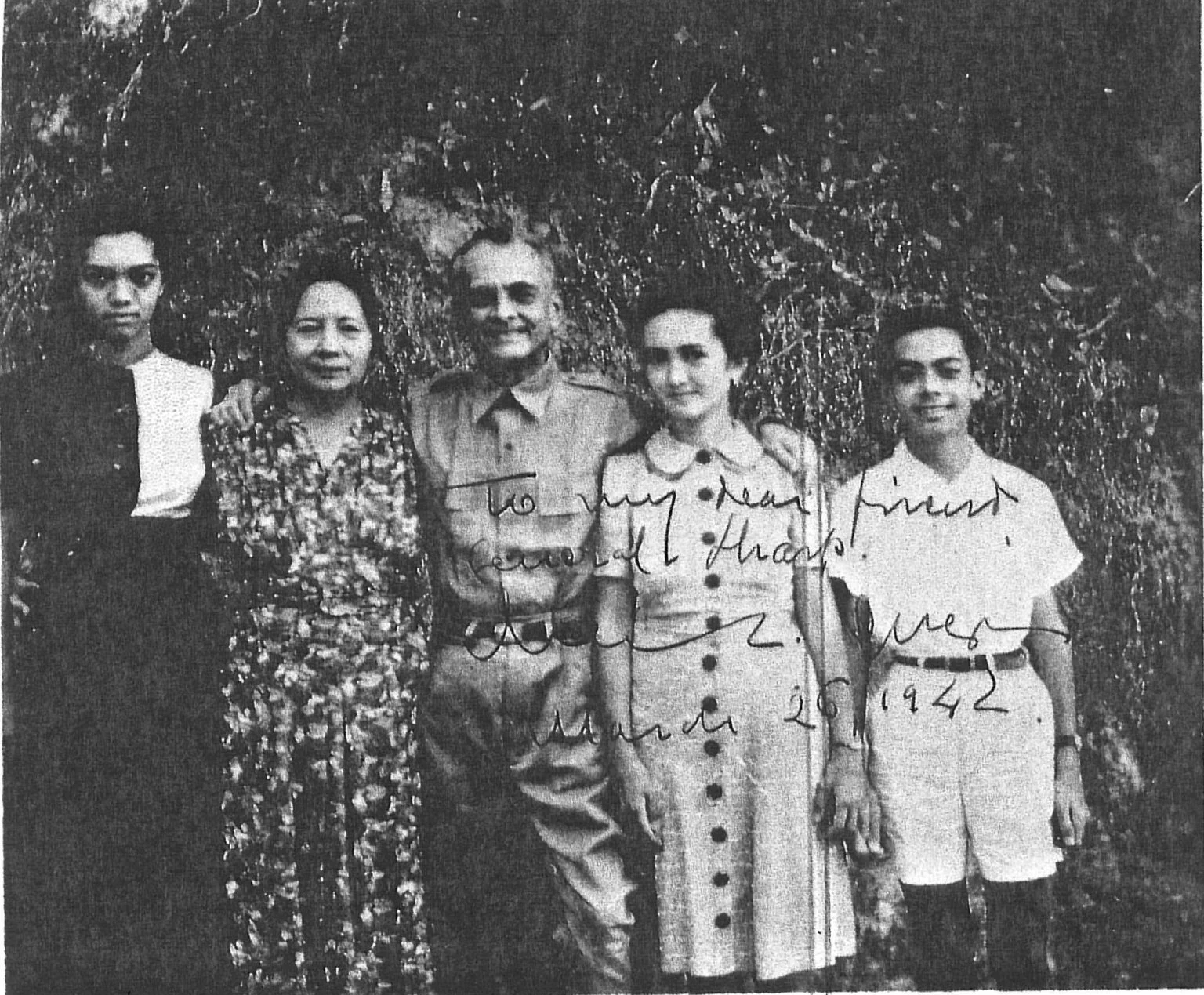
The war found Maximo at Los Baños, Laguna in the country south of Manila, with his family around him. He evacuated his family there at the outbreak of World War II in December 1941 to escape the heavy Japanese bombings in Manila. The Commonwealth had set up a Civilian Emergency Administration earlier that year against the prospect of war, and in early December, Maximo had sent its information office a set of proposals for its work. Word reached him at Los Baños that he had been taken on, appointed an assistant director under Camilo Osias. He went up to Manila on Christmas Day to take the oath, into a city already abandoned by its own government. He was sworn in, by his own account, on the last day of 1941. Two days later the Japanese entered Manila. The appointment had lasted barely a week and it was the last office Maximo held under the lawful government of his country.38 Through the whole occupation that followed he would refuse every office the new power offered him.
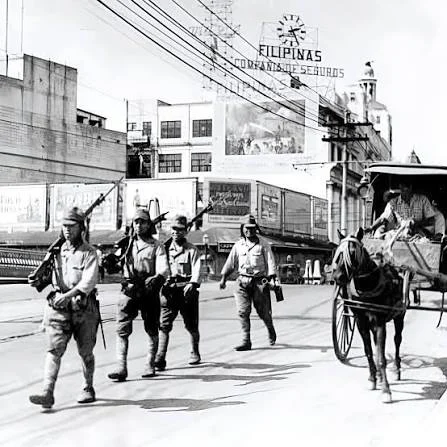
For two and a half years Maximo lived in occupied Manila as, to all appearances, a man quietly waiting out the war. The newspapers still came out, but were censored and turned to the occupier’s purposes. The Kalaws appeared in them the way prominent families do. In July 1942, his daughter Erlinda married Potenciano Ilusorio, a young lawyer from Bulacan, at the Apostolic Delegation, the Vatican’s mission in the city; Maximo and Marieta were the only sponsors, the wedding party as small as the times.40 In May 1943, the society pages carried a double baptism at the same Delegation, a son newly born to Maximo and Marieta and, christened beside him, the couple’s first grandchild, Erlinda’s boy.41 A reader of those pages saw a retired professor past fifty, long out of politics, marrying off his children and waiting, like everyone, for the war to end. That was precisely what Maximo wanted the reader to see. The Japanese, who knew his record, came to him more than once with offers of place, a seat on a research council, a position in the government they were assembling. He turned them down without ever quite refusing. He had given up politics, he told them; he was a farmer now. When the collaborationist press pressed him to write something for it, he said he was deep in a study of old Malay lore, and nothing ever appeared. The quiet was not retirement. It was the cover.
Underneath the quiet, the other work had already begun. Maximo had founded a school in Manila, the Central Colleges, in 1941, and it had a cadet corps, and the corps had rifles, 100 Enfields and four automatics, stored in one of his buildings when the Japanese came. Early in 1942 a guerrilla organizer, Eleuterio “Terry” Adevoso of the Hunters ROTC unit, proposed a trade: carry off the best of the guns and disable the rest where they sat. Maximo agreed. Ten rifles, the four automatics and six of the Enfields, went out past the Japanese guard to the Hunters; the remaining ninety-four were sabotaged in place, so that when the Japanese came for them and broke open the crates they found only useless ones. His son Edgardo, whom everyone called Hadji, had overseen the exchange, and for Hadji, his father wrote afterward, the moment those crates were opened was the longest of the war.38 The work spread from there. Maximo had a coconut farm at Calapan, on the island of Mindoro, 500 hectares of it and 40,000 trees, and a coconut crop had to be carried to market, and to carry it a man needed a pass from the Japanese. The pass took him to Mindoro. From early 1943 his farm at Silonay was a farm only on its surface. It became, in his own postwar phrase, virtually a continuous guerrilla camp. The fighters of the Mindoro resistance lived on it, drew food and money and supplies from it, and a paper concern called the Copra Purchasing Union gave the traffic a face it could turn to the Japanese. When the war was over the men of that resistance swore to it, one affidavit after another: Kalaw had helped raise their unit, had been its backer and its constant adviser, had kept it on its feet.42
That unit had a starting point, and Maximo’s affidavit gave it a name. The man who organized the Mindoro camp in early 1943 was Lieutenant Inocencio Manzo. After the Japanese killed Manzo, the work passed to Captain Esteban Beloncio, the figure the guerrillas of the island would remember at war’s end. South across the strait, Maximo did the same kind of work for the unit Lieutenant Pedro Kalalo was raising at San Jose, Batangas. He set the wider role down himself, in his postwar affidavit, as the inspirer of the resistance movement in his native Lipa.43
The pose of the harmless farmer could not be kept up indefinitely, and there came a point when it nearly gave way. In May 1943, a letter addressed to Maximo arrived from Jose P. Laurel, by then the occupation government’s commissioner of the interior. It ordered him to report to the governor of Batangas, join the pacification campaign, and make speeches to the towns of the province in support of the new order. It was not a request, and to refuse it outright was to invite arrest. Maximo went to Laurel and asked to be left off the list; Laurel told him the list had come from the Japanese military command and was not his to change. So Maximo went down to Batangas, stood before the assembled mayors, and gave them as near to nothing as a speech can hold, talking in wide generalities and leaving the substance to the men of the cabinet. He came away certain he was now a marked man and he was right.38
One meeting from these years Maximo set down at length in the memoir. He had kept a private tally of which prominent men had stayed clear of the Japanese, and the man he rated highest was General Manuel Roxas, who had fought at Bataan and Corregidor and, since his surrender, had kept out of the occupation’s councils. So when Roxas’s name appeared, in 1943, on the Japanese-sponsored Preparatory Commission for Philippine Independence, Maximo wanted to know how it had got there, and sent him an unsigned note asking how a former general of the American forces could join such a movement. Three days later, on 3 July 1943, Roxas asked to see him, and Maximo went to a house on Taft Avenue. The man who met him, Maximo wrote, “appeared only as a mere shadow of the former Manuel Roxas,” leaning on a cane, his eyes sunken, down to 118 pounds, and plagued with a lung illness that had taken root in a Japanese prison camp in Mindanao. The seat on the Commission, Roxas said, had been pinned on what he called “a mere prisoner of war.” And to Maximo’s last question, whether the men still set against the collaborationists could rely on him, Roxas answered: “Most assuredly.”38
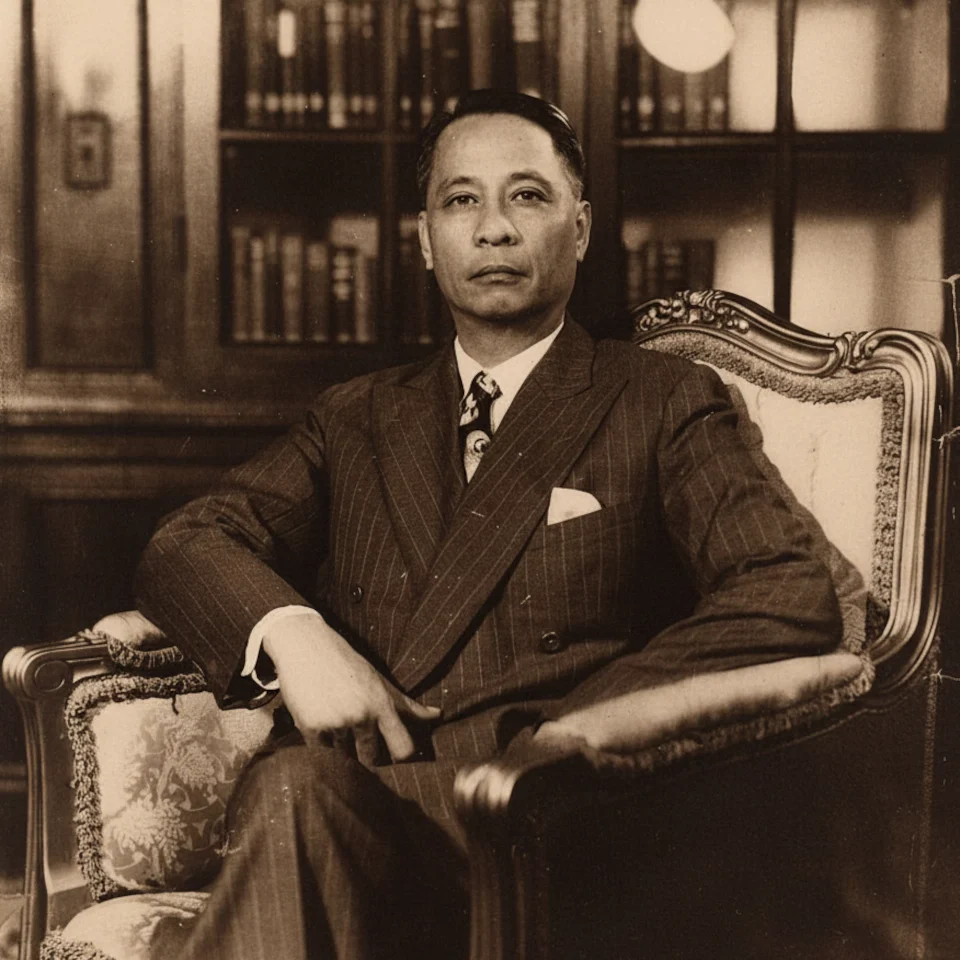
Maximo set that afternoon down, after the war, from memory. Two papers he never saw lent it support. In August 1943, six weeks after the meeting on Taft Avenue, United States military intelligence in Washington reported to the Army chief of staff, on what it called highly secret but reliable sources, that the Japanese meant to install Manuel Roxas as the puppet president of their coming republic, and meant to do it “without his consent,” holding him incommunicado in a hospital while Laurel ran the government in fact.44 A paraphrase went to President Quezon in exile. The republic the Japanese inaugurated that October was Laurel’s; Roxas never took the chair they had marked for him. The other paper is a sworn affidavit from 1947, given by one of the men who had worked beside Roxas through the occupation. It places inside that same house on Taft Avenue a central intelligence group that Roxas headed: it raised money from private citizens, passed funds to guerrilla units in the field, and kept coded contact with the Allied command in Australia through an American naval officer, Commander Charles Parsons, known to everyone as Chick. The affidavit names the rest of the group. Three of them, José Ozámiz, Juan Elizalde, and Enrico Pirovano, were taken by the Japanese military police, tortured for months, and killed. The fourth was Vicente Lim.45
None of these recorded accounts settled the question. When the war was over, the wartime conduct of Manuel Roxas was debated in the Manila press and the People’s Courts, and a United States intelligence report of 1948 still counted him among the men who had held office under the Japanese-sponsored republic, until a general amnesty closed the matter without resolving it.46 But the papers written while during the occupation, the intelligence memo and the affidavit alike, hold to the same picture Maximo carried out of that house: a sick man the Japanese meant to use against his will, telling him the resistance still had a friend near the top of the government they were assembling.
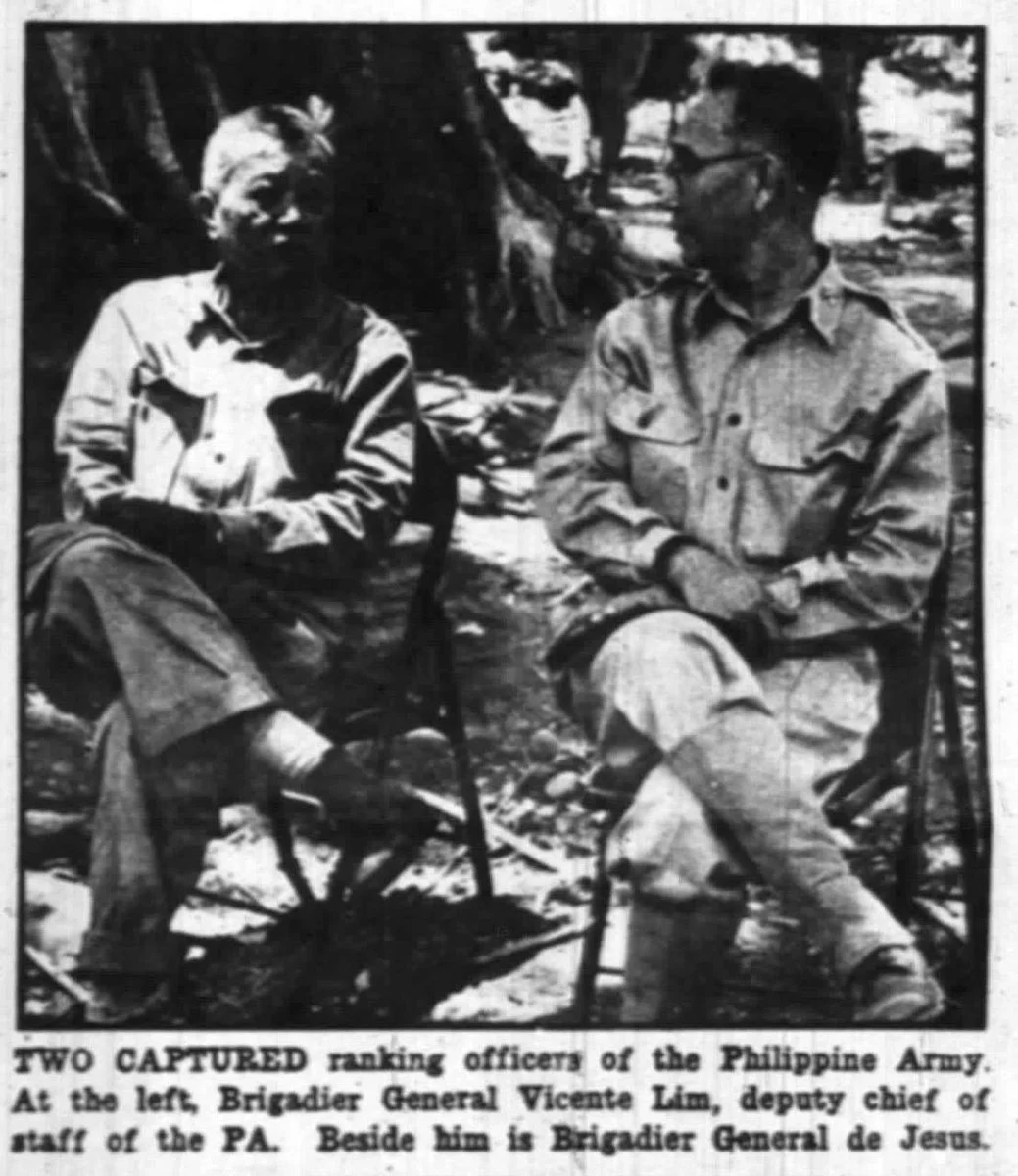
Even while being watched, he went deeper. The heaviest of Maximo’s own underground work ran through Lim. He was the most senior Filipino general of the war, the first of his countrymen to pass through West Point, and he and Maximo went back to their boyhood; they had been students together at the Manila Normal School, and thirty years before they had stood side by side at a Rizal Day in Washington, two young Filipinos a long way from home. Now Lim ran an underground network in occupied Manila, and in July 1943 he gave his old schoolmate a place in it. Maximo, who had never worn a uniform in his life, was commissioned a lieutenant-colonel, his work propaganda and intelligence.47 With a colonel named Emanuel Baja he began, once more, to write. They printed clandestine manifestos and put them into quiet circulation, and at the opening of 1944 they issued a declaration in the name of a body they called the National Committee of Free Philippines. It held that the Commonwealth was still the only lawful government of the islands, that the republic the Japanese had installed under Jose P. Laurel was a thing of no standing that would pass, and that Filipinos should keep faith with the resistance. Maximo did not sign it with his name. He had spent his whole life making his country’s case in print over his own signature, before editors and committees and the Congress of the United States. Now he made it again, in secret, against a different empire, this time under a name that was not his own. In the wider Manila circle that read and carried the manifestos forward, Maximo’s affidavit named, among others, the journalist Vicente A. Pacis and Assemblyman Miguel Tolentino.43
The pose held, but the ground beneath it was washing away. At the end of May 1944, the Japanese raided the Calapan farm. They tied up the servants and searched the house, and they found the quinine (a bitter tasting substance used to prevent malaria) Maximo had been running to the guerrillas and took off with them. In the same drawer lay the manuscript of his secret writing; the soldiers could not read English, and left it lying there. He called that his “second escape”, and he had reason by then to be counting them. A man named Franco Vera Reyes, who had passed through the resistance circles of Manila calling himself an American agent, had proved to be a Japanese one, and friends of Maximo’s had been taken to the cells of Fort Santiago on the strength of what Vera Reyes had reported. Then, in June, came the blow that was not a near miss. Lim had been preparing for months to get out of the islands, and his courier on the work, Captain Abeleda, had crossed twice to Mindoro to arrange the evacuation with Major Phillips of the guerrilla coast. The first attempt had failed because General Roxas would not leave his family; the second was frustrated by a Japanese sweep. Now Lim was going himself. Maximo saw him for the last time that month. Lim had been due to stand as a sponsor at the wedding of a Kalaw nephew, the late Teodoro’s son, and now could not, and he asked Maximo to take his place. On 11 June 1944, Maximo did.48 At the wedding breakfast the man seated beside him gave him the news: Lim had been seized by the Japanese the day before, caught trying to get out of the islands. The general who had given Maximo his commission, the friend he had known since the two of them were young men in Manila, was in enemy hands, and he would not come out of them alive. Maximo had carried the double life for two and a half years, and it had held. The men around him were being taken one after another. It would not hold much longer.38
Into the underground
The cover broke at the beginning of September 1944. The Japanese seized Colonel Emanuel Baja, the partner of Maximo’s clandestine writing, and his family with him. The National Committee of Free Philippines had been a partnership between Baja and Maximo. With Baja taken, the Japanese held a thread that led straight to Maximo. Within days, strange men were asking after him at his house in Manila. He did not wait to see how much they knew. Maximo, a retired professor and a former assemblyman, a man whose whole working life had been made of words and arguments, had decided to disappear.
He traveled to Mindoro, an island he knew well; his coconut farm was there, and its guerrillas had been camping on his land since 1943. Now he went to join them, and with him were his two sons,Augusto, called Naning, and Hadji. They climbed to a guerrilla camp high on Mount Halcon, one of the tallest mountains in the islands, and there, in the words a guerrilla captain swore to afterward, Maximo Kalaw and his two sons openly and voluntarily joined them.42 A man of fifty-three, who had spent his life arguing his country’s case in books and before committees of the United States Congress, had climbed into an armed camp on a mountain to take his place among men with guns. His name, and his family’s, stood on the Japanese list of wanted men. The guerrillas put Hadji, who two years before had run the rifles out of Florida Hall, to intelligence work under an American officer in the hills, Commander George Rowe. For Maximo they had something stranger in mind.
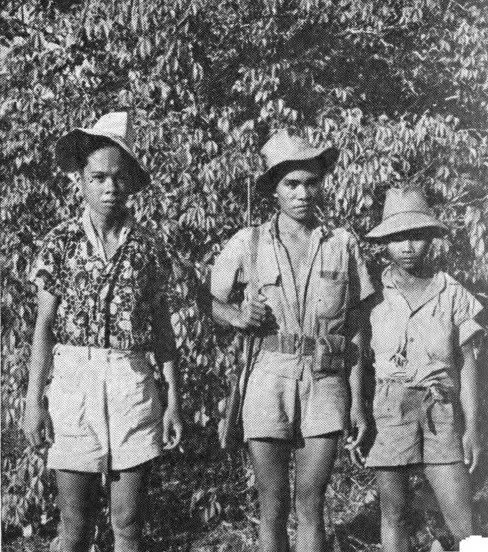
The Mindoro guerrillas were not one army but several, and they did not always agree. The three men who led them came from different worlds. Major Ramon Ruffy had been the Philippine Constabulary commander on the island before the war and had simply refused to surrender to the Japanese in 1942. Captain Esteban Beloncio had been a high-school teacher with some military training, called to the Army weeks before the invasion. Lieutenant-Colonel Enrique Jurado was an intelligence officer for Colonel Macario Peralta of the 6th Military District out of Panay, a Visayan operation reaching across the strait into the 4th Military District, which Mindoro belonged to and which Ruffy considered his own. In August 1944, at Lieutenant-Commander George Rowe’s office at Sablayan, officers and enlisted men were given the choice of whom to serve under: Ruffy, or the Jurado-aligned Beloncio. The vast majority went to Ruffy. The split between Ruffy and Jurado was bitter enough to set armed men against each other, despite being on the same side of the war. What the camp wanted from Maximo was something he had always been good at. He was made a liaison officer and sent to make peace. On 25 September 1944, three weeks out of Manila, he wrote to Colonel Jurado, and he signed the letter not as a guerrilla but with the title of his last lawful office, assistant director of the Division of Information of the Commonwealth. It is the earliest piece of paper that fixes him on Mindoro after the escape. The fighters did not call him colonel. They called him Dean Kalaw, the title from the university he had left nine years before, and it was as the dean that he carried messages between the two camps. It worked. By the middle of October, a truce was holding, and Jurado wrote to thank him for it: much of this new state of affairs, the colonel said, should be credited to Dean Kalaw, to whom Mindoro should be grateful. There is a stranger letter in the same file. An American naval officer with the guerrillas wrote that he would be glad to see Dean Kalaw again, the same Dean Kalaw who, if he remembered rightly, had once beaten him rather badly at golf.49
Sadly, the truce between Ruffy and Jurado broke down, and Maximo’s own account picks up where the letters of those weeks stop. Reinforcements reached Jurado’s camp from Beloncio in the north, and Jurado, encouraged, began digging foxholes and threatening Ruffy’s supply lines. Maximo, judging his mission a failure, set out for Commander Rowe’s office on the northern coast meaning to ask MacArthur or Osmeña to appoint an island commander outright. He had not yet reached Rowe when the news caught up with him. Two days after he had walked out of Jurado’s camp, Ruffy’s men surprised Jurado’s at breakfast and routed them again, the guerrillas throwing their guns into the river as they fled. Ruffy’s lieutenants surrounded Jurado’s house and called on him to surrender. Jurado came down with a tommy gun, and began to engage in a heated discussion with one of Ruffy’s lieutenants. In the exchange of gunfire that followed, Jurado was shot dead. The feud Maximo had been sent to settle had failed and ended in one death.49
What Maximo, the failed peacemaker, saw in those weeks on Mindoro stayed with him. Major Ruffy ran the island in a way that struck him as one of the most economical guerrilla systems in the country. Ruffy’s men drew no salaries; the entire Mindoro operation outside Jurado’s was authorized to spend ₱20,000 in total. In each barrio Ruffy had a food administrator, usually the barrio lieutenant, who held the rice the village had collected as the guerrillas’ share and a small fund to buy viands; the rig drivers gave one or two days of free transport a week; the home guards acted as runners and intelligence men. Fifteen of Mindoro’s seventeen mayors were sympathetic to the guerrillas and effectively worked for them. The fighters were not only a force; they were the island’s de facto government, keeping order, suppressing banditry, and on occasion serving as its courts of justice. Maximo, who traveled the length of the island through this system without spending a centavo, wrote afterward that under such an arrangement an army could exist on practically no budget.38
Maximo came rather close to danger on several occasions. Three or four times, Japanese trucks came down the road past his carretela and he had to leave it and hide behind the trees. On another occasion, he was with a guerrilla unit when it ambushed a Japanese truck and killed three of its soldiers. He set the comparison down plainly: “By and large, I felt safer in Mindoro than in Manila, when I was engaged in anti-Japanese activities. … If the Japanese actually discovered me, I felt there was a chance to fight back. In Manila, once you are discovered, you are gone.38 ”
So Maximo went north, because by late 1944 there was a way out, and it ran under the sea. On or about 15 October he joined Major Ruffy and made the journey from the southern part of the island up to Abra de Ilog on the northwest coast, where Lieutenant-Commander George Rowe was making arrangements for a submarine call. Rowe was General Douglas MacArthur’s intelligence officer in Mindoro, the successor to a Major Phillips killed by the Japanese earlier in the year. The American forces had returned: they landed in Leyte on 20 October and came ashore alongside President Osmeña. The liberation had begun in the islands to the south while Maximo was already waiting on the Mindoro coast. Through the years of the occupation American submarines had run a quiet traffic into and out of the islands, surfacing off empty coasts to put agents and supplies ashore and to take off men who carried things worth knowing. Maximo was one such man. He had lived nearly three years inside occupied Manila and two months inside the Mindoro resistance, and what was in his head was intelligence. On 1 November 1944 Commander Rowe put him aboard the submarine USS Ray. He was three weeks at sea. Those weeks were not the quiet passage the word “courier” suggests, and the family’s account of them, told later by his son Hadji, has the ring of a story Maximo carried home himself. Unknown to its passenger, the Ray was a combat submarine standing in for a missing courier boat, and before it turned for safety it had a patrol to finish. It joined a wolf pack hunting a Japanese convoy bound for the Philippines, sank a Japanese freighter, and was then caught by the depth charges of a Japanese destroyer. The crew took her down and held her on the bottom in the dark, the lights dead, riding out the attack, while the professor who had never before gone to sea under it made his first dive in a hunted boat. She came through, but battered, and turned not for Australia, where she had been bound, but for Pearl Harbor instead.76 Near the beginning of December the Ray arrived there, and the army and navy intelligence officers there sat the fifty-three-year-old professor down and asked him everything he knew.50
From Pearl Harbor, the way led home. The American command in the Pacific cleared him to fly on, and the order that carried him bore the highest authority in that war: he traveled, the paper read, by command of General MacArthur.50 The plane landed, with Maximo on board, in Tacloban, on the island of Leyte, onto Philippine ground that was free. He had left Manila in September, a hunted man, climbed a mountain, made and lost a peace, and crossed the Pacific under water, and now, in December, he stood again in his own country, in a corner of it with the flag of the Commonwealth flying over it once more. President Osmeña was at Tacloban, putting together a government for the island, and he had a place in it for the first public man to reach him out of the occupied country. What that place would ask of Maximo, and what his war would cost the family he had left behind, is the last hard turn of the story.
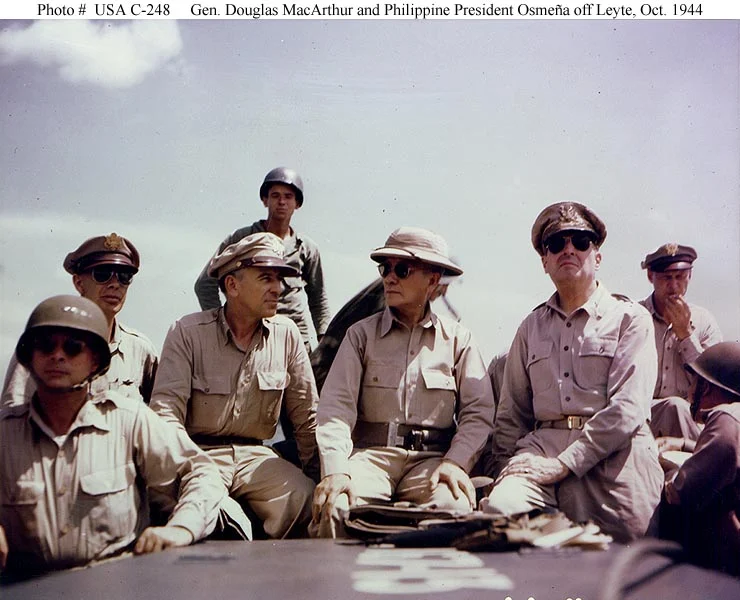
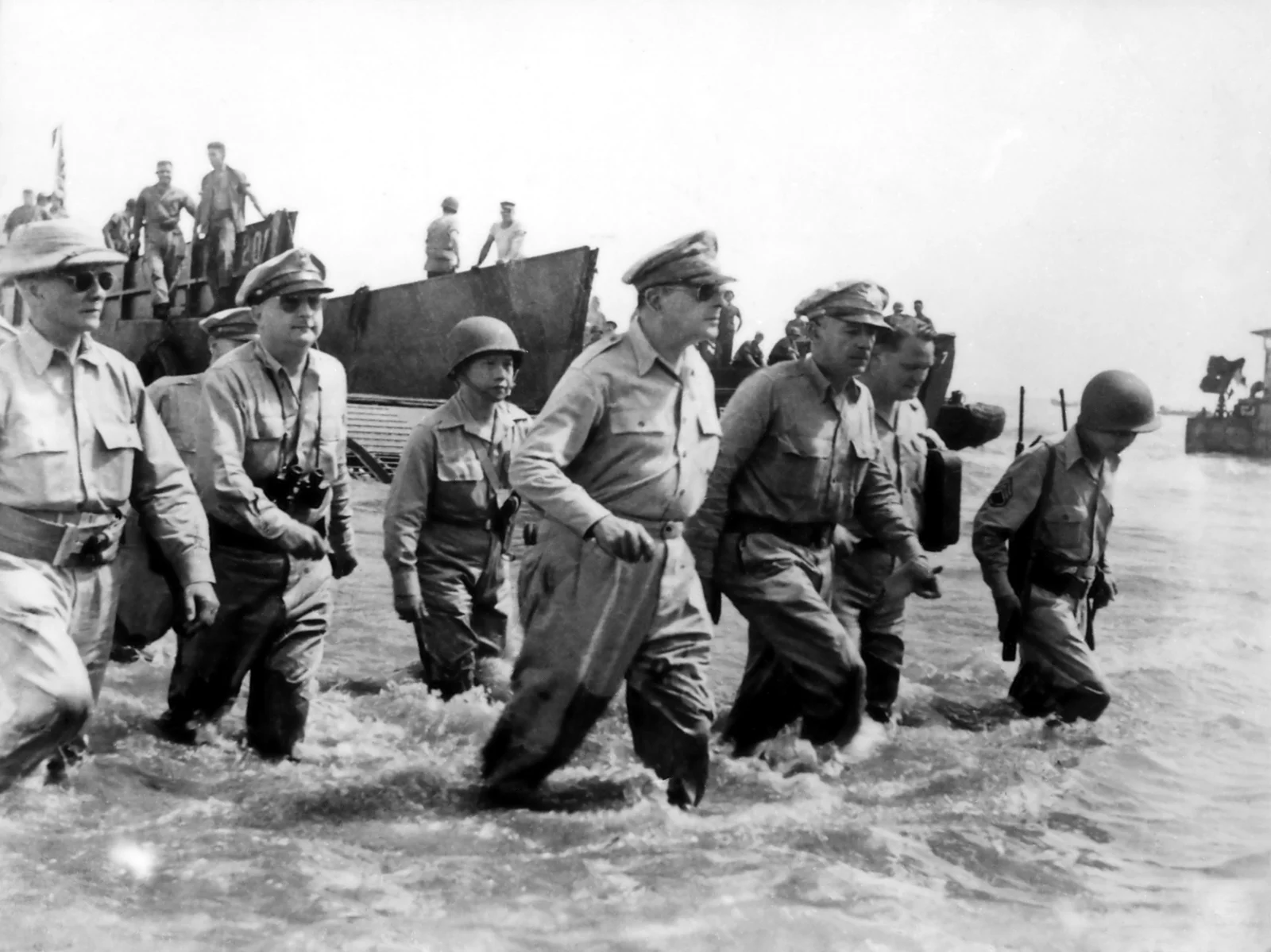
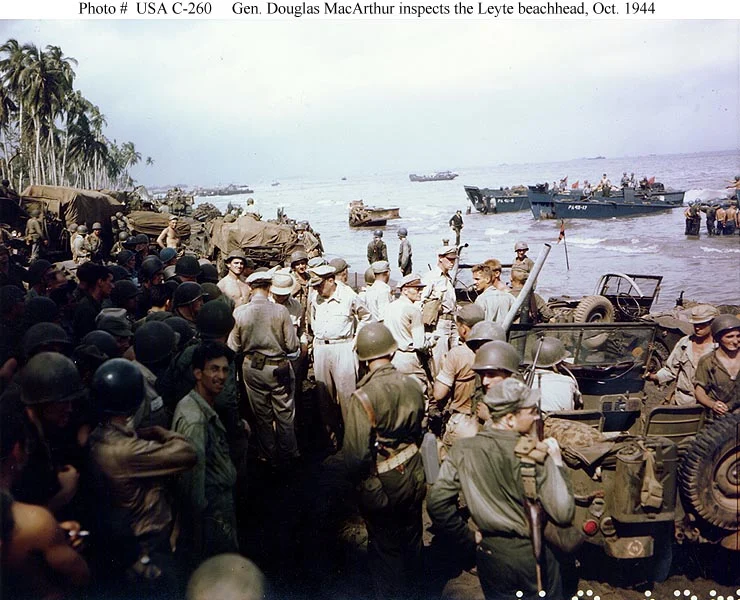
The ruined city
The place Osmeña had for Maximo was in the cabinet. Through that winter, beginning in October 1944, the president had rebuilt the government of the Commonwealth on the first stretch of Philippine ground the war had given back. Most of the men he gathered had spent the occupation outside the country, in Washington or in exile with him, with the exception of Maximo. He had come out of the occupied islands themselves, out of Manila and the Mindoro hills, and that, he wrote afterward, made him the first public man from inside the occupation to join Osmeña’s wartime cabinet.38 From the middle of December 1944, he worked as the government’s spokesman, broadcasting and writing to tell a country still half under Japanese arms that its lawful government stood again on its own soil. When Tomas Confesor, the resistance governor of Iloilo, came in out of the Panay hills that January, he recorded a fruitful conference with General Valdes, Governor Hayden, and Dean Kalaw at the seat of the Commonwealth. He had spent the past ten years of his life arguing for the Filipino case. He was arguing it still, into a liberation only half won.
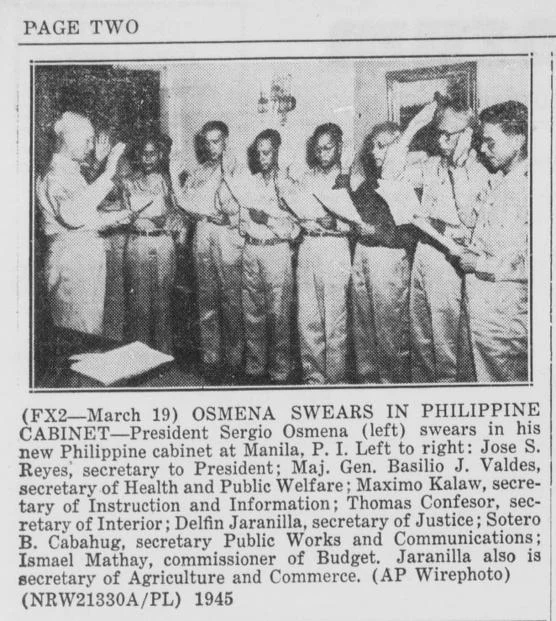
The work had a price, and Maximo was not the one who paid it. While Maximo and his two eldest sons went underground in Mindoro, he left Marieta and the younger children in Batangas. By 1945, the Japanese knew exactly who Maximo Kalaw was. American planes had scattered leaflets across the province praising his patriotic work, and the praise fell on his family like a mark. They ran, hunted from Balayan to Nasugbu for more than a month, hidden at one point by a guerrilla leader named Salvador Rillo. When the American army reached Batangas he asked it to find his wife and children, and in February and March the civil-affairs officers of the 11th Airborne Division traced Marieta and the children to a friend’s house at Nasugbu. They brought him word in Manila that they were alive.50 However, not all of the family got away. In his sworn account of the war Maximo set down what the reprisal had taken: the Japanese had beheaded his stepmother, Emilia Kalaw, and the wife of his half-brother José. He had come through the whole of the war untouched. But its price had been paid by the family he left behind.43
The cabinet post itself came in the spring. On 8 March 1945, Osmeña named Maximo secretary of public instruction and Information. The portfolio held two things at once, the country’s schools and the government’s word to its people. The Battle of Manila had ended five days before. For a month, the American and Japanese armies had fought through the city street by street, the Japanese garrison dying in place rather than yielding, and taking much of the city and tens of thousands of its people down with it. The capital Maximo was now to educate was little more than a field of rubble. He took its measure in his own department’s terms: of the Philippine Library and Museum a single division had survived, the archives, and of the whole University of the Philippines a single laboratory, the serum station at Alabang. His own block of student boarding halls in Malate had not survived either; Kalaw Court had burned to the ground in the February fires, with the rest of the block between Georgia, San Andres, Remedios, and Florida streets. Into that ruin he set the schools going again. Within a week of his appointment, Manila’s surviving schoolrooms had reopened with some 5,000 children in them, a fraction of the city’s prewar enrollment.
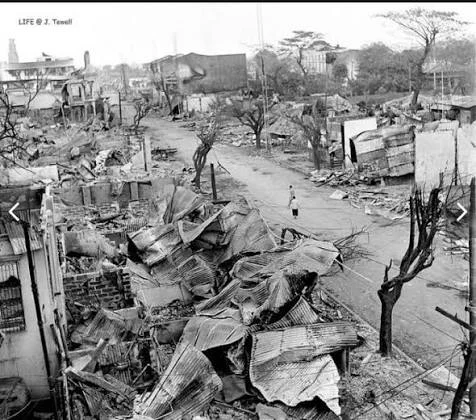
The damage that troubled Maximo most was not in the buildings. The occupation, he told an American correspondent that March, had left its mark on the character of the young, a cynicism and a hypocrisy it had taught them. Children had sat in Japanese-run classrooms pretending to absorb a propaganda they could see was absurd, the claim that the Japanese race had existed for nearly two million years among it, and a habit of pretending, learned over three years, did not end with the war. There was a harder question still, and the liberation had carried it home. What was to be done with the Filipinos who had held office under the republic the Japanese installed. Maximo gave the government’s answer, and it was a lawyer’s. The judge would not be the Commonwealth but the United States Army, through its Counter Intelligence Corps, the unit that screened men for service to the enemy; the standard would be the one President Roosevelt had set in January 1944, that those who had served the occupation be cleared from authority before independence was granted. The Commonwealth had been wiped out in the islands when the Japanese came, Maximo said. A man who had taken a post under what replaced it could not simply walk back into the restored government. He had to be appointed afresh, and Maximo would hold to that until the Supreme Court told him otherwise.51 He had spent the occupation refusing every office it offered him. Now he set the terms for the men who had said yes.
The cabinet term was largely spent abroad. On 1 April 1945, less than a month into the portfolio, Maximo was sent back to the United States, and the country he had given his youth lobbying for received him now as a minister of its government. In Washington, he was the speaker at a Sulgrave Club luncheon set up to raise interest in the Philippine Y.W.C.A., hosted by Edith Bolling Wilson, the widow of President Woodrow Wilson.52 A long arc was closing in that room. When Maximo first arrived in Washington in 1911, it was then President Wilson who had signed the Jones Act, which gave assurances of the promise of independence to the Philippines;twenty-nine years later, he sat at the table of Wilson’s widow as a cabinet officer of the country to which that promise had been made. From Washington he went on to San Francisco, where in late April the nations gathered to write the charter of a new world body, the United Nations, with a Security Council on which the great powers would each keep a veto. The Philippines was there, not yet independent, a Commonwealth among sovereign states, and Maximo sat as part of its delegation. When General Carlos P. Romulo, the delegation head, whom Maximo had succeeded in Osmeña’s cabinet, fell ill, Maximo stood in as its acting head. To Margaret Parton of the New York Herald Tribune he set out the position the delegation would carry: the Philippines would support the proposal of independence for all dependent peoples first; if that fell, it would take the English trusteeship arrangement in its stead, and on the wider question of self-government the Commonwealth would stand with the Russian motion.53
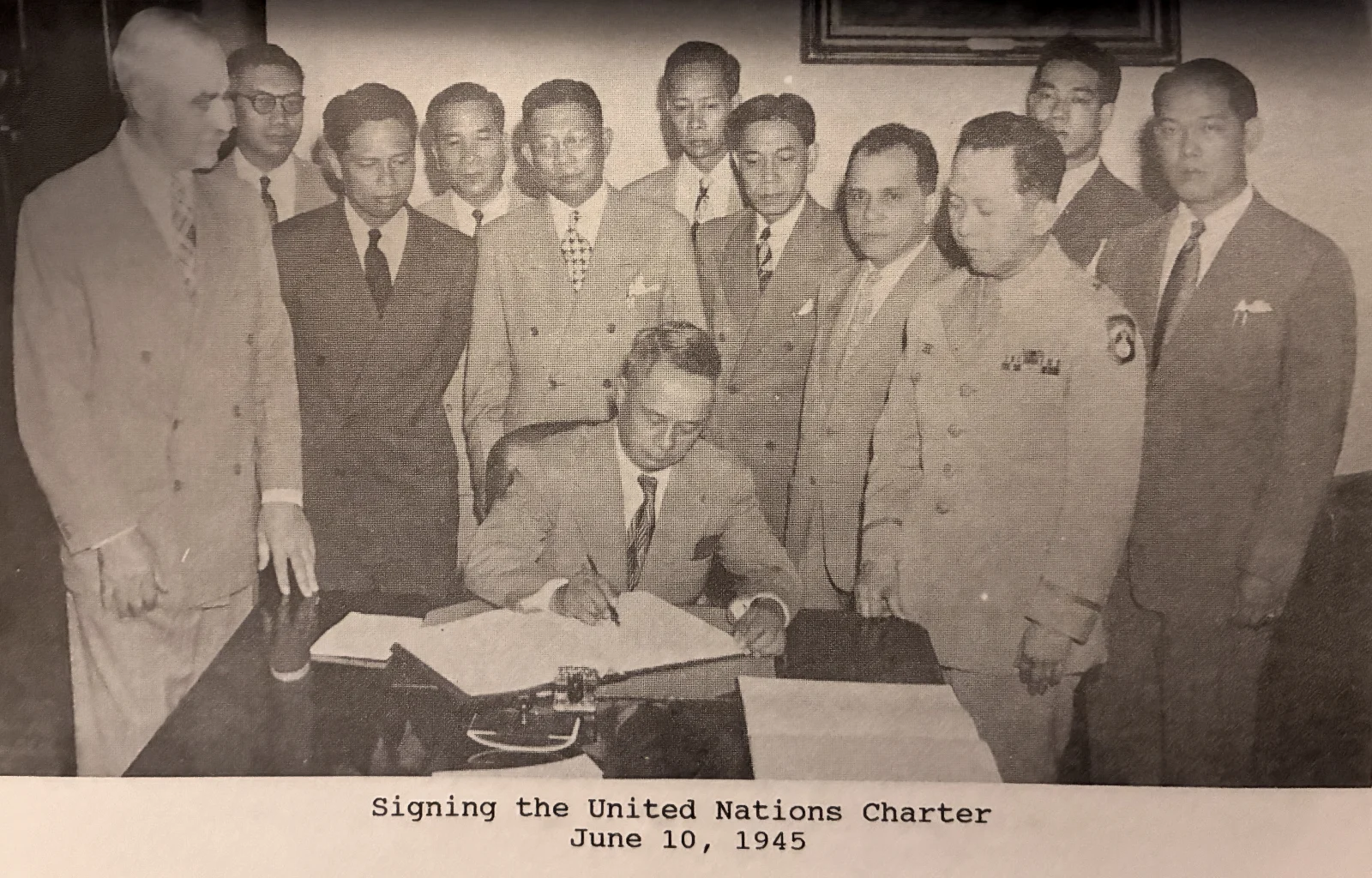
The portfolio he had carried into the room would be his until the eleventh of July, when Osmeña withdrew his appointment before the Senate’s Commission on Appointments could vote it down and sent his secretary back to the United States again, this time, as a book collector. He had been secretary for about four months, and most of them abroad. He had spent thirty-four years making his country’s case to America and the world, and he was making it yet, at the table where the shape of the postwar world was being drawn.
The coconut republic
Maximo came home from San Francisco to a country on the threshold of independence. The Tydings-McDuffie Act had specified it for 4 July 1946, and as the date came near, the question was what the new Republic should lean on for its safety. In March 1946, Maximo gave his answer at a Manila town-hall meeting. The new United Nations, the body he had helped charter the year before, was an uncertain shelter for a small country: as long as the great powers each held a veto over its council, a nation the size of the Philippines stood in a dangerous place. The secret of the atomic bomb, he added, was best kept where it was, in the hands of a responsible power like the United States. These were the views of a man who had long held that his country’s safety ran through Washington, and the coming of independence did not change them.
The Republic of the Philippines was born that summer, and it was born poor. Three years of war and a month of street fighting had wrecked the country, and a wrecked country had to be rebuilt on what it could sell. Among the things the islands could sell was copra, the dried meat of the coconut, pressed for its oil and carried abroad by the shipload to be made into soap and margarine and a multitude of things besides. The government meant to manage that trade itself, through a state corporation, the National Coconut Corporation, and it made Maximo Kalaw the corporation’s general manager.54 A professor of political science running a copra business was a smaller leap than it looked. The coconut had run through Maximo’s life for years already. He had studied it as a commodity for the National Assembly in 1940, writing a report on it after a mission abroad. He had hidden behind it in the war, when a sham copra-buying union gave his Mindoro farm its cover. Now it became the plain work of his days.
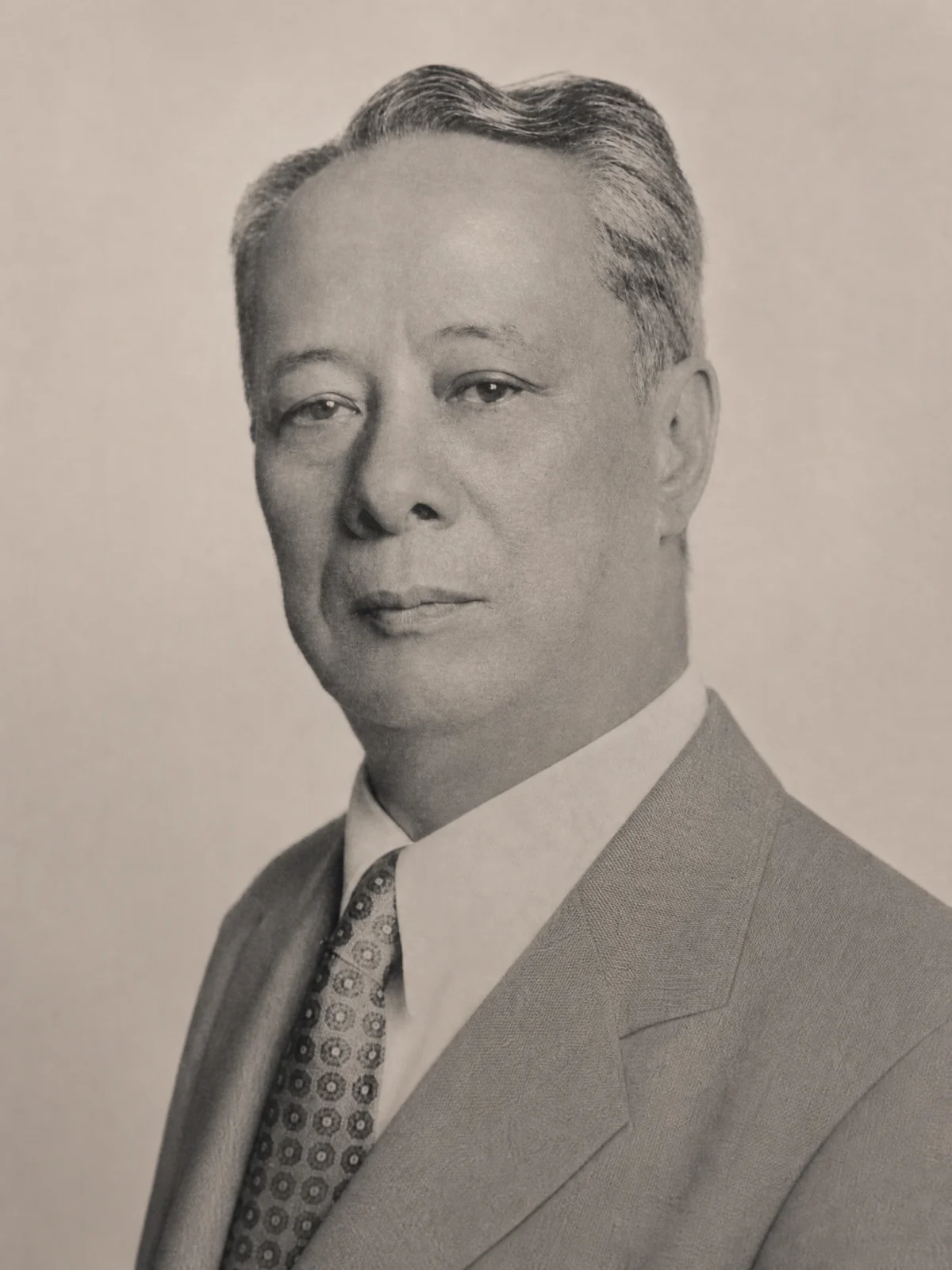
The corporation Maximo ran was a trading house with a government behind it. It bought copra and sold it abroad, and it did so at scale: the National Coconut Corporation was, by his own account, the second largest shipper of copra to the continental United States. Its business ran the length of the islands. In November 1946, Maximo signed for it a lease on land at Iligan, in Lanao, carrying its work south into Mindanao. And it traded on borrowed money. Early in 1948, the corporation arranged a line of credit of a million and a half dollars with the government’s own Philippine National Bank, to finance its dealings in copra. The man who had spent thirty years trading in arguments now dealt in a commodity, and gave the newspapers its tonnages and its prices the way he had once given them the progress of the independence fight.
For a time it went well, and it was Maximo who told the country so. In 1947, he reported, the islands had shipped a record crop, a million tons of copra, more than they had ever sent abroad in a single year; and at the opening of 1948, the price stood at the highest copra had ever reached in the American market, three hundred dollars a ton and better.55 Then the weather turned. Typhoons crossed the coconut country in the early months of 1948 and struck three of its four great producing districts hard, sparing only Mindanao. Maximo, the industry’s public voice, told the press what was coming: the year’s exports would fall by nearly a third, the first half of the year would yield next to nothing, and the crop would not be itself again until the second half.56
The trouble, when it came, came from his own corporation. On 3 February 1949 the National Coconut Corporation filed suit against him in the Court of First Instance of Manila over nine forward sales of copra he had signed between July and October 1947, about 16,500 long tons in all, to buyers in the United States and elsewhere. The complaint charged that he had bound the corporation to deliver more copra than it could buy, at prices the four typhoons of late 1947 had since turned against, and that he had done so without the board’s formal authority and against President Roxas’s directive that the corporation not speculate.57 Some of the Manila newspapers, taking the complaint as license, went further than the suit did, and insinuated that the general manager had profited personally on the side. Maximo did not take this sitting down. His niece Purita, writing a memoir decades later, set the answer down in family voice. He had called a Kalaw clan council, the kind the family resorted to for matters of weight, on which one’s attendance was vigilantly counted and a verdict was felt by the whole house, and explained that he had not taken money. The family believed him. No matter the controversy, the niece would write, they felt no shame.2 The Republic, in time, would say the same. The lawsuit ran for eighteen years, through procedural rulings and amended complaints and the dissolution of NACOCO itself, and ended on 14 August 1967 with the Supreme Court en banc affirming the dismissal of the case. The Court, by the hand of Justice Sanchez, held that Maximo’s authority to sign the contracts had been settled by the practice of the corporation, that the board had ratified them, and that the damages had been caused not by his negligence but by the typhoons themselves. The corporation’s own president at the time, Manuel Roxas, had defended Maximo publicly in January 1948, and the board had re-elected him acting general manager that same month, with the contracts already under dispute. Maximo’s good faith, Justice Sanchez wrote, clinched the case for him.58 Maximo did not live to read the judgment. He had died on a coconut farm at Calapan twelve years earlier. The clan council had returned its verdict in his own lifetime; the Republic returned the same one after he was gone.
Maximo kept the post into the new decade. After the university, it was the longest single job of his life, and the quietest. He gave his last working years to the copra trade. He was in his late fifties when it began and in his sixties when it ended. One long journey still remained for him, and it would be made, fittingly, on the business of the coconut.
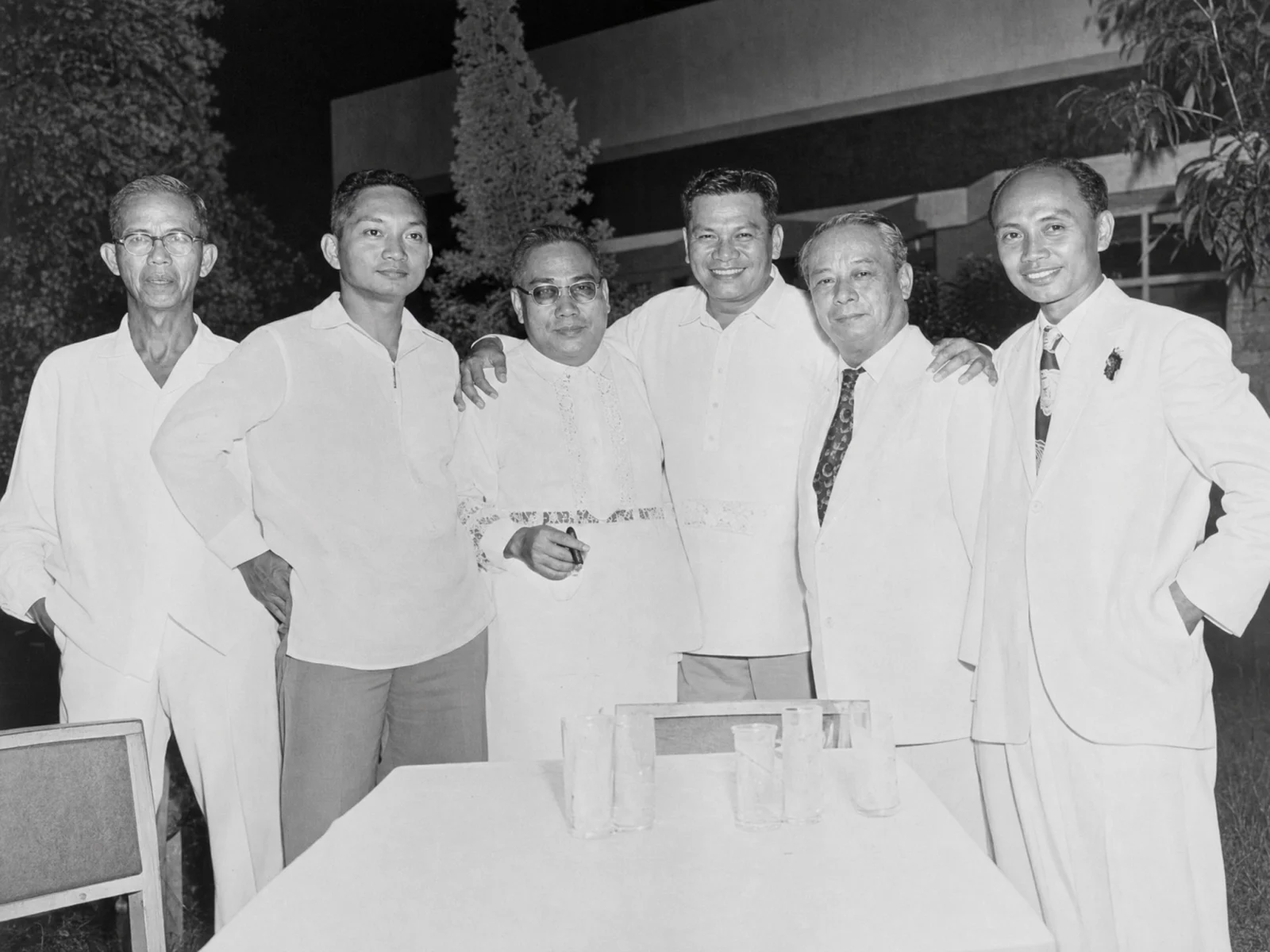
Rio to Manila
Maximo managed the National Coconut Corporation through the second half of the 1940s and into the new decade, and somewhere in the early 1950s, as the administrations changed in Manila, the work ran out. He was past sixty. He had been a public man for forty years: a secretary at twenty, then a professor, a dean, an assemblyman, a cabinet officer at fifty-three. The public years were behind him now.
In the middle of 1954, Maximo and Marieta arrived in Rio de Janeiro. Brazil was a coconut country, one of the rivals the Philippines met in the copra markets of the world, and a likely reason for Maximo’s visit. On 26 June 1954, the two of them flew out of Brazil together on a Pan American clipper bound for New York, and the papers they carried were transit visas: New York was merely a stop on the way back home to Manila. Marieta was beside him, as she had been beside him for the journeys of their whole marriage, from the wedding at Molo in 1918 onward. This would be the last of their journeys together.59
Maximo went on writing to the end. His last piece was an essay, “National Leadership in Philippine History,” and it appeared in the Journal of History, a Manila scholarly review, in the closing months of 1955, some months after he was gone. A man who had been publishing for more than forty years, from the student magazine of 1911 to the shelf of political-science books and the novel, signed off, fittingly, on the leadership of his country and its history. The end had come on 23 March 1955. Maximo was at Calapan, Mindoro, on ground the family knew well: the Kalaws had held land there since 1928, in Marieta’s name,29 and it was the island whose coconut farm had sheltered the guerrillas through the war and to which a wartime copra pass had first carried him. He was brought to the provincial hospital at Calapan that morning at eight, with a heart that had been working too hard for too long. A coronary thrombosis had closed on years of hypertension, and the attending doctor stayed at his bedside through the next five hours. A little after one in the afternoon his heart gave out. He was sixty-three years old. The informant on the certificate of death, the family member who answered for the household and gave the hospital itself as her address that day, was his niece Purita. The same niece who would, decades later, write the memoir from which much of this story is drawn was beside him at the hour of it.60
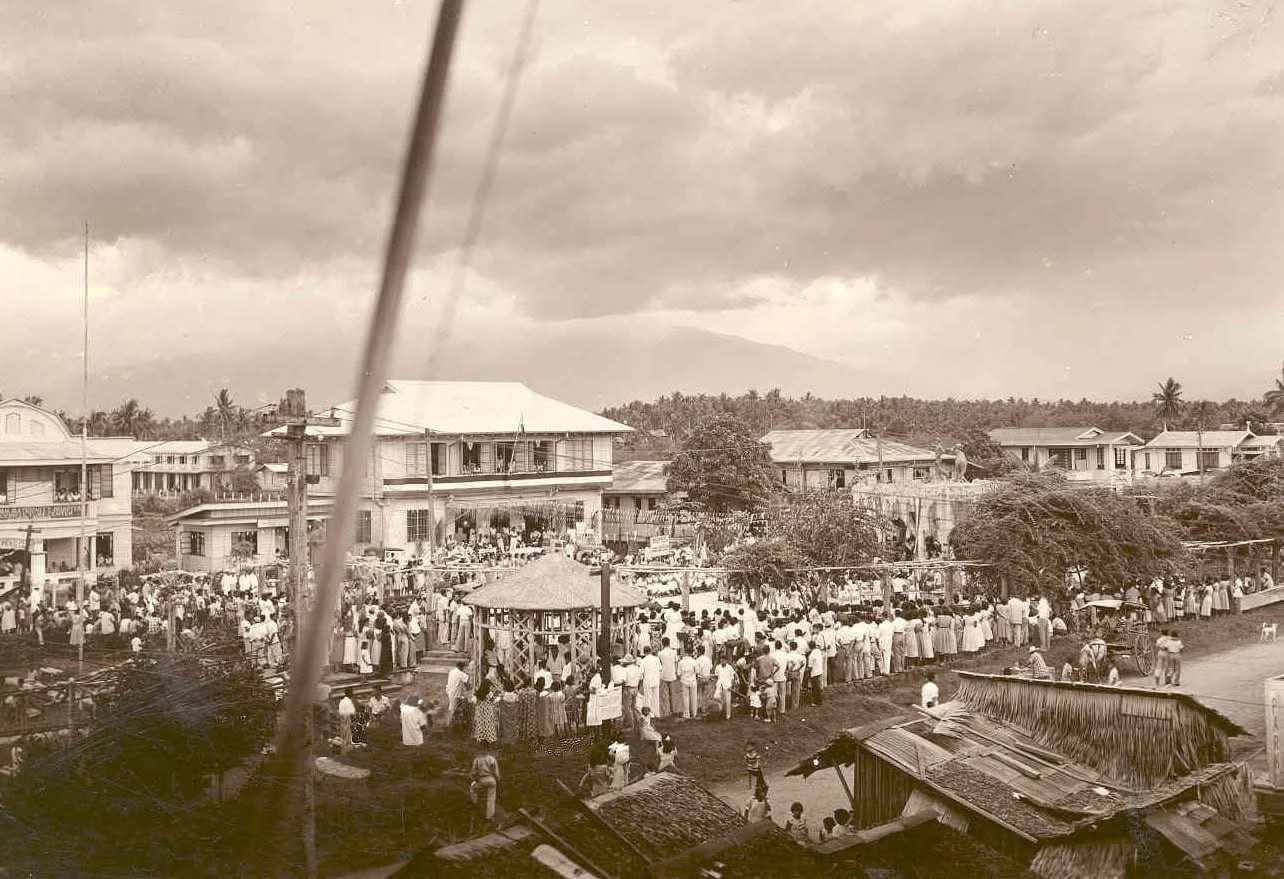
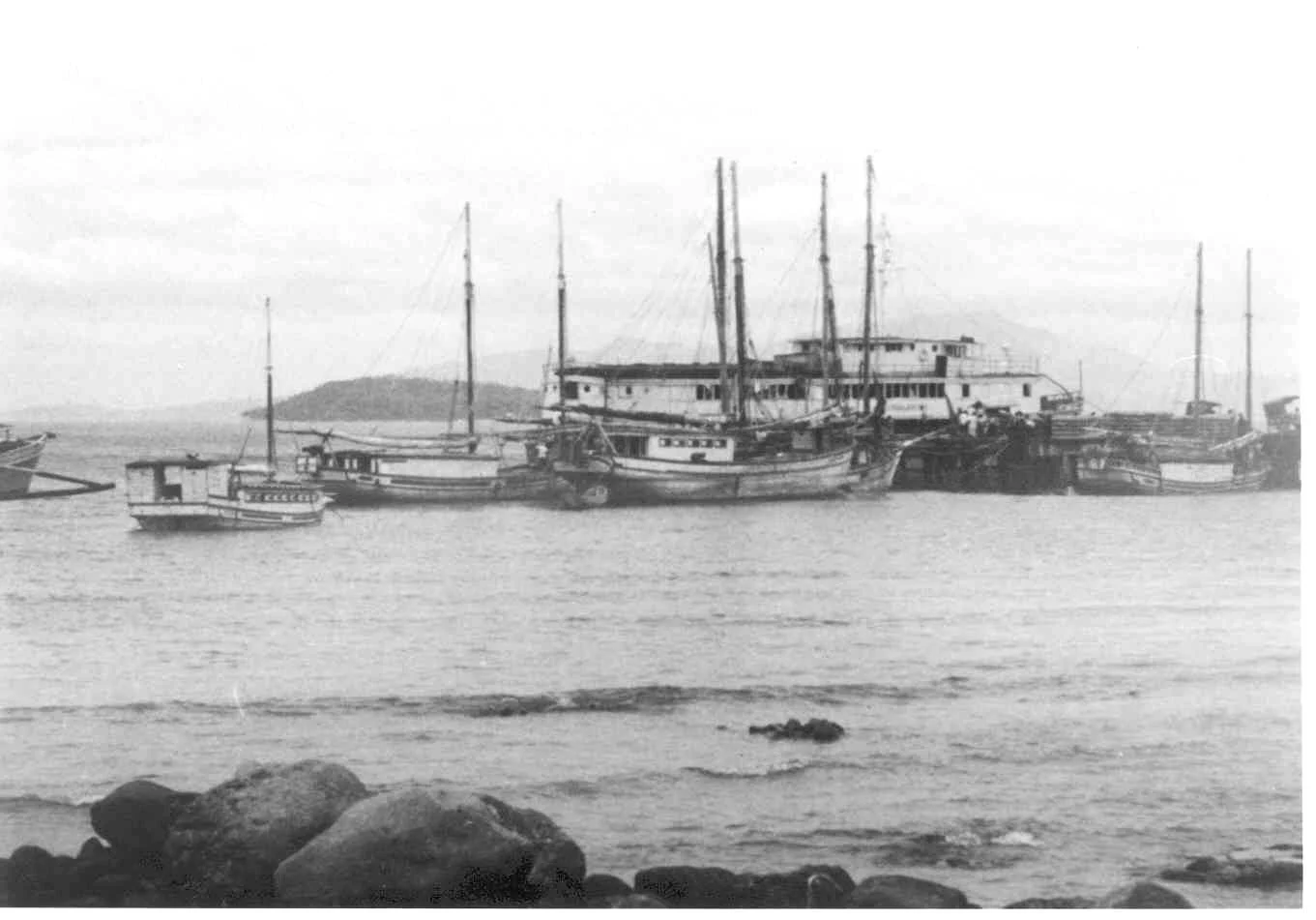
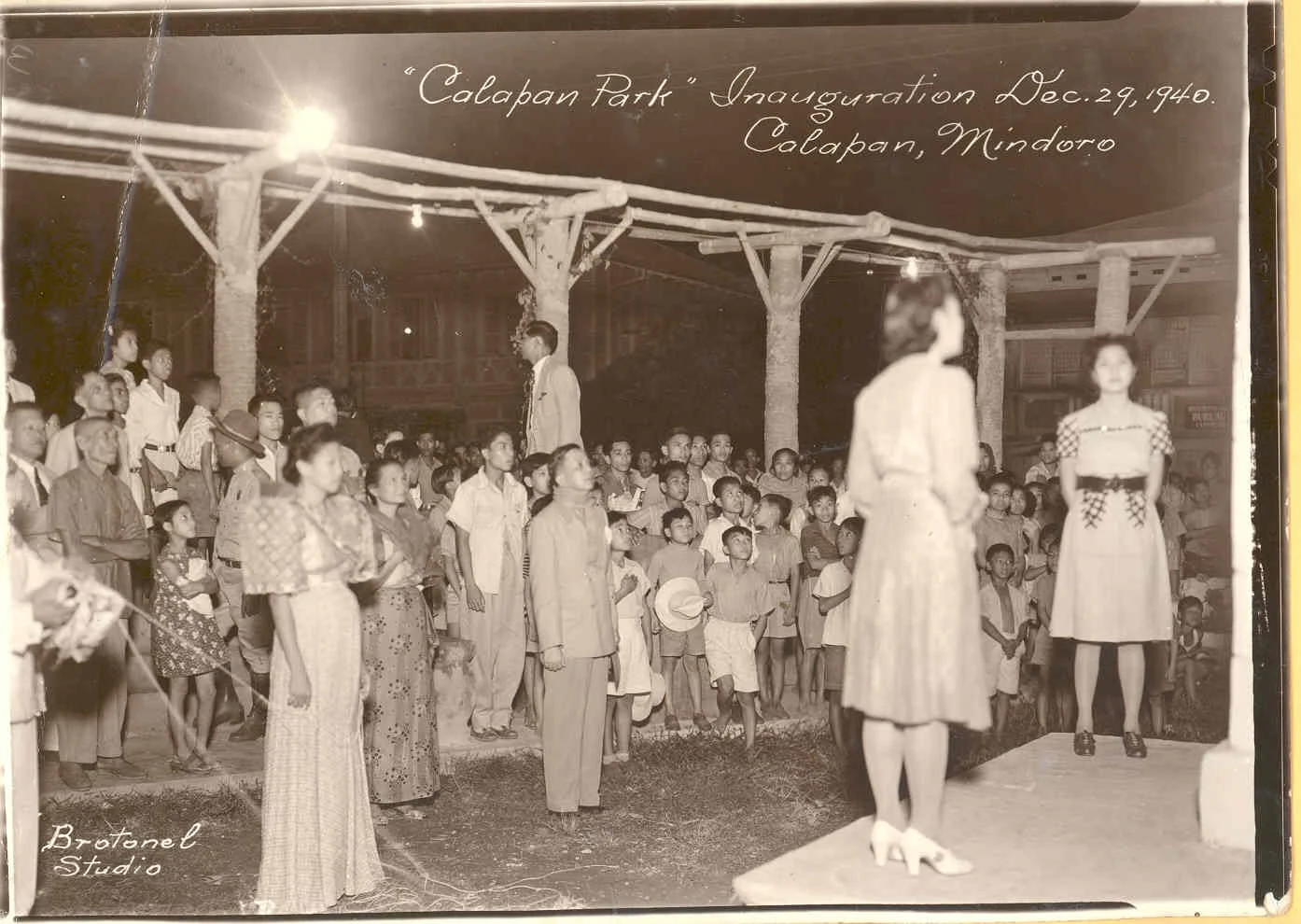
They carried him home to Manila. On 26 March 1955, three days after he died, Maximo Kalaw was buried in the Cementerio de La Loma, the old Manila cemetery, a long way from the Lipa ground where his father lay. Valerio had spent his whole life inside a single Batangas town; the son had carried the name across the islands, across an ocean and back, and he came to rest in the capital.60 He had outlived the war by ten years, and he died a citizen of the republic whose independence he had argued for since he was a young man of twenty in Washington. Four years before the end, he had seen his son Hadji marry. The bride had come from another family altogether, and the knot that wedding tied, and the family on its other side, is the turn this story takes next.
Hadji and Corito
Maximo and Marieta had six children. The eldest was Augusto, called Naning, who would marry Lita Sison; then Erlinda, called Nena, who would marry Potenciano “Nanoy” Ilusorio during the war; then Edgardo, whom everyone knew as Hadji; then Azucena; then Lydia, who entered the congregation of the Good Shepherd sisters; and last, born in 1940, another Maximo, called Junie, who would grow up to become one of the country’s most prominent environmentalists. The third child, Hadji, is the one whose life carries this story to its close.
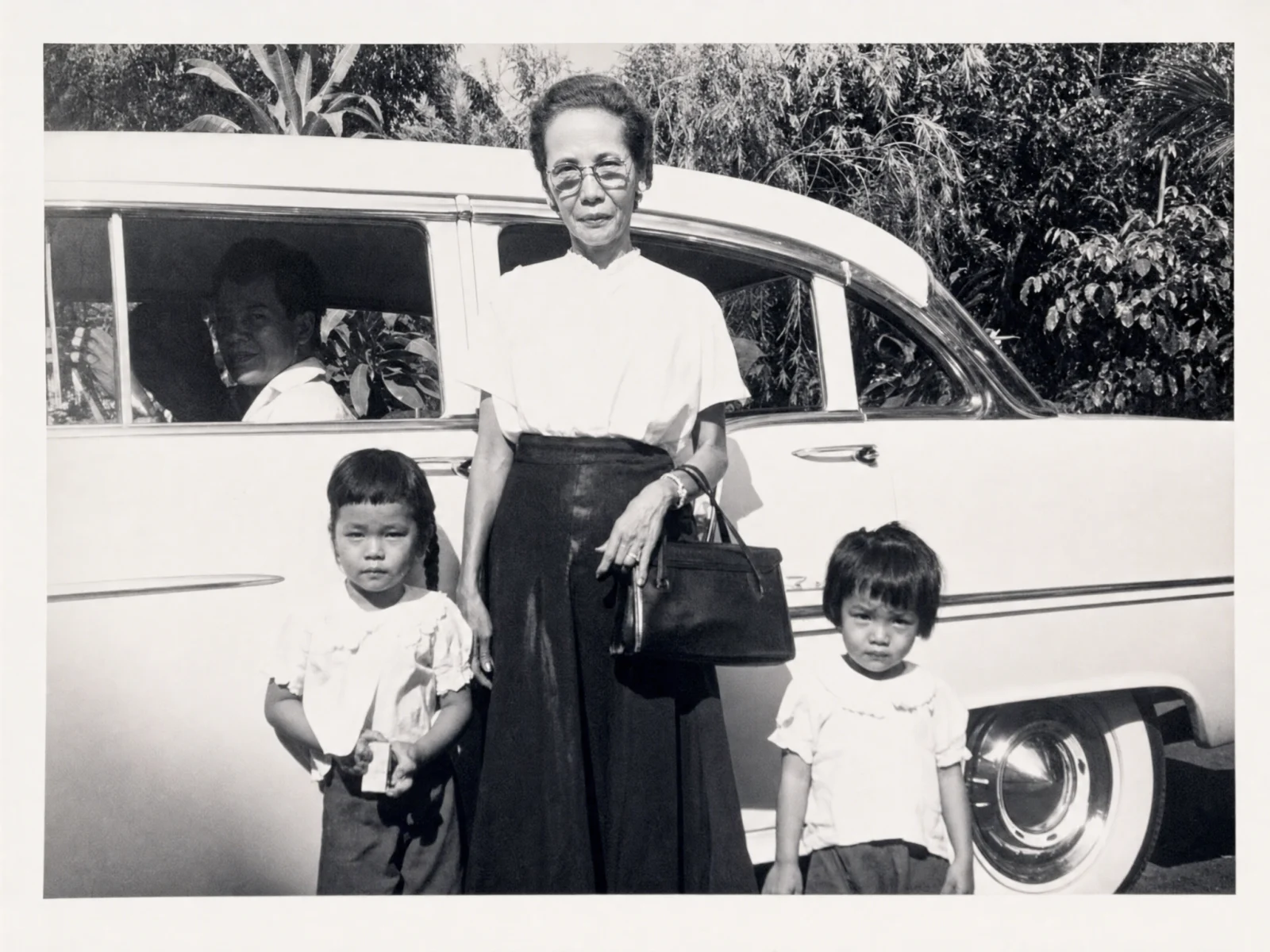
He had been born in 1921, and by the start of 1941 he was a law student at his father’s university, sure enough on his feet to stand among the orators in the U.P. College of Law’s annual contest with a piece he titled “The Road to Destiny.”77 Then the war made a soldier of him. It was Hadji who, at twenty, had carried the rifles out of Florida Hall under the eyes of the Japanese guard. It was Hadji who had gone up to Mindoro with his father in September 1944, climbed to the guerrilla camp, and served out the war doing intelligence work for an American officer in the hills. He came through it whole. After the war he went to the United States for the rest of his schooling: his last college years at Fordham in the Bronx, and then, in February 1948, a master’s in business administration from Harvard.78 By the family’s account, he was the first Filipino after the war to take a degree from its business school.61 A Tampa newspaper caught him that spring, a young man in aviator sunglasses stopped on the street for the day’s question, who answered that the spread of communism could be checked by sharing wealth more evenly at home and helping troubled countries abroad.79 When he came home, he married the love of his life, Corito Araneta, on 31 March 1951 in Pasay City.
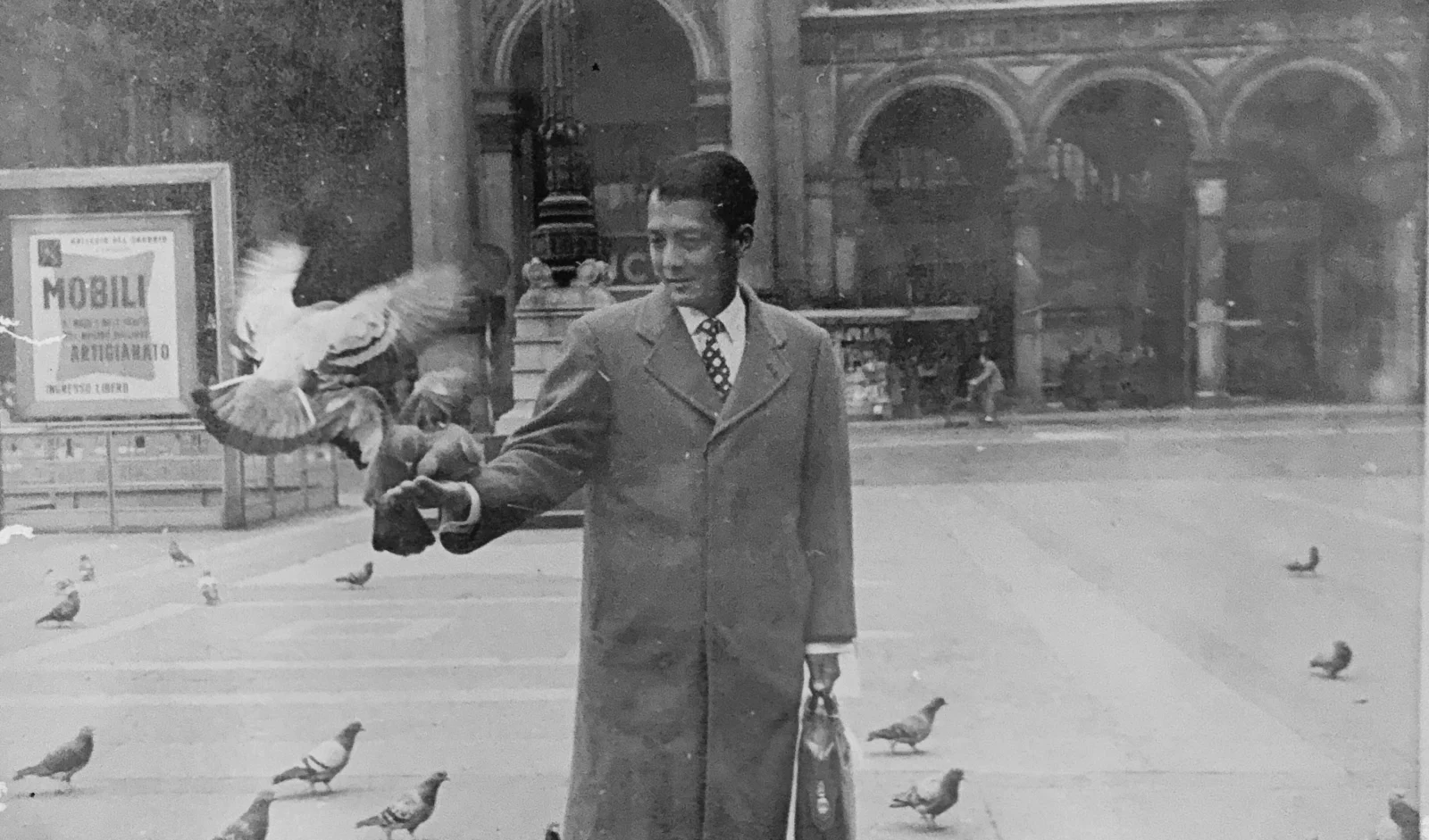
The wedding was at the Parish of Our Lady of Sorrows, and Father Walter Hogan, a Jesuit priest, would officiate. The bride was twenty-six years old, a painter, and her name was Socorro Araneta, called Corito.62 Her father was Ramon Sitchon Araneta, a Negros man, a lawyer, and a sugar planter. He was not at his daughter’s wedding. He had died in the war, seven years before, while Hadji was still up in the Mindoro hills; how he died, and what it cost his family, is Ramon’s own story.
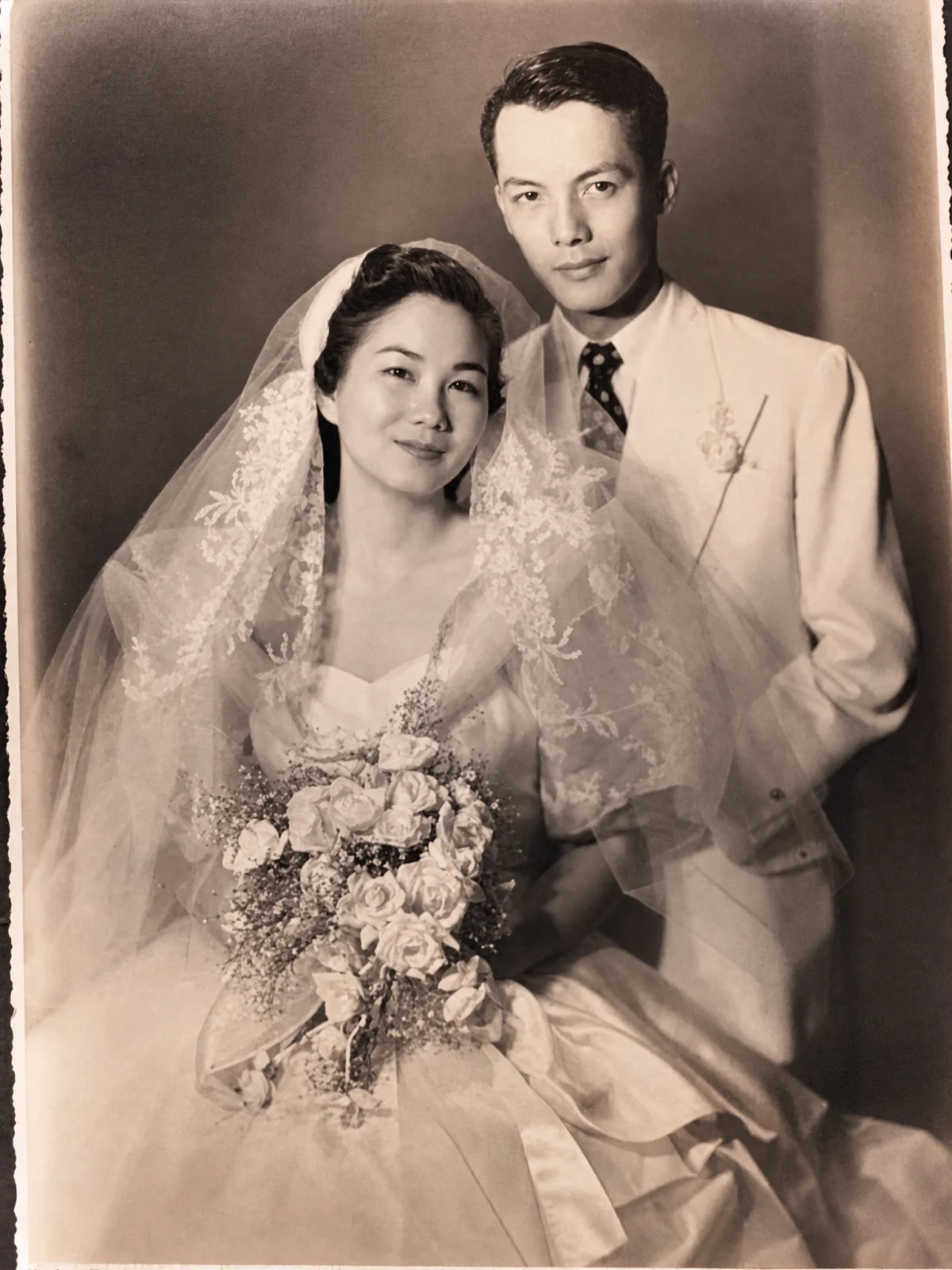
The marriage lasted half a century. Hadji and Corito spent its first years farming in the southern province of Bukidnon, and eventually in Negros, good years by the family’s account, lived among friends who would later become their business partners. The columnist Larry Henares, who made sport of the country’s industrialists and bankers in his “Make My Day” column, set it down in print:
An Ateneo boy fresh from Harvard, Edgardo “Hadji” Kalaw, spent 3 years farming in Mindanao, practically sleeping under a tractor. And all he got from it is a permanent sunburn that he cannot get rid of for 30 years. He made his pile putting up a finance company, a flour mill and a bank.80
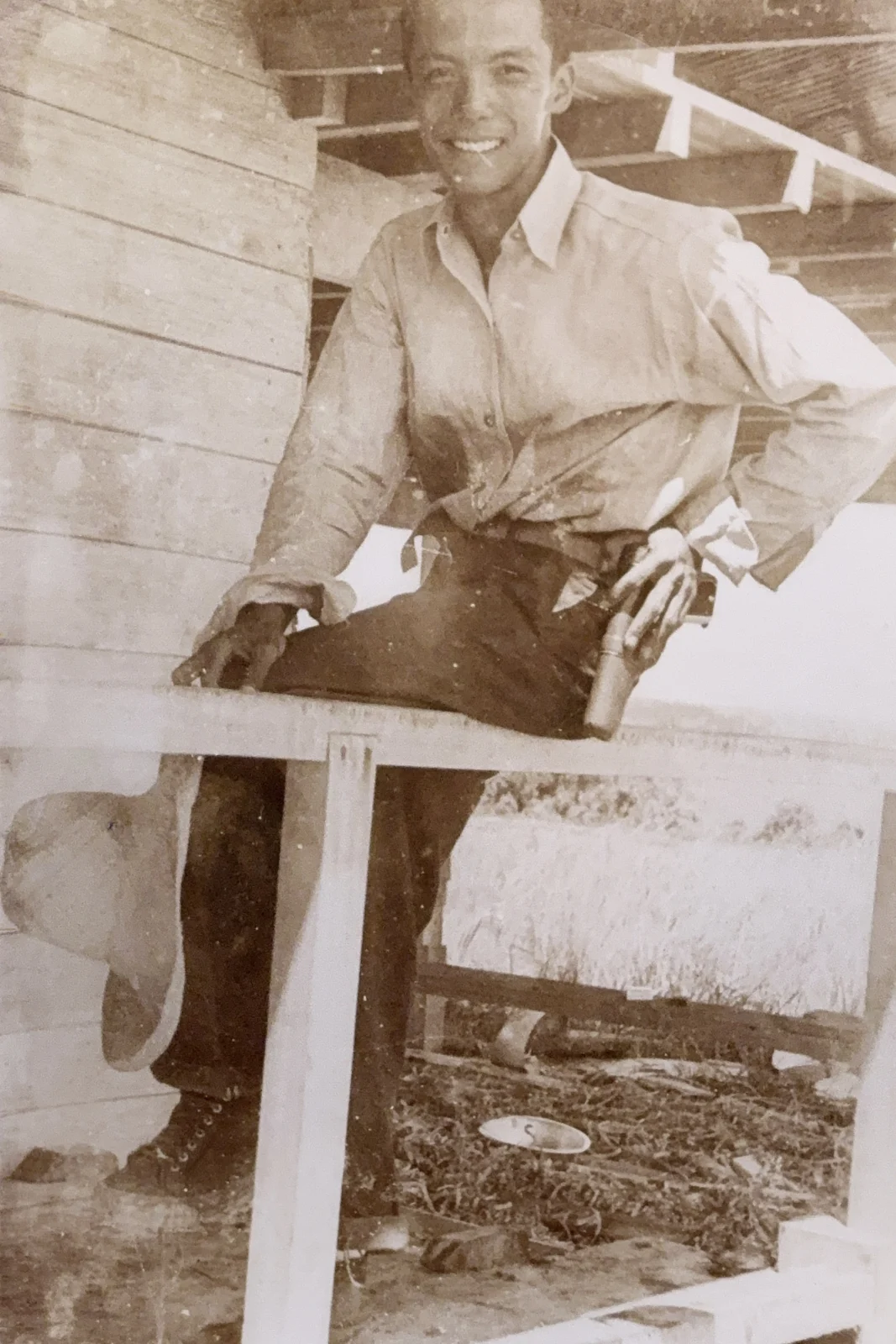
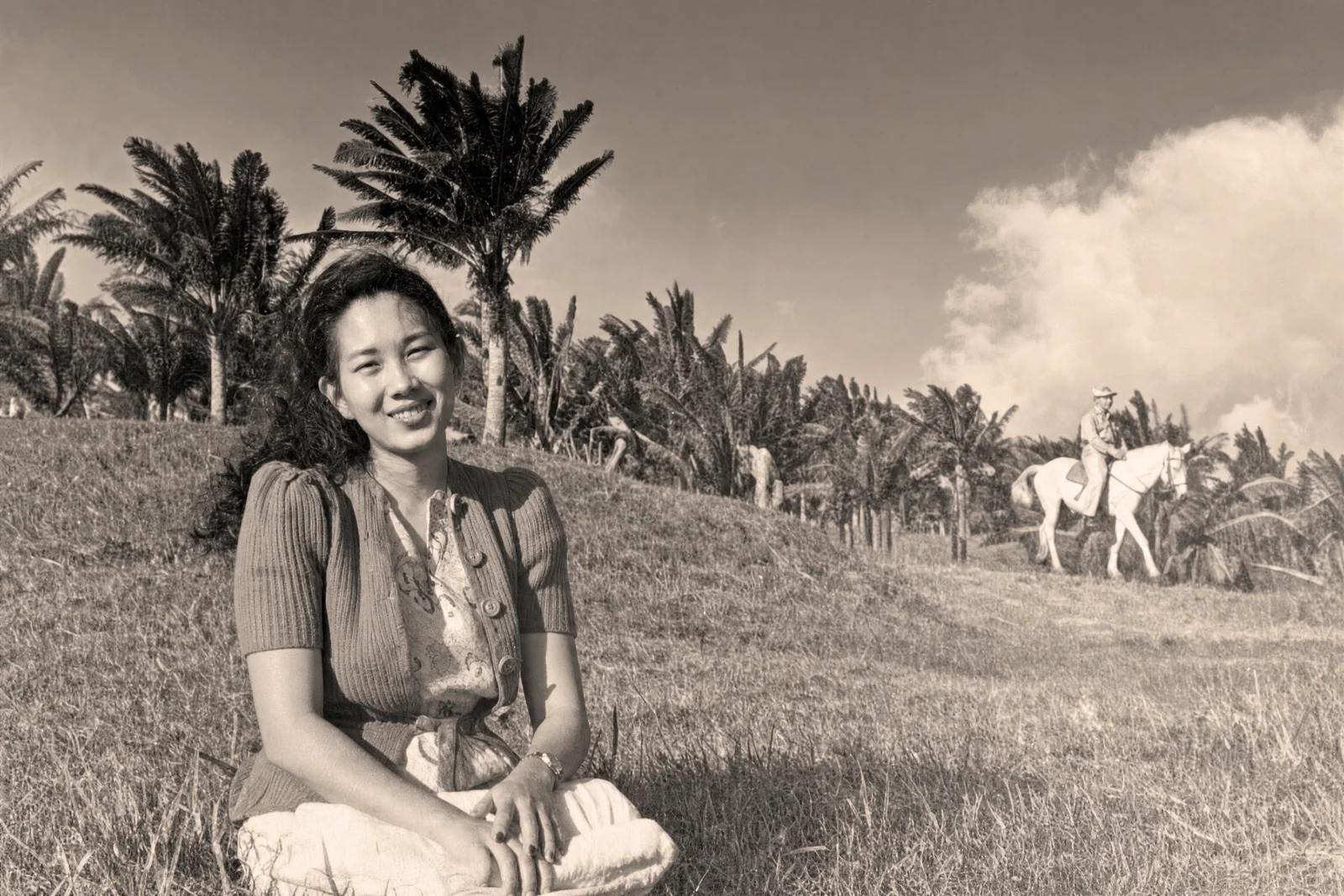
The family kept a flourish of its own to add to the bank: that Hadji wrote the Bank of Asia’s manual from memory. He gave his later years to civic work, serving a term as president of the Rotary Club of Makati, remembered there as the moving spirit behind the foundation that set the club’s charities on a lasting footing, from a credit union for the fishermen of Jomalig, an island municipality in Quezon province, to a school for children with disabilities.81 He died on 29 July 2001, in California, and was brought home to be buried in Manila.82
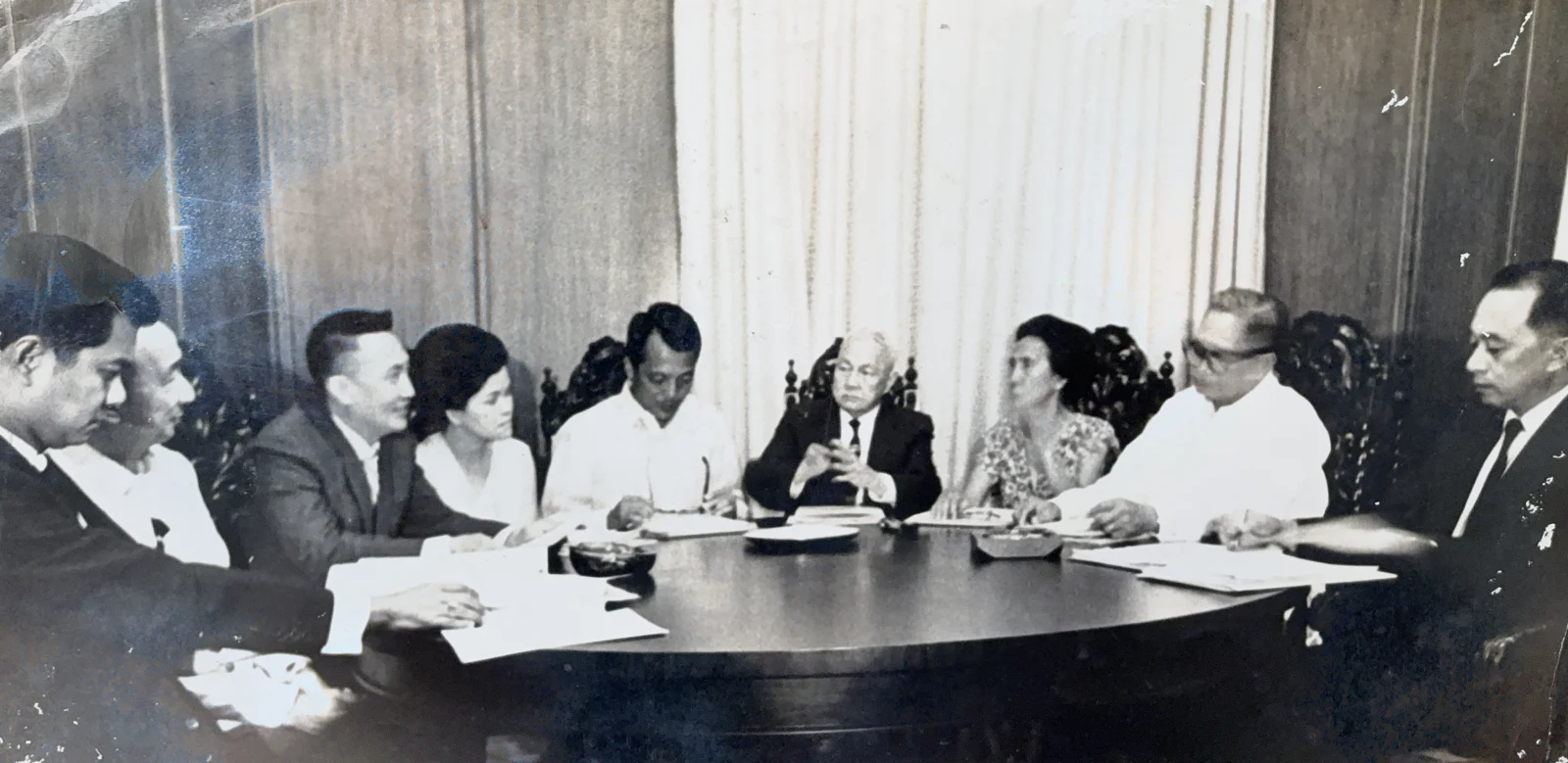
The marriage contract is the one document in all of this research that carries both the names of Maximo Kalaw and Ramon Araneta, the Batangas professor and the Negros planter. The marriage joined their families into one, and it is here where the two lives that ran their whole length apart meet, in a single line of descent, and do not part again.62
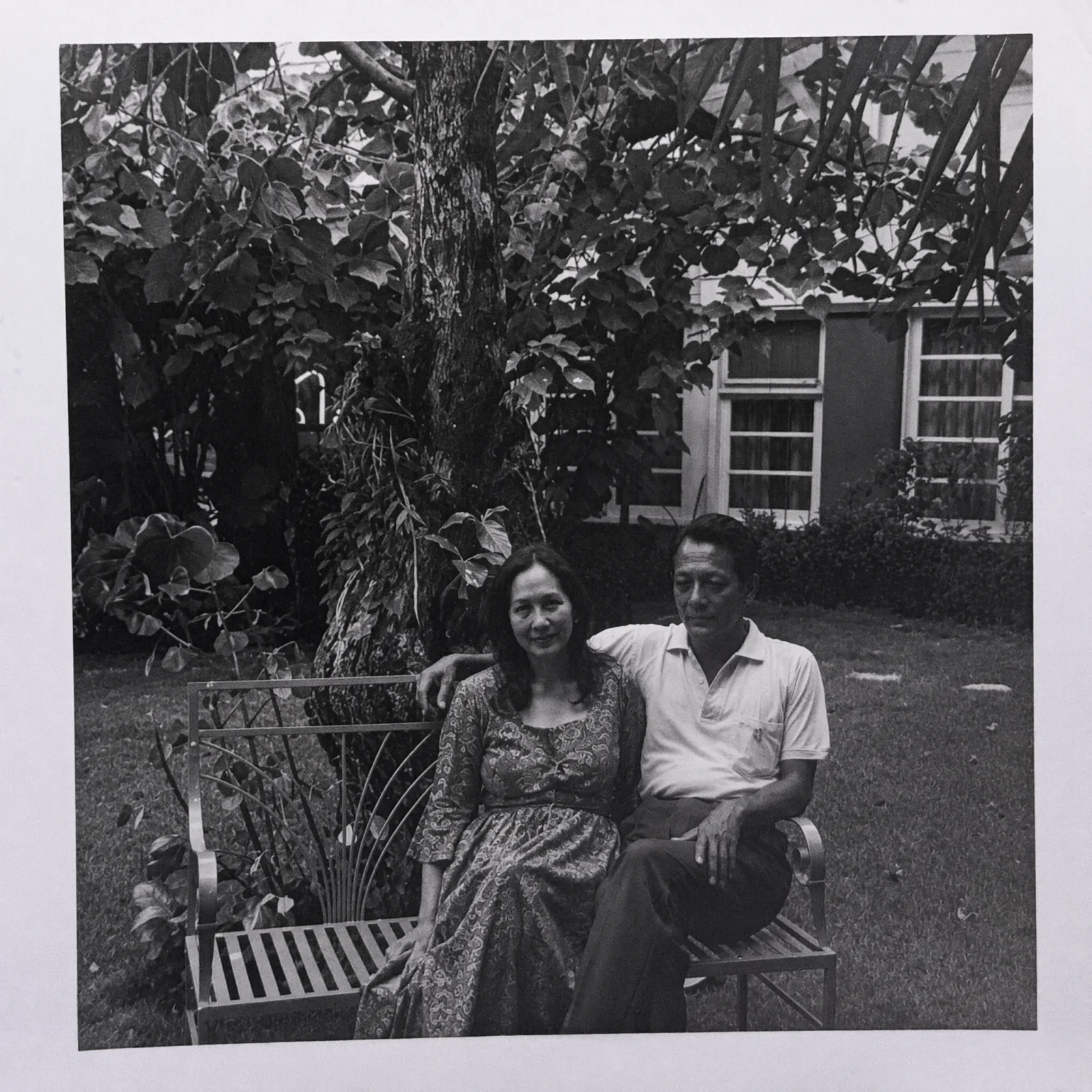
The lasting record
What Maximo Kalaw left behind, when the rest is set aside, was a shelf of books. He had started publishing in 1915, with a pamphlet in Tagalog, and he never really stopped: The Case for the Filipinos the next year, then decades of political science, the textbooks a Filipino could at last study his own government from, a novel in the middle of them, and a last essay that reached print in a Manila journal in the closing months of 1955, after he was dead. It was forty years of writing, and under all of it lay a single argument, the one he had carried since he was a secretary of twenty in Washington: that the Philippines was already a nation in everything but the granting of it, and that the granting was owed. He made that case more fully, and more often, than any man of his time. And he built the place where it would keep being made. The department of political science at the University of the Philippines, which he took over as its first Filipino head in 1917, was as much his work as any book on the shelf.13
That shelf was not the whole of what he wrote, only the part that survived. Years afterward his son Hadji, in Washington for a medical checkup, was taken by his American doctor to see the Library of Congress, and on a whim asked to look through the authors’ catalogue. His father’s name was in it, a dozen titles deep. The doctor was astonished. The family was not, for they knew the cost of the rest. Maximo had spent the war years on the Calapan farm writing what his son called his last book, The Fighting Filipinos, an account of his own war that took in the submarine and the underground, and that book, with many of his lesser and unfinished works, never reached a press. Most of them, Hadji wrote, “were burned during the Liberation, as were most of the libraries in Manila. That is why the books in the Library of Congress are so important to us.” What the world can still read of Maximo Kalaw, it can read because copies had crossed an ocean and come to rest in Washington, beyond the reach of the fire that took Manila.67
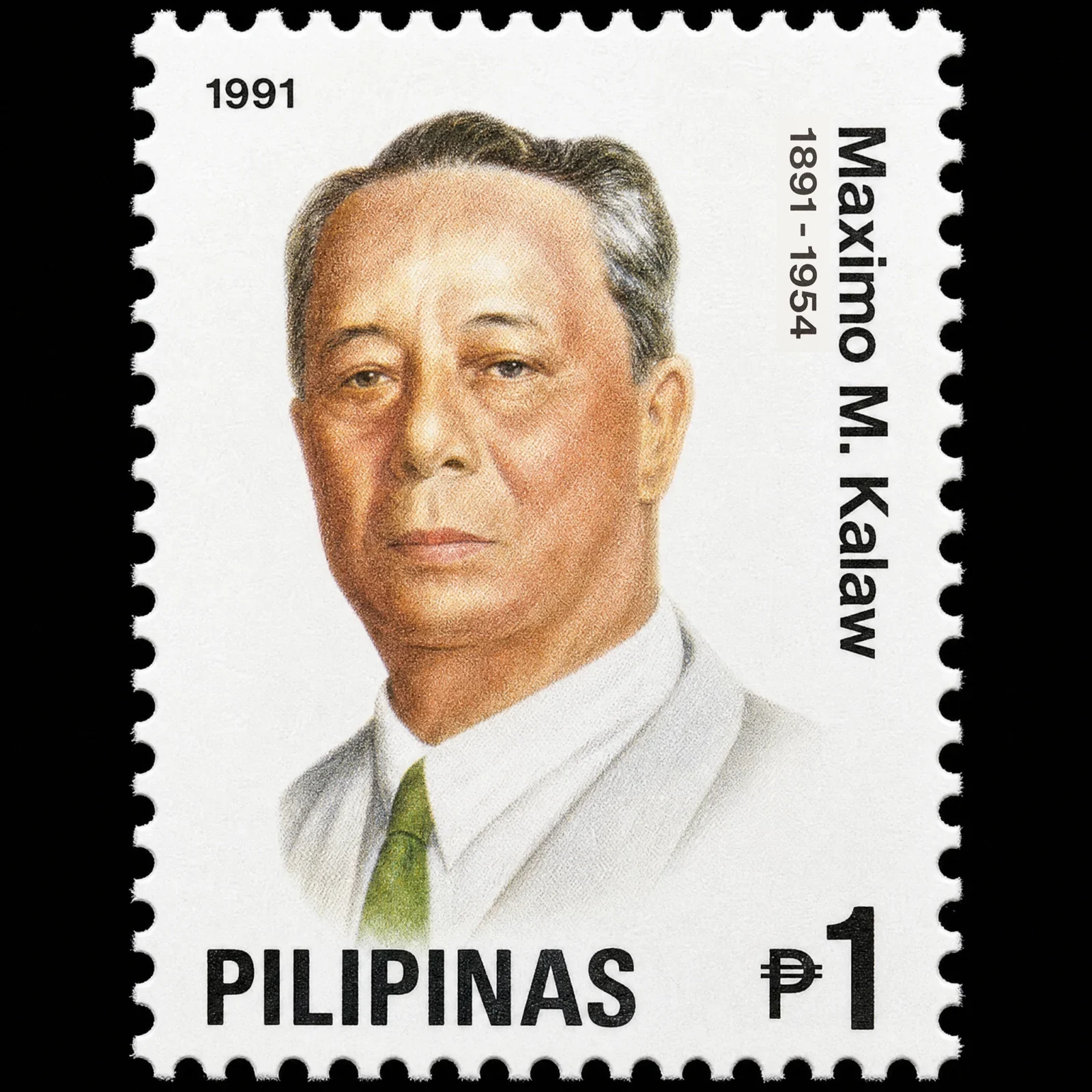
The work was reckoned with, in his lifetime and after it. In 1953, two years before he died, a writer named Juan Cabildo set him down, in a book of appraisals, in language that would have embarrassed a temperate man: the prophet of the new era, the interpreter of the country’s fundamental law, the guardian of its political faiths, a figure whose authority it would be as sacrilegious to dispute as the Dalai Lama’s. Maximo lived to read that. The soberer judgment came later, and from the institution itself. In August 1990, the centenary year of his birth, the department of political science at the University of the Philippines, by then seventy-five years old, gave a lecture on the political science of the man who had first led it. The scholar who gave it, Remigio Agpalo, found the work old-fashioned and, in the same breath, found it right: legalistic, static, and exactly the political science a country arguing for its independence had needed.13 The next year, the Republic printed his face on a stamp.63 A second turn of academic attention came in the twenty-first century. The historian Lisandro E. Claudio’s Liberalism and the Postcolony, in 2017, named Maximo a central voice in the two liberalisms—American and older Hispanic—that postcolonial Philippine politics had inherited from the years he had spent writing inside them.64 The literary scholar Johaina Crisostomo, at the University of California at Berkeley, took up The Filipino Rebel in 2021 in the American Quarterly and at greater length in her 2022 doctoral dissertation. Her acknowledgements thanked Maximo’s grandchildren for access to Maximo’s writings: the family-side preservation of the papers, three generations long, had made the modern academic recovery possible.27
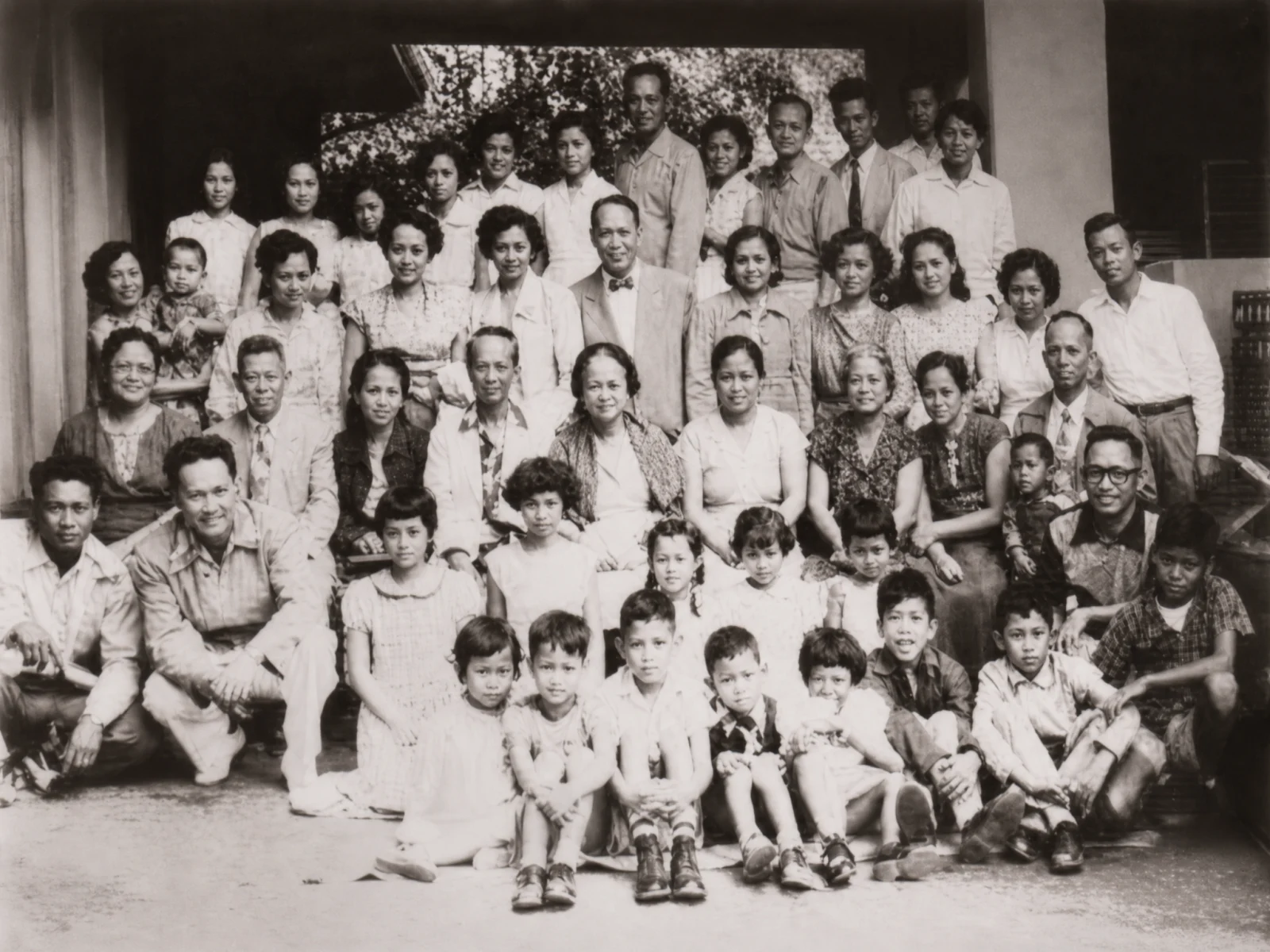
Second row: Ames Villegas, Amando Kalaw, Purisima Katigbak, Marie Villegas, Cynthia Santos, Dolly Villegas, Lorna Kalaw and Maning Kalaw.
Third row: Maria Kalaw Katigbak, Valente Villegas, Marieta Tejico Kalaw, Maximo Kalaw, Rosario Kalaw Roxas, Emila Kalaw Tapalla, Manuela Kalaw Villegas, Mercedes Kalaw Katigbak and Moises Kalaw with youngest child Ed.
Fourth row: Nelly Mayo Kalaw carrying son Boy, Yit Roxas, Fely Roxas Tanco, Nena Roxas Kalaw, Pepito Katigbak, Estela Villegas, Tessie Villegas, Estela Villegas, Presen Silva Katigbak and Dick Katigbak.
Last row: Pinkie Katigbak, Ester Kalaw, Lulu Katigbak, Dada Villegas, Justa Katigbak, Nenita Tapalla, Antonio Tapalla, Melinda Tapalla, Paping Kalaw, Naning Kalaw, Tony Katigbak and Hadji Kalaw.
From Huni ng Kalaw.
And the argument did not stop when the man did. His novel was reprinted; his books were scanned and set online, where anyone can now read them;65 and in 2023, on a stage in Saint Paul, Minnesota, a Filipino-American actor played him under a Philippine flag, in a production named for the press sobriquet of his student days, The Boy Wonder.
Maximo Manguiat Kalaw was one of the men who argued a nation into being, and, more than any other, built the study of how that nation governs itself. He was also, in the plainer accounting for which this research was made, a grandfather. His sons and daughters married, and a long line emerged that continues to grow from those unions. Every 29th of January, on the birthday of Valerio, the descendants of the man Maximo had crossed an ocean to come home to in 1937 still gather, the branches of the clan taking turns to host, under the name Kalaw Day.2 The family had begun in a sixteenth-century revolt against Spain. It had passed through revolution, university, and underground. Maximo, a man who gave his life to making his country’s case in words, lives on, not just in his descendants, but in the very words that he strung together. The argument he was making is still being made.